Can business skills provide an appealing context for adolescent treatment?
High relapse rates among treated adolescents underscore the need for youth-focused substance use treatments that are both engaging and effective. This pilot study tested a novel intervention designed to enhance therapeutic skills within an entrepreneurial framework in adolescent boys attending residential treatment.
Adolescents with a substance use disorder are at high risk of treatment dropout and relapse. Conventional treatments often fail to engage youth and meet their developmental needs, contributing to these poorer outcomes. Interventions that can target core mechanisms of recovery while also appealing to youth may help address this gap in care.
Effective interventions would ideally address both the psychosocial predictors of relapse and protective factors that support recovery. Negative affect is one such well-established factor, which together with emotion regulation deficits can trigger substance use to cope with negative emotional states and alleviate psychological distress. As a result, relapse prevention interventions typically focus on developing effective coping skills as a mechanism to address negative emotional states and other high-risk situations that often precede relapse.
Another key underlying mechanism of recovery and protective factor against relapse is self-efficacy, or the belief in one’s capacity to successfully execute plans, achieve goals, and persevere through challenges. In substance use treatment, this self-efficacy might relate to one’s confidence to deal with risky situations while maintaining abstinence. Social cognitive theory suggests that self-efficacy is built through the following information sources: mastery experiences, vicarious experiences, social persuasion, and managing negative emotions and physiological states. Thus, to build capacity to sustain recovery and avoid relapse, interventions should provide youth with structured yet engaging opportunities to develop self-efficacy through these channels.
Drawing upon this body of evidence and adolescents’ interest in entrepreneurship (i.e., business skills), this pilot study evaluated a novel intervention that uses entrepreneurial education as a vehicle to reduce relapse risk by increasing self-efficacy, emotion regulation, and positive affect.
HOW WAS THIS STUDY CONDUCTED?
This pilot study examined the immediate outcomes of an entrepreneurial education intervention designed to prevent relapse among treated youth. Participants were recruited from a residential treatment facility that exclusively served male adolescents. All incoming residents were considered eligible for participation. Over the 6-month study period, 27 (aged 13-17) of the 32 residents chose to enroll in the study. Participants were randomly assigned to a comparison group (n = 12) or intervention group (n = 15). An assessment was conducted at baseline (treatment admission) and again 4 weeks later where the effects of the intervention were examined.
Participants in the comparison group received treatment-as-usual. The residential facility’s standard schedule included a community meeting, a cognitive behavioral therapy group, schoolwork, a dialectical behavior therapy skills group, and individual therapy sessions that varied in frequency and therapeutic approach. Following completion of the study, comparison group participants were given the intervention materials to ensure they were not denied any potential benefits.
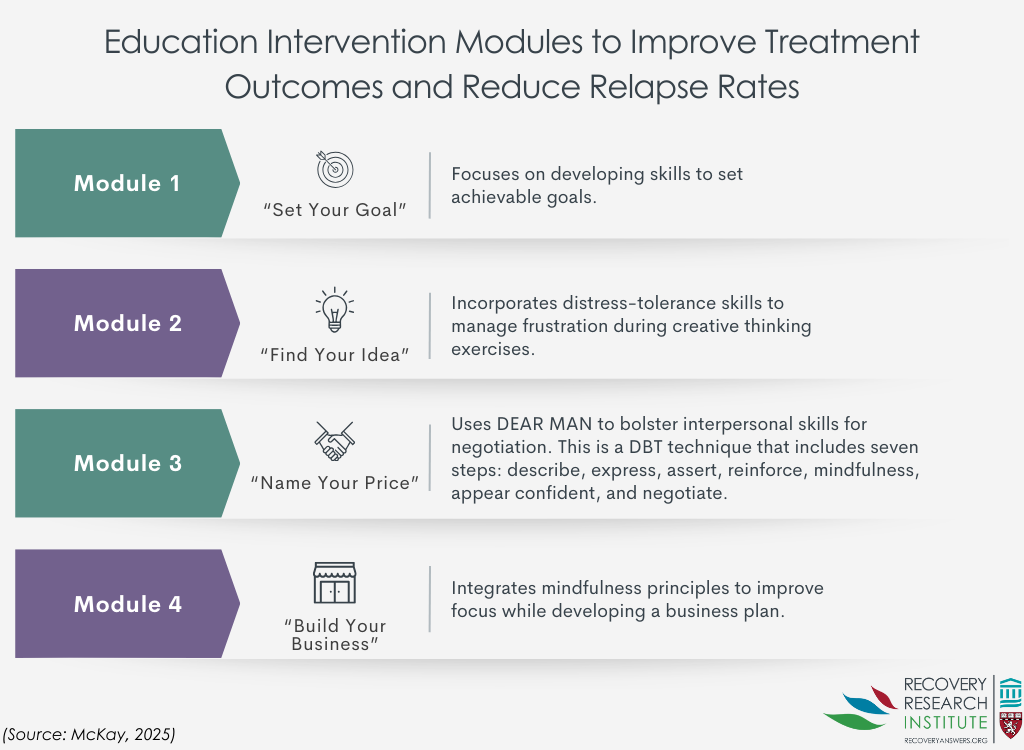
The entrepreneurial education intervention (see graphic below) was delivered to groups of 6 to 10 participants in 1-hour weekly sessions over a 4-week period. The groups were offered on a rolling basis, with new intervention participants joining as they were admitted to the residential facility. The intervention was implemented during the time normally allotted for the standard dialectical behavior therapy skills group, which was still attended by the comparison group participants. The intervention is comprised of 4 modules containing material adapted from an entrepreneur workbook for adolescents. The modules incorporated key principles of dialectical behavior therapy, offering an engaging context for developing emotion regulation and interpersonal skills while simultaneously providing structured opportunities to build self-efficacy through the 4 information sources identified in social cognitive theory (i.e., mastery experiences, vicarious experiences, social persuasion, and managing negative emotions and physiological states).
Baseline to post-intervention changes were assessed for the following outcomes: self-efficacy (general self-efficacy, not self-efficacy specific to substance use), emotion regulation difficulties, positive and negative affect, depression, anxiety, and stress. The researchers hypothesized that, relative to the comparison group, participants in the intervention group would have larger improvements in self-efficacy, emotion regulation (i.e., reduced emotion regulation difficulties), and positive affect as well as larger reductions in negative affect, depression, anxiety, and stress. Change scores were calculated for each outcome and compared between the intervention and comparison groups. Within-group changes were examined by comparing baseline and post-intervention scores.
On average, study participants were 15 years old. Approximately 89% were non-Hispanic White and all were male. The median annual household income range was $50k-$99.9k.
WHAT DID THIS STUDY FIND?
The intervention was associated with improvements in some protective factors against relapse
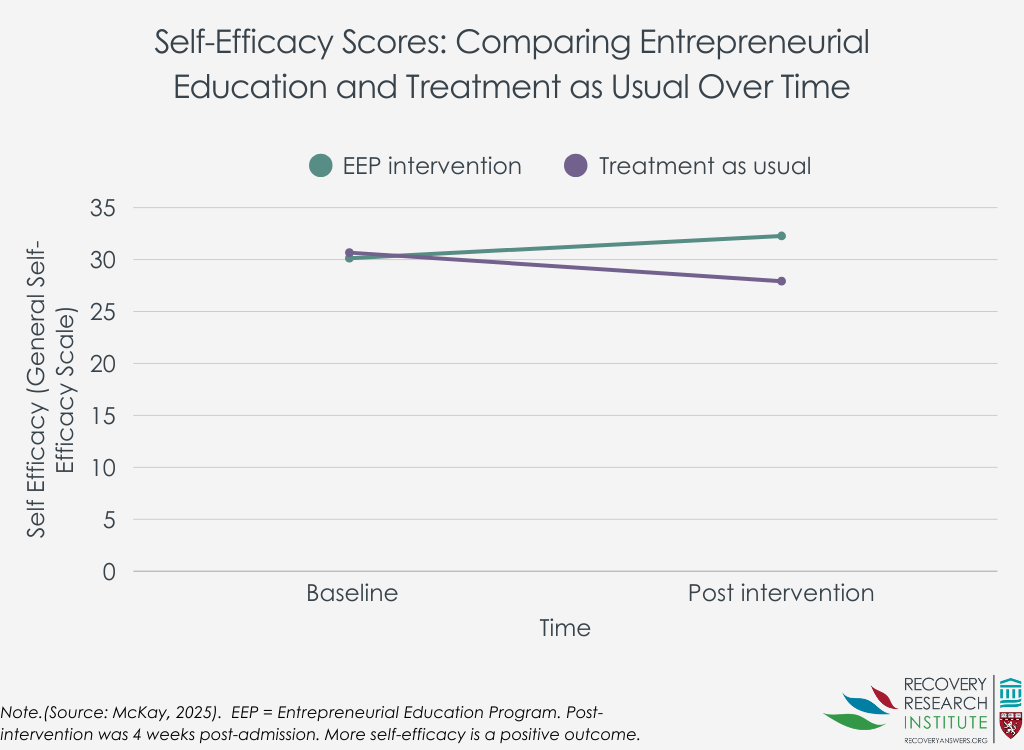
Relative to the comparison group, participants in the intervention group had greater improvements in self-efficacy after completing the intervention (see graph below). Changes in emotion regulation and positive affect were not different between the intervention and comparison groups. Of note, however, when examining change just within the intervention group, participants had significant improvements in emotion regulation and positive affect, while those outcomes remained the same for the comparison group.
The intervention reduced anxiety and stress but not depression and negative affect
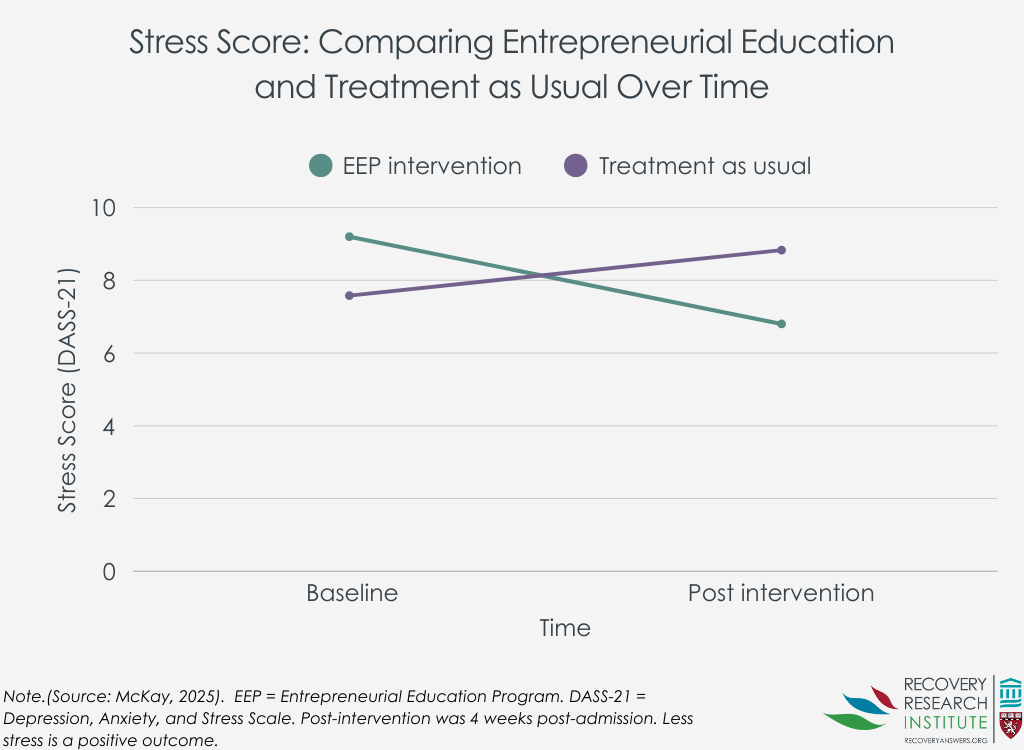
The novel intervention group had greater reductions in anxiety and stress than the comparison group (see graph below), but the changes in depression and negative affect were not different between the groups.
WHAT ARE THE IMPLICATIONS OF THE STUDY FINDINGS?
This small pilot study evaluated the effectiveness of an innovative entrepreneurial education intervention designed to prevent relapse in treated youth by increasing self-efficacy, emotion regulation, and positive affect. Differences between the intervention and comparison groups suggest that the intervention improved self-efficacy and reduced symptoms of anxiety and stress. Within the intervention group, improvements in emotion regulation and positive affect were observed, although these were not statistically different from the improvements observed within the comparison group and thus should be interpreted with caution. There was no evidence the intervention reduced negative affect or depression.
These findings lend partial, preliminary support for this entrepreneurial education intervention as a potentially beneficial supplement to ongoing substance use disorder treatment for adolescents. Prior research identified changes in self-efficacy as a key factor in understanding why some individuals have better recovery outcomes than others, suggesting that the observed improvements in this mechanism—if maintained—could subsequently reduce relapse risk. Additionally, the improvement in emotion regulation within intervention participants could reflect meaningful increases in coping and emotion regulation skills, but this study must be replicated in a larger sample and with longer-term assessments (i.e., several months after the treatment ends).
There was mixed evidence for the intervention’s ability to effectively target psychosocial predictors of recovery. It is possible the promising change on emotion regulation in the intervention group may have been strong enough to improve anxiety and stress but not depressed mood. This may be an inherent limitation of a brief intervention, but it could also suggest that the intervention components do not directly address depression. Thus, the intervention might benefit from adding components that more effectively target depression.
Taken together, entrepreneurial education may be a useful vehicle for building self-efficacy and reducing anxiety and stress among youth. Findings are similar to prior research that found an entrepreneurship education-based preventive intervention reduced cannabis use in a community sample of Native American adolescents. It is possible the combination of a relevant topic and engaging activities enhances the uptake and application of the therapeutic content and skills beyond what is observed in a dialectical behavior therapy skills group alone, suggesting this intervention could serve as a beneficial adjunctive therapy. However, a larger, more rigorous study must be conducted to evaluate this. Beyond its direct therapeutic value, entrepreneurial education provides vocational training that can help youth transition from residential substance use disorder treatment by addressing boredom and limited employment opportunities. This is consistent with a prior study that identified life skills development and future-oriented planning as factors that enable successful recovery among adolescents, underscoring the importance of including these intervention components.
Participants were drawn from a single, privately funded residential recovery facility in the Southeastern United States. The sample was comprised entirely of male adolescents, the majority of whom were White. These characteristics limit the generalizability of the findings.
Because data were collected only at baseline and post-intervention, this evaluation was limited to the evaluation of short-term effects. It is unknown whether the observed effects persist over time or translate into reductions in relapse risk following treatment.
Due to the small sample size, there was limited ability to detect intervention effects. As such, between-group improvements may be meaningful despite not reaching statistical significance. A more rigorous trial with a larger sample is needed to test these preliminary findings and clarify the magnitude of the intervention effects.
Substantial differences in baseline anxiety and stress scores were present between the intervention and comparison groups, which may have influenced those respective between-group reductions. A larger sample would help ensure baseline equivalence between the groups to accurately assess changes and isolate the intervention effects.
BOTTOM LINE
Relative to the treatment-as-usual comparison group, a DBT skills intervention factored in business-related goals improved self-efficacy and reduced anxiety and stress. Although the changes in emotional regulation and positive affect observed within the intervention group may reflect meaningful improvements (particularly in light of the small sample size), they must be interpreted with caution. Taken together, the findings suggest that entrepreneurial education may be helpful for adolescents receiving treatment for substance use disorder, but a rigorous longitudinal study should be conducted to test whether these baseline to post-intervention changes are maintained and translate into reduced relapse rates following discharge.
For individuals and families seeking recovery: Participating in this entrepreneurial education intervention (or one that employs a similar approach that appeals to adolescents) alongside standard treatment could be beneficial. The changes associated with the intervention may help youth more effectively navigate challenges during recovery and cope with setbacks or triggering events, potentially reducing relapse risk and supporting recovery. Similarly, engaging in other meaningful activities that promote life skills and self-efficacy (e.g., volunteerism, vocational training) may also be helpful.
For treatment professionals and treatment systems: The preliminary findings suggest that a strength-based entrepreneurial education intervention may serve as a valuable adjunctive therapy. Treatment systems and clinicians aiming to maximize resources could benefit from implementing it or a similar intervention, given the scalability, low cost, and minimal risk relative to the potential benefits.
For scientists: These preliminary findings are promising, yet more rigorous evaluation is needed to test the effectiveness of this intervention. A longitudinal randomized controlled trial that includes post-discharge assessments of substance use would help determine whether changes associated with the intervention are maintained and translate into lower of odds of relapse. Generalizability should also be improved through the recruitment of a larger, more diverse sample that is adequately powered to detect true intervention effects. Moreover, future pilot studies should be conducted to examine the feasibility and effectiveness of implementing the intervention in non-residential clinical settings as well as community-based settings as a youth-focused continuing care option. Finally, researchers may collaborate with clinicians to develop similar interventions that leverage other interests of youth as vehicles for therapeutic change.
For policy makers: Studies like this are vital as they help identify new approaches for supporting adolescents in recovery. Investing in the development of similar low-cost, low-risk interventions has the potential to improve youth recovery outcomes, which could reduce the economic and public health burdens associated with adolescent substance use disorders.
Adolescents with a substance use disorder are at high risk of treatment dropout and relapse. Conventional treatments often fail to engage youth and meet their developmental needs, contributing to these poorer outcomes. Interventions that can target core mechanisms of recovery while also appealing to youth may help address this gap in care.
Effective interventions would ideally address both the psychosocial predictors of relapse and protective factors that support recovery. Negative affect is one such well-established factor, which together with emotion regulation deficits can trigger substance use to cope with negative emotional states and alleviate psychological distress. As a result, relapse prevention interventions typically focus on developing effective coping skills as a mechanism to address negative emotional states and other high-risk situations that often precede relapse.
Another key underlying mechanism of recovery and protective factor against relapse is self-efficacy, or the belief in one’s capacity to successfully execute plans, achieve goals, and persevere through challenges. In substance use treatment, this self-efficacy might relate to one’s confidence to deal with risky situations while maintaining abstinence. Social cognitive theory suggests that self-efficacy is built through the following information sources: mastery experiences, vicarious experiences, social persuasion, and managing negative emotions and physiological states. Thus, to build capacity to sustain recovery and avoid relapse, interventions should provide youth with structured yet engaging opportunities to develop self-efficacy through these channels.
Drawing upon this body of evidence and adolescents’ interest in entrepreneurship (i.e., business skills), this pilot study evaluated a novel intervention that uses entrepreneurial education as a vehicle to reduce relapse risk by increasing self-efficacy, emotion regulation, and positive affect.
HOW WAS THIS STUDY CONDUCTED?
This pilot study examined the immediate outcomes of an entrepreneurial education intervention designed to prevent relapse among treated youth. Participants were recruited from a residential treatment facility that exclusively served male adolescents. All incoming residents were considered eligible for participation. Over the 6-month study period, 27 (aged 13-17) of the 32 residents chose to enroll in the study. Participants were randomly assigned to a comparison group (n = 12) or intervention group (n = 15). An assessment was conducted at baseline (treatment admission) and again 4 weeks later where the effects of the intervention were examined.
Participants in the comparison group received treatment-as-usual. The residential facility’s standard schedule included a community meeting, a cognitive behavioral therapy group, schoolwork, a dialectical behavior therapy skills group, and individual therapy sessions that varied in frequency and therapeutic approach. Following completion of the study, comparison group participants were given the intervention materials to ensure they were not denied any potential benefits.
The entrepreneurial education intervention (see graphic below) was delivered to groups of 6 to 10 participants in 1-hour weekly sessions over a 4-week period. The groups were offered on a rolling basis, with new intervention participants joining as they were admitted to the residential facility. The intervention was implemented during the time normally allotted for the standard dialectical behavior therapy skills group, which was still attended by the comparison group participants. The intervention is comprised of 4 modules containing material adapted from an entrepreneur workbook for adolescents. The modules incorporated key principles of dialectical behavior therapy, offering an engaging context for developing emotion regulation and interpersonal skills while simultaneously providing structured opportunities to build self-efficacy through the 4 information sources identified in social cognitive theory (i.e., mastery experiences, vicarious experiences, social persuasion, and managing negative emotions and physiological states).
Baseline to post-intervention changes were assessed for the following outcomes: self-efficacy (general self-efficacy, not self-efficacy specific to substance use), emotion regulation difficulties, positive and negative affect, depression, anxiety, and stress. The researchers hypothesized that, relative to the comparison group, participants in the intervention group would have larger improvements in self-efficacy, emotion regulation (i.e., reduced emotion regulation difficulties), and positive affect as well as larger reductions in negative affect, depression, anxiety, and stress. Change scores were calculated for each outcome and compared between the intervention and comparison groups. Within-group changes were examined by comparing baseline and post-intervention scores.
On average, study participants were 15 years old. Approximately 89% were non-Hispanic White and all were male. The median annual household income range was $50k-$99.9k.
WHAT DID THIS STUDY FIND?
The intervention was associated with improvements in some protective factors against relapse
Relative to the comparison group, participants in the intervention group had greater improvements in self-efficacy after completing the intervention (see graph below). Changes in emotion regulation and positive affect were not different between the intervention and comparison groups. Of note, however, when examining change just within the intervention group, participants had significant improvements in emotion regulation and positive affect, while those outcomes remained the same for the comparison group.
The intervention reduced anxiety and stress but not depression and negative affect
The novel intervention group had greater reductions in anxiety and stress than the comparison group (see graph below), but the changes in depression and negative affect were not different between the groups.
WHAT ARE THE IMPLICATIONS OF THE STUDY FINDINGS?
This small pilot study evaluated the effectiveness of an innovative entrepreneurial education intervention designed to prevent relapse in treated youth by increasing self-efficacy, emotion regulation, and positive affect. Differences between the intervention and comparison groups suggest that the intervention improved self-efficacy and reduced symptoms of anxiety and stress. Within the intervention group, improvements in emotion regulation and positive affect were observed, although these were not statistically different from the improvements observed within the comparison group and thus should be interpreted with caution. There was no evidence the intervention reduced negative affect or depression.
These findings lend partial, preliminary support for this entrepreneurial education intervention as a potentially beneficial supplement to ongoing substance use disorder treatment for adolescents. Prior research identified changes in self-efficacy as a key factor in understanding why some individuals have better recovery outcomes than others, suggesting that the observed improvements in this mechanism—if maintained—could subsequently reduce relapse risk. Additionally, the improvement in emotion regulation within intervention participants could reflect meaningful increases in coping and emotion regulation skills, but this study must be replicated in a larger sample and with longer-term assessments (i.e., several months after the treatment ends).
There was mixed evidence for the intervention’s ability to effectively target psychosocial predictors of recovery. It is possible the promising change on emotion regulation in the intervention group may have been strong enough to improve anxiety and stress but not depressed mood. This may be an inherent limitation of a brief intervention, but it could also suggest that the intervention components do not directly address depression. Thus, the intervention might benefit from adding components that more effectively target depression.
Taken together, entrepreneurial education may be a useful vehicle for building self-efficacy and reducing anxiety and stress among youth. Findings are similar to prior research that found an entrepreneurship education-based preventive intervention reduced cannabis use in a community sample of Native American adolescents. It is possible the combination of a relevant topic and engaging activities enhances the uptake and application of the therapeutic content and skills beyond what is observed in a dialectical behavior therapy skills group alone, suggesting this intervention could serve as a beneficial adjunctive therapy. However, a larger, more rigorous study must be conducted to evaluate this. Beyond its direct therapeutic value, entrepreneurial education provides vocational training that can help youth transition from residential substance use disorder treatment by addressing boredom and limited employment opportunities. This is consistent with a prior study that identified life skills development and future-oriented planning as factors that enable successful recovery among adolescents, underscoring the importance of including these intervention components.
Participants were drawn from a single, privately funded residential recovery facility in the Southeastern United States. The sample was comprised entirely of male adolescents, the majority of whom were White. These characteristics limit the generalizability of the findings.
Because data were collected only at baseline and post-intervention, this evaluation was limited to the evaluation of short-term effects. It is unknown whether the observed effects persist over time or translate into reductions in relapse risk following treatment.
Due to the small sample size, there was limited ability to detect intervention effects. As such, between-group improvements may be meaningful despite not reaching statistical significance. A more rigorous trial with a larger sample is needed to test these preliminary findings and clarify the magnitude of the intervention effects.
Substantial differences in baseline anxiety and stress scores were present between the intervention and comparison groups, which may have influenced those respective between-group reductions. A larger sample would help ensure baseline equivalence between the groups to accurately assess changes and isolate the intervention effects.
BOTTOM LINE
Relative to the treatment-as-usual comparison group, a DBT skills intervention factored in business-related goals improved self-efficacy and reduced anxiety and stress. Although the changes in emotional regulation and positive affect observed within the intervention group may reflect meaningful improvements (particularly in light of the small sample size), they must be interpreted with caution. Taken together, the findings suggest that entrepreneurial education may be helpful for adolescents receiving treatment for substance use disorder, but a rigorous longitudinal study should be conducted to test whether these baseline to post-intervention changes are maintained and translate into reduced relapse rates following discharge.
For individuals and families seeking recovery: Participating in this entrepreneurial education intervention (or one that employs a similar approach that appeals to adolescents) alongside standard treatment could be beneficial. The changes associated with the intervention may help youth more effectively navigate challenges during recovery and cope with setbacks or triggering events, potentially reducing relapse risk and supporting recovery. Similarly, engaging in other meaningful activities that promote life skills and self-efficacy (e.g., volunteerism, vocational training) may also be helpful.
For treatment professionals and treatment systems: The preliminary findings suggest that a strength-based entrepreneurial education intervention may serve as a valuable adjunctive therapy. Treatment systems and clinicians aiming to maximize resources could benefit from implementing it or a similar intervention, given the scalability, low cost, and minimal risk relative to the potential benefits.
For scientists: These preliminary findings are promising, yet more rigorous evaluation is needed to test the effectiveness of this intervention. A longitudinal randomized controlled trial that includes post-discharge assessments of substance use would help determine whether changes associated with the intervention are maintained and translate into lower of odds of relapse. Generalizability should also be improved through the recruitment of a larger, more diverse sample that is adequately powered to detect true intervention effects. Moreover, future pilot studies should be conducted to examine the feasibility and effectiveness of implementing the intervention in non-residential clinical settings as well as community-based settings as a youth-focused continuing care option. Finally, researchers may collaborate with clinicians to develop similar interventions that leverage other interests of youth as vehicles for therapeutic change.
For policy makers: Studies like this are vital as they help identify new approaches for supporting adolescents in recovery. Investing in the development of similar low-cost, low-risk interventions has the potential to improve youth recovery outcomes, which could reduce the economic and public health burdens associated with adolescent substance use disorders.
Adolescents with a substance use disorder are at high risk of treatment dropout and relapse. Conventional treatments often fail to engage youth and meet their developmental needs, contributing to these poorer outcomes. Interventions that can target core mechanisms of recovery while also appealing to youth may help address this gap in care.
Effective interventions would ideally address both the psychosocial predictors of relapse and protective factors that support recovery. Negative affect is one such well-established factor, which together with emotion regulation deficits can trigger substance use to cope with negative emotional states and alleviate psychological distress. As a result, relapse prevention interventions typically focus on developing effective coping skills as a mechanism to address negative emotional states and other high-risk situations that often precede relapse.
Another key underlying mechanism of recovery and protective factor against relapse is self-efficacy, or the belief in one’s capacity to successfully execute plans, achieve goals, and persevere through challenges. In substance use treatment, this self-efficacy might relate to one’s confidence to deal with risky situations while maintaining abstinence. Social cognitive theory suggests that self-efficacy is built through the following information sources: mastery experiences, vicarious experiences, social persuasion, and managing negative emotions and physiological states. Thus, to build capacity to sustain recovery and avoid relapse, interventions should provide youth with structured yet engaging opportunities to develop self-efficacy through these channels.
Drawing upon this body of evidence and adolescents’ interest in entrepreneurship (i.e., business skills), this pilot study evaluated a novel intervention that uses entrepreneurial education as a vehicle to reduce relapse risk by increasing self-efficacy, emotion regulation, and positive affect.
HOW WAS THIS STUDY CONDUCTED?
This pilot study examined the immediate outcomes of an entrepreneurial education intervention designed to prevent relapse among treated youth. Participants were recruited from a residential treatment facility that exclusively served male adolescents. All incoming residents were considered eligible for participation. Over the 6-month study period, 27 (aged 13-17) of the 32 residents chose to enroll in the study. Participants were randomly assigned to a comparison group (n = 12) or intervention group (n = 15). An assessment was conducted at baseline (treatment admission) and again 4 weeks later where the effects of the intervention were examined.
Participants in the comparison group received treatment-as-usual. The residential facility’s standard schedule included a community meeting, a cognitive behavioral therapy group, schoolwork, a dialectical behavior therapy skills group, and individual therapy sessions that varied in frequency and therapeutic approach. Following completion of the study, comparison group participants were given the intervention materials to ensure they were not denied any potential benefits.
The entrepreneurial education intervention (see graphic below) was delivered to groups of 6 to 10 participants in 1-hour weekly sessions over a 4-week period. The groups were offered on a rolling basis, with new intervention participants joining as they were admitted to the residential facility. The intervention was implemented during the time normally allotted for the standard dialectical behavior therapy skills group, which was still attended by the comparison group participants. The intervention is comprised of 4 modules containing material adapted from an entrepreneur workbook for adolescents. The modules incorporated key principles of dialectical behavior therapy, offering an engaging context for developing emotion regulation and interpersonal skills while simultaneously providing structured opportunities to build self-efficacy through the 4 information sources identified in social cognitive theory (i.e., mastery experiences, vicarious experiences, social persuasion, and managing negative emotions and physiological states).
Baseline to post-intervention changes were assessed for the following outcomes: self-efficacy (general self-efficacy, not self-efficacy specific to substance use), emotion regulation difficulties, positive and negative affect, depression, anxiety, and stress. The researchers hypothesized that, relative to the comparison group, participants in the intervention group would have larger improvements in self-efficacy, emotion regulation (i.e., reduced emotion regulation difficulties), and positive affect as well as larger reductions in negative affect, depression, anxiety, and stress. Change scores were calculated for each outcome and compared between the intervention and comparison groups. Within-group changes were examined by comparing baseline and post-intervention scores.
On average, study participants were 15 years old. Approximately 89% were non-Hispanic White and all were male. The median annual household income range was $50k-$99.9k.
WHAT DID THIS STUDY FIND?
The intervention was associated with improvements in some protective factors against relapse
Relative to the comparison group, participants in the intervention group had greater improvements in self-efficacy after completing the intervention (see graph below). Changes in emotion regulation and positive affect were not different between the intervention and comparison groups. Of note, however, when examining change just within the intervention group, participants had significant improvements in emotion regulation and positive affect, while those outcomes remained the same for the comparison group.
The intervention reduced anxiety and stress but not depression and negative affect
The novel intervention group had greater reductions in anxiety and stress than the comparison group (see graph below), but the changes in depression and negative affect were not different between the groups.
WHAT ARE THE IMPLICATIONS OF THE STUDY FINDINGS?
This small pilot study evaluated the effectiveness of an innovative entrepreneurial education intervention designed to prevent relapse in treated youth by increasing self-efficacy, emotion regulation, and positive affect. Differences between the intervention and comparison groups suggest that the intervention improved self-efficacy and reduced symptoms of anxiety and stress. Within the intervention group, improvements in emotion regulation and positive affect were observed, although these were not statistically different from the improvements observed within the comparison group and thus should be interpreted with caution. There was no evidence the intervention reduced negative affect or depression.
These findings lend partial, preliminary support for this entrepreneurial education intervention as a potentially beneficial supplement to ongoing substance use disorder treatment for adolescents. Prior research identified changes in self-efficacy as a key factor in understanding why some individuals have better recovery outcomes than others, suggesting that the observed improvements in this mechanism—if maintained—could subsequently reduce relapse risk. Additionally, the improvement in emotion regulation within intervention participants could reflect meaningful increases in coping and emotion regulation skills, but this study must be replicated in a larger sample and with longer-term assessments (i.e., several months after the treatment ends).
There was mixed evidence for the intervention’s ability to effectively target psychosocial predictors of recovery. It is possible the promising change on emotion regulation in the intervention group may have been strong enough to improve anxiety and stress but not depressed mood. This may be an inherent limitation of a brief intervention, but it could also suggest that the intervention components do not directly address depression. Thus, the intervention might benefit from adding components that more effectively target depression.
Taken together, entrepreneurial education may be a useful vehicle for building self-efficacy and reducing anxiety and stress among youth. Findings are similar to prior research that found an entrepreneurship education-based preventive intervention reduced cannabis use in a community sample of Native American adolescents. It is possible the combination of a relevant topic and engaging activities enhances the uptake and application of the therapeutic content and skills beyond what is observed in a dialectical behavior therapy skills group alone, suggesting this intervention could serve as a beneficial adjunctive therapy. However, a larger, more rigorous study must be conducted to evaluate this. Beyond its direct therapeutic value, entrepreneurial education provides vocational training that can help youth transition from residential substance use disorder treatment by addressing boredom and limited employment opportunities. This is consistent with a prior study that identified life skills development and future-oriented planning as factors that enable successful recovery among adolescents, underscoring the importance of including these intervention components.
Participants were drawn from a single, privately funded residential recovery facility in the Southeastern United States. The sample was comprised entirely of male adolescents, the majority of whom were White. These characteristics limit the generalizability of the findings.
Because data were collected only at baseline and post-intervention, this evaluation was limited to the evaluation of short-term effects. It is unknown whether the observed effects persist over time or translate into reductions in relapse risk following treatment.
Due to the small sample size, there was limited ability to detect intervention effects. As such, between-group improvements may be meaningful despite not reaching statistical significance. A more rigorous trial with a larger sample is needed to test these preliminary findings and clarify the magnitude of the intervention effects.
Substantial differences in baseline anxiety and stress scores were present between the intervention and comparison groups, which may have influenced those respective between-group reductions. A larger sample would help ensure baseline equivalence between the groups to accurately assess changes and isolate the intervention effects.
BOTTOM LINE
Relative to the treatment-as-usual comparison group, a DBT skills intervention factored in business-related goals improved self-efficacy and reduced anxiety and stress. Although the changes in emotional regulation and positive affect observed within the intervention group may reflect meaningful improvements (particularly in light of the small sample size), they must be interpreted with caution. Taken together, the findings suggest that entrepreneurial education may be helpful for adolescents receiving treatment for substance use disorder, but a rigorous longitudinal study should be conducted to test whether these baseline to post-intervention changes are maintained and translate into reduced relapse rates following discharge.
For individuals and families seeking recovery: Participating in this entrepreneurial education intervention (or one that employs a similar approach that appeals to adolescents) alongside standard treatment could be beneficial. The changes associated with the intervention may help youth more effectively navigate challenges during recovery and cope with setbacks or triggering events, potentially reducing relapse risk and supporting recovery. Similarly, engaging in other meaningful activities that promote life skills and self-efficacy (e.g., volunteerism, vocational training) may also be helpful.
For treatment professionals and treatment systems: The preliminary findings suggest that a strength-based entrepreneurial education intervention may serve as a valuable adjunctive therapy. Treatment systems and clinicians aiming to maximize resources could benefit from implementing it or a similar intervention, given the scalability, low cost, and minimal risk relative to the potential benefits.
For scientists: These preliminary findings are promising, yet more rigorous evaluation is needed to test the effectiveness of this intervention. A longitudinal randomized controlled trial that includes post-discharge assessments of substance use would help determine whether changes associated with the intervention are maintained and translate into lower of odds of relapse. Generalizability should also be improved through the recruitment of a larger, more diverse sample that is adequately powered to detect true intervention effects. Moreover, future pilot studies should be conducted to examine the feasibility and effectiveness of implementing the intervention in non-residential clinical settings as well as community-based settings as a youth-focused continuing care option. Finally, researchers may collaborate with clinicians to develop similar interventions that leverage other interests of youth as vehicles for therapeutic change.
For policy makers: Studies like this are vital as they help identify new approaches for supporting adolescents in recovery. Investing in the development of similar low-cost, low-risk interventions has the potential to improve youth recovery outcomes, which could reduce the economic and public health burdens associated with adolescent substance use disorders.