Severity of illness makes it difficult to carry out study of contingency management for alcohol-related liver disease
Contingency management is one of the most helpful behavior change strategies for people with substance use disorder, yet its impact varies at different stages of the disorder. This study examined its utility for patients admitted to the hospital for alcohol-related liver disease, showing just how difficult it is to intervene at the later stages.
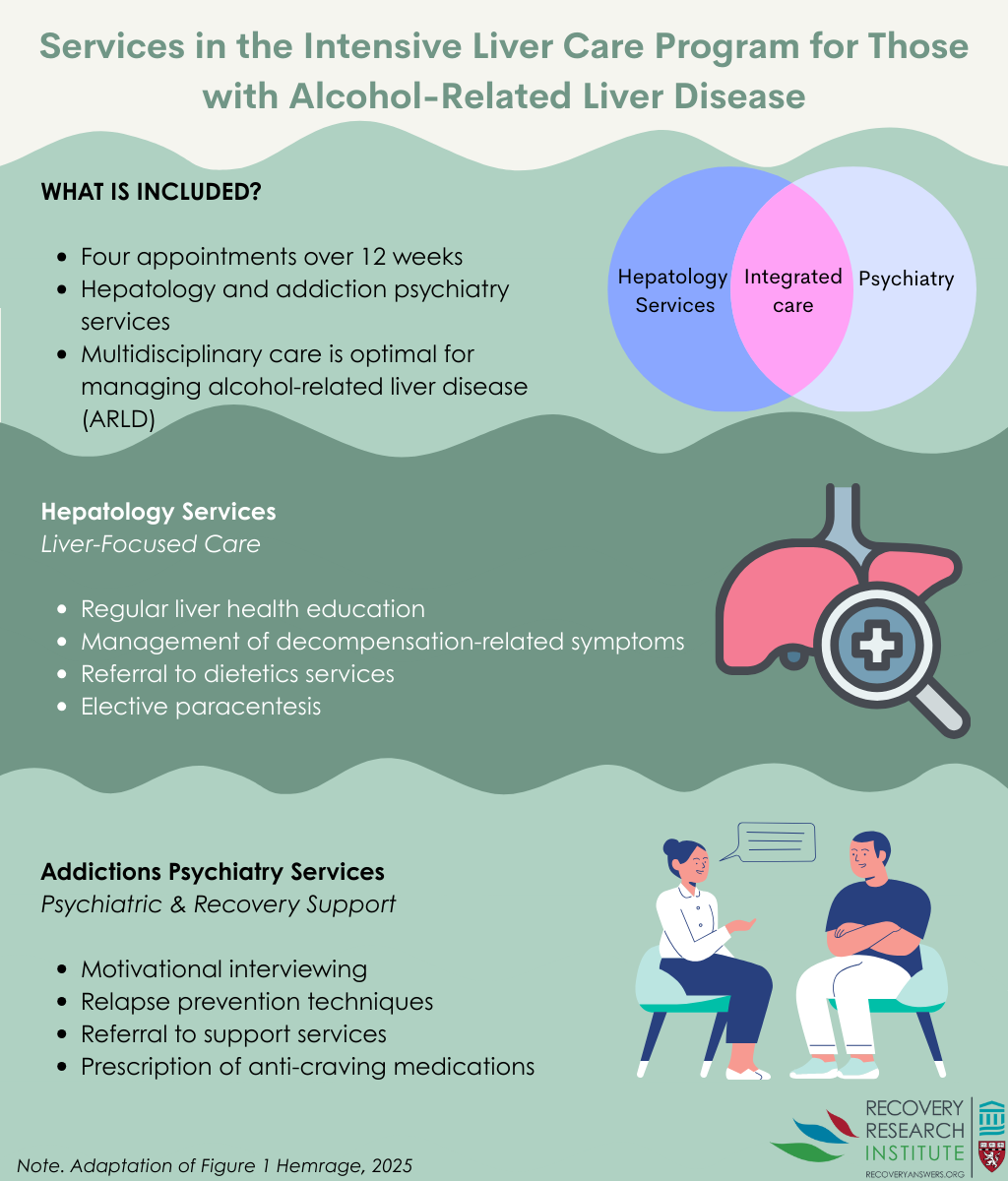
This was a randomized controlled trial with 30 adults with alcohol use disorder and alcohol-related liver disease presenting to the emergency department or admitted to the hospital with an acute liver episode. It compared the effects of providing an integrated liver care intervention plus contingency management to integrated liver care alone measuring effects both after the hospital visit at 12 weeks post-treatment and again 12 weeks later (i.e., 24-week follow-up). Alcohol use disorder was determined by electronic health record or a screening instrument and alcohol-related liver disease was determined by clinical examination or labs. Integrated liver care consisted of 4 outpatient appointments with comprehensive alcohol use disorder care over 12 weeks (see graphic below for more details). Contingency management provided motivational incentives which took the form of vouchers for material goods up to a value of 120 UK pounds based on attendance at the integrated liver care sessions; the greater the number of sessions the patients attended the more vouchers they could earn.
As is common with initial investigations like this study, findings focused both on how feasible the intervention was to deliver as well as preliminary clinical outcomes. Of note, the study did not use formal tests to compare attendance in each group. They also did not examine alcohol-related outcomes of randomized groups, only the participants who went to 2+ appointments in each randomized group – a select group of engaged participants. All outcomes should be considered descriptive and preliminary given this was a small study conducted at an early stage of investigation.
WHAT DID THIS STUDY FIND?
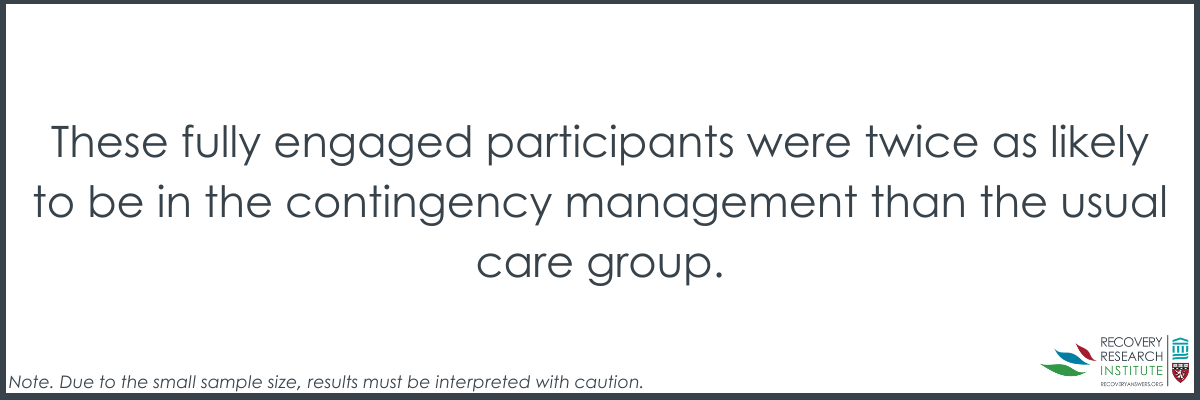
The study was very challenging to implement – 8 participants died in the hospital before discharge and 11 attended 0 or 1 appointment. Because only 11 participants fully engaged with the trial, study results should be interpreted with caution. That said, these fully engaged participants were twice as likely to be in the contingency management than the usual care group.
All 4 usual care participants (who attended 2+ sessions) were abstinent throughout the 24-week study and the 7 contingency management participants had 75% days abstinent 12 weeks post treatment and 71% days abstinent 12 weeks later. While no formal statistical tests were conducted, among the 11 participants with 2+ sessions, alcohol problems declined in both groups while liver functioning improved in both groups.
WHAT ARE THE IMPLICATIONS OF THE STUDY FINDINGS?
This study reflects the challenges of clinical interventions with people with a history of alcohol-related liver disease admitted to the hospital for an acute liver episode, and the substantial lethal risks related to these conditions. Also, because the study sample was small to begin with – not uncommon for these types of early investigations – and many patients died it is difficult to appraise the impact of the contingency management intervention.
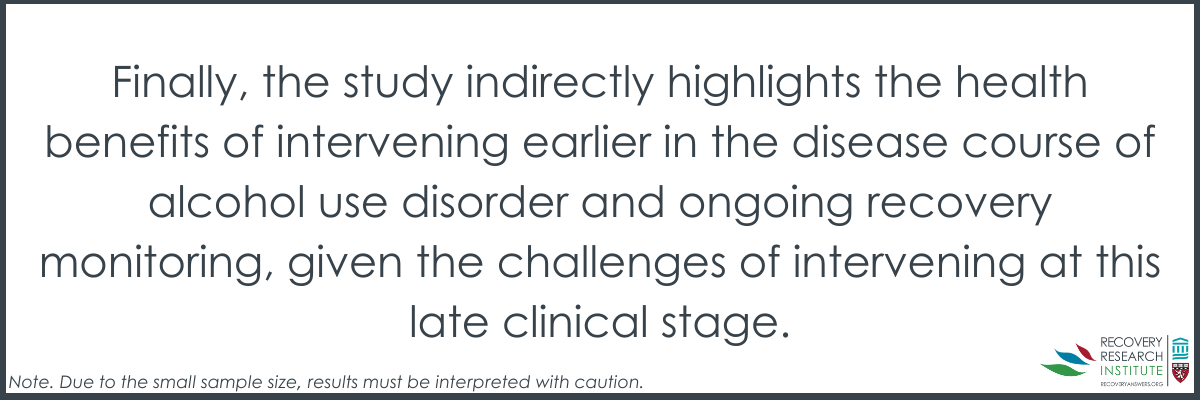
That said, it is somewhat promising that those who received contingency management were twice as likely as those who did not to engage in integrated liver care after their hospital visit. It is possible that this advantage could have been even higher had the monetary incentive been larger than the 120 UK pound reward. This relatively low amount may be related to the stigma around severe, chronic alcohol and other drug use disorders. Future studies may try and increase the monetary incentive to promote greater integrated live care attendance. In addition, future studies might target individuals with higher likelihood of survival and better functioning (e.g., during one’s first alcohol-related hospital consequence), albeit still at major risk for alcohol-related liver conditions, to determine if contingency management improves engagement in care. Finally, the study indirectly highlights the health benefits of intervening earlier in the disease course of alcohol use disorder and ongoing recovery monitoring, given the challenges of intervening at this late clinical stage.
The study did not use formal statistical tests to compare attendance in each group.
The study did not examine alcohol-related outcomes of randomized groups, only the participants who went to 2+ appointments in each randomized group, a select group of engaged participants.
The overall reward was relatively nominal (i.e., a value of 120 UK pounds), pointing potentially to the stigmatized nature of severe, treatment-resistant alcohol use disorder.
BOTTOM LINE
It is challenging to engage people with substantial alcohol-related liver conditions in outpatient care before they require hospital admissions; earlier intervention is needed. For people at this later stage of liver disease, rewards for attending specialized care may help improve engagement and decrease mortality risk. The preliminary results from this small, pilot study should be replicated in larger trials.
For individuals and families seeking recovery: Liver disease is life-threatening. This study showed how challenging it can be to engage people admitted to the hospital with existing alcohol-associated liver disease with outpatient care services. Seeking out empirically-supported treatments as early as possible in the course of alcohol use disorder can be life-saving.
For treatment professionals and treatment systems: This study showed how challenging it can be to engage people admitted to the hospital for liver disease with outpatient care. Screening strategies, addiction consult assessment and treatment linkages, and ongoing assertive recovery management check-ups are needed to interrupt the worsening and potentially lethal course of alcohol use disorder.
For scientists: There has been an alarming rise in alcohol-associated liver disease during the past 20 years. Conducting research with patients who have severely impacted liver functioning is extremely challenging, yet critically important to save lives. Continue to develop and test strategies that can disrupt the negative trajectory of alcohol use disorder as early as possible.
For policy makers: Funding to screen for alcohol use disorder and to link individuals to care as early in the course of alcohol use disorder as possible is needed to reduce the public and clinical health burdens of alcohol use.
This was a randomized controlled trial with 30 adults with alcohol use disorder and alcohol-related liver disease presenting to the emergency department or admitted to the hospital with an acute liver episode. It compared the effects of providing an integrated liver care intervention plus contingency management to integrated liver care alone measuring effects both after the hospital visit at 12 weeks post-treatment and again 12 weeks later (i.e., 24-week follow-up). Alcohol use disorder was determined by electronic health record or a screening instrument and alcohol-related liver disease was determined by clinical examination or labs. Integrated liver care consisted of 4 outpatient appointments with comprehensive alcohol use disorder care over 12 weeks (see graphic below for more details). Contingency management provided motivational incentives which took the form of vouchers for material goods up to a value of 120 UK pounds based on attendance at the integrated liver care sessions; the greater the number of sessions the patients attended the more vouchers they could earn.
As is common with initial investigations like this study, findings focused both on how feasible the intervention was to deliver as well as preliminary clinical outcomes. Of note, the study did not use formal tests to compare attendance in each group. They also did not examine alcohol-related outcomes of randomized groups, only the participants who went to 2+ appointments in each randomized group – a select group of engaged participants. All outcomes should be considered descriptive and preliminary given this was a small study conducted at an early stage of investigation.
WHAT DID THIS STUDY FIND?
The study was very challenging to implement – 8 participants died in the hospital before discharge and 11 attended 0 or 1 appointment. Because only 11 participants fully engaged with the trial, study results should be interpreted with caution. That said, these fully engaged participants were twice as likely to be in the contingency management than the usual care group.
All 4 usual care participants (who attended 2+ sessions) were abstinent throughout the 24-week study and the 7 contingency management participants had 75% days abstinent 12 weeks post treatment and 71% days abstinent 12 weeks later. While no formal statistical tests were conducted, among the 11 participants with 2+ sessions, alcohol problems declined in both groups while liver functioning improved in both groups.
WHAT ARE THE IMPLICATIONS OF THE STUDY FINDINGS?
This study reflects the challenges of clinical interventions with people with a history of alcohol-related liver disease admitted to the hospital for an acute liver episode, and the substantial lethal risks related to these conditions. Also, because the study sample was small to begin with – not uncommon for these types of early investigations – and many patients died it is difficult to appraise the impact of the contingency management intervention.
That said, it is somewhat promising that those who received contingency management were twice as likely as those who did not to engage in integrated liver care after their hospital visit. It is possible that this advantage could have been even higher had the monetary incentive been larger than the 120 UK pound reward. This relatively low amount may be related to the stigma around severe, chronic alcohol and other drug use disorders. Future studies may try and increase the monetary incentive to promote greater integrated live care attendance. In addition, future studies might target individuals with higher likelihood of survival and better functioning (e.g., during one’s first alcohol-related hospital consequence), albeit still at major risk for alcohol-related liver conditions, to determine if contingency management improves engagement in care. Finally, the study indirectly highlights the health benefits of intervening earlier in the disease course of alcohol use disorder and ongoing recovery monitoring, given the challenges of intervening at this late clinical stage.
The study did not use formal statistical tests to compare attendance in each group.
The study did not examine alcohol-related outcomes of randomized groups, only the participants who went to 2+ appointments in each randomized group, a select group of engaged participants.
The overall reward was relatively nominal (i.e., a value of 120 UK pounds), pointing potentially to the stigmatized nature of severe, treatment-resistant alcohol use disorder.
BOTTOM LINE
It is challenging to engage people with substantial alcohol-related liver conditions in outpatient care before they require hospital admissions; earlier intervention is needed. For people at this later stage of liver disease, rewards for attending specialized care may help improve engagement and decrease mortality risk. The preliminary results from this small, pilot study should be replicated in larger trials.
For individuals and families seeking recovery: Liver disease is life-threatening. This study showed how challenging it can be to engage people admitted to the hospital with existing alcohol-associated liver disease with outpatient care services. Seeking out empirically-supported treatments as early as possible in the course of alcohol use disorder can be life-saving.
For treatment professionals and treatment systems: This study showed how challenging it can be to engage people admitted to the hospital for liver disease with outpatient care. Screening strategies, addiction consult assessment and treatment linkages, and ongoing assertive recovery management check-ups are needed to interrupt the worsening and potentially lethal course of alcohol use disorder.
For scientists: There has been an alarming rise in alcohol-associated liver disease during the past 20 years. Conducting research with patients who have severely impacted liver functioning is extremely challenging, yet critically important to save lives. Continue to develop and test strategies that can disrupt the negative trajectory of alcohol use disorder as early as possible.
For policy makers: Funding to screen for alcohol use disorder and to link individuals to care as early in the course of alcohol use disorder as possible is needed to reduce the public and clinical health burdens of alcohol use.
This was a randomized controlled trial with 30 adults with alcohol use disorder and alcohol-related liver disease presenting to the emergency department or admitted to the hospital with an acute liver episode. It compared the effects of providing an integrated liver care intervention plus contingency management to integrated liver care alone measuring effects both after the hospital visit at 12 weeks post-treatment and again 12 weeks later (i.e., 24-week follow-up). Alcohol use disorder was determined by electronic health record or a screening instrument and alcohol-related liver disease was determined by clinical examination or labs. Integrated liver care consisted of 4 outpatient appointments with comprehensive alcohol use disorder care over 12 weeks (see graphic below for more details). Contingency management provided motivational incentives which took the form of vouchers for material goods up to a value of 120 UK pounds based on attendance at the integrated liver care sessions; the greater the number of sessions the patients attended the more vouchers they could earn.
As is common with initial investigations like this study, findings focused both on how feasible the intervention was to deliver as well as preliminary clinical outcomes. Of note, the study did not use formal tests to compare attendance in each group. They also did not examine alcohol-related outcomes of randomized groups, only the participants who went to 2+ appointments in each randomized group – a select group of engaged participants. All outcomes should be considered descriptive and preliminary given this was a small study conducted at an early stage of investigation.
WHAT DID THIS STUDY FIND?
The study was very challenging to implement – 8 participants died in the hospital before discharge and 11 attended 0 or 1 appointment. Because only 11 participants fully engaged with the trial, study results should be interpreted with caution. That said, these fully engaged participants were twice as likely to be in the contingency management than the usual care group.
All 4 usual care participants (who attended 2+ sessions) were abstinent throughout the 24-week study and the 7 contingency management participants had 75% days abstinent 12 weeks post treatment and 71% days abstinent 12 weeks later. While no formal statistical tests were conducted, among the 11 participants with 2+ sessions, alcohol problems declined in both groups while liver functioning improved in both groups.
WHAT ARE THE IMPLICATIONS OF THE STUDY FINDINGS?
This study reflects the challenges of clinical interventions with people with a history of alcohol-related liver disease admitted to the hospital for an acute liver episode, and the substantial lethal risks related to these conditions. Also, because the study sample was small to begin with – not uncommon for these types of early investigations – and many patients died it is difficult to appraise the impact of the contingency management intervention.
That said, it is somewhat promising that those who received contingency management were twice as likely as those who did not to engage in integrated liver care after their hospital visit. It is possible that this advantage could have been even higher had the monetary incentive been larger than the 120 UK pound reward. This relatively low amount may be related to the stigma around severe, chronic alcohol and other drug use disorders. Future studies may try and increase the monetary incentive to promote greater integrated live care attendance. In addition, future studies might target individuals with higher likelihood of survival and better functioning (e.g., during one’s first alcohol-related hospital consequence), albeit still at major risk for alcohol-related liver conditions, to determine if contingency management improves engagement in care. Finally, the study indirectly highlights the health benefits of intervening earlier in the disease course of alcohol use disorder and ongoing recovery monitoring, given the challenges of intervening at this late clinical stage.
The study did not use formal statistical tests to compare attendance in each group.
The study did not examine alcohol-related outcomes of randomized groups, only the participants who went to 2+ appointments in each randomized group, a select group of engaged participants.
The overall reward was relatively nominal (i.e., a value of 120 UK pounds), pointing potentially to the stigmatized nature of severe, treatment-resistant alcohol use disorder.
BOTTOM LINE
It is challenging to engage people with substantial alcohol-related liver conditions in outpatient care before they require hospital admissions; earlier intervention is needed. For people at this later stage of liver disease, rewards for attending specialized care may help improve engagement and decrease mortality risk. The preliminary results from this small, pilot study should be replicated in larger trials.
For individuals and families seeking recovery: Liver disease is life-threatening. This study showed how challenging it can be to engage people admitted to the hospital with existing alcohol-associated liver disease with outpatient care services. Seeking out empirically-supported treatments as early as possible in the course of alcohol use disorder can be life-saving.
For treatment professionals and treatment systems: This study showed how challenging it can be to engage people admitted to the hospital for liver disease with outpatient care. Screening strategies, addiction consult assessment and treatment linkages, and ongoing assertive recovery management check-ups are needed to interrupt the worsening and potentially lethal course of alcohol use disorder.
For scientists: There has been an alarming rise in alcohol-associated liver disease during the past 20 years. Conducting research with patients who have severely impacted liver functioning is extremely challenging, yet critically important to save lives. Continue to develop and test strategies that can disrupt the negative trajectory of alcohol use disorder as early as possible.
For policy makers: Funding to screen for alcohol use disorder and to link individuals to care as early in the course of alcohol use disorder as possible is needed to reduce the public and clinical health burdens of alcohol use.