Online mutual-help group meetings have become commonplace since the COVID-19 pandemic, raising an important question for people seeking recovery support: do online meetings provide at least the same benefits as attending in person?

Online mutual-help group meetings have become commonplace since the COVID-19 pandemic, raising an important question for people seeking recovery support: do online meetings provide at least the same benefits as attending in person?
Mutual-help groups, such as Alcoholics Anonymous and non-12-step options like SMART Recovery, LifeRing Secular Recovery, and Women for Sobriety, are among the most widely used recovery supports for individuals in or seeking recovery from alcohol use disorder.
Decades of research show that in-person participation in mutual-help groups – particularly meeting attendance combined with active group involvement beyond simply attending meetings (e.g., having a sponsor, speaking at meetings, engaging in service or leadership roles) – is associated with improved alcohol outcomes, including higher rates of abstinence and fewer alcohol-related problems. In recent years, however, online mutual-help group meetings have expanded rapidly, especially during and after the COVID-19 pandemic. Online meetings may improve access for individuals who face barriers to in-person attendance, such as geographic isolation, mobility limitations, stigma, or competing work and family responsibilities. Despite their growing use, relatively little is known about whether attending online meetings is as effective as attending in person, or whether combining online and in-person participation yields similar benefits.
A small number of recent studies using the same underlying data source as the present study examined associations between mutual-help group attendance mode and alcohol outcomes. These studies found that any form of mutual-help group participation – online, in-person, or both – was generally associated with better alcohol outcomes, including higher odds of abstinence and lower odds of heavy drinking and alcohol-related problems. However, individuals who attended meetings exclusively online tended to report lower levels of group involvement than those attending in-person only.
Because attendance mode and alcohol outcomes were assessed for overlapping time periods, prior studies could not determine whether attending meetings online or in person influenced later drinking outcomes, or whether individuals’ drinking patterns or recovery goals (e.g., abstinence vs. moderation) influenced how they chose to attend meetings.
In addition, earlier studies did not examine whether differences in alcohol outcomes across attendance modes could be explained by differences in levels of group involvement, nor whether involvement provided similar benefits regardless of how meetings were attended.
This study sought to build on prior work by using pooled longitudinal data to examine whether mutual-help group attendance mode (in-person only, online only, both) predicted later alcohol outcomes, and whether any differences were explained by levels of mutual-help group involvement. The researchers hypothesized that individuals who attended meetings exclusively online would experience poorer alcohol-related outcomes compared to those who attended meetings in person, and that these differences would be explained by lower levels of mutual-help group involvement among online-only attendees. The study also explored whether being actively involved in a mutual-help group was equally beneficial for alcohol outcomes, regardless of whether meetings were attended online, in person, or through both formats.
This study used pooled longitudinal data from 2 cohorts (2015 and 2021) of the Peer Alternatives in Addiction Study. The combined sample included 1,152 adults with a lifetime diagnosis of alcohol use disorder who had attended at least 1 mutual-help group meeting in the previous 30 days at baseline. Participants completed online surveys at baseline and again at 6-month (n = 966) and 12-month (n = 962) follow-ups.
Mutual-help group measures included past 30-day in-person and online meeting attendance and past 30-day mutual-help group involvement. Involvement was assessed using 5 dichotomous (yes/no) items capturing both meeting attendance frequency (weekly vs. less than weekly/none) and participation in core group activities adapted from the Alcoholics Anonymous Affiliation Scale (e.g., having a home group, having close friends or a sponsor to call on for help, volunteering or providing service at a meeting in the past 30 days, and leading meetings in past 30 days). Meeting attendance mode was categorized based on past-30-day meeting attendance as in-person only, online only, or both. A total group involvement score was calculated by averaging responses across the 5 involvement items. Alcohol outcomes were assessed at all timepoints and included self-reported alcohol abstinence (abstinent or used alcohol in past 6 months), heavy drinking (number of days during the past month consumed 4 or more drinks for women or 5 or more drinks for men; recoded to 1 or more or 0 days), and alcohol-related problems (any or none in the past 6 months, measured using 5 items from the Short Index of Alcohol Problems).
For the analyses, the study examined whether baseline demographic characteristics (age, race/ethnicity, marital status, education, employment status, annual household income) differed by mutual-help group attendance mode (online only, in-person only, both in-person and online). They then analyzed whether attendance mode and involvement at 1 time point predicted alcohol outcomes at the next assessment, while accounting for relevant demographic and clinical factors, study cohort (2015 or 2021), survey wave (6 or 12 months), and baseline alcohol outcomes. This approach strengthened confidence in the findings by ensuring that meeting attendance mode and involvement occurred before the alcohol outcomes being examined.
Alcohol outcomes differed by mutual-help group attendance mode
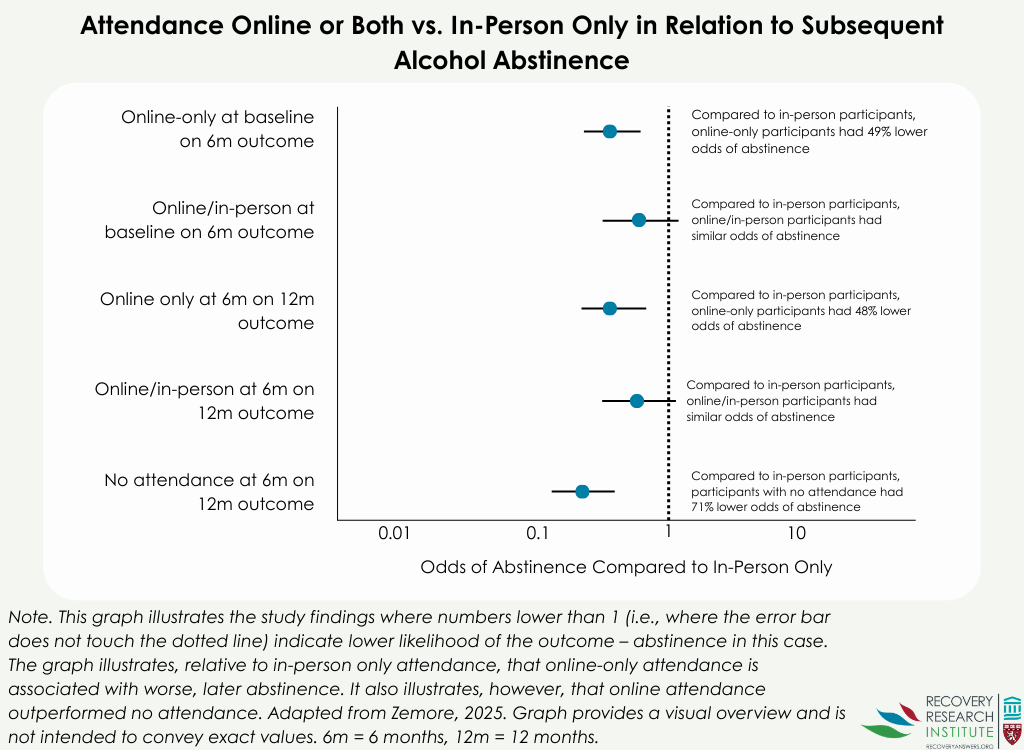
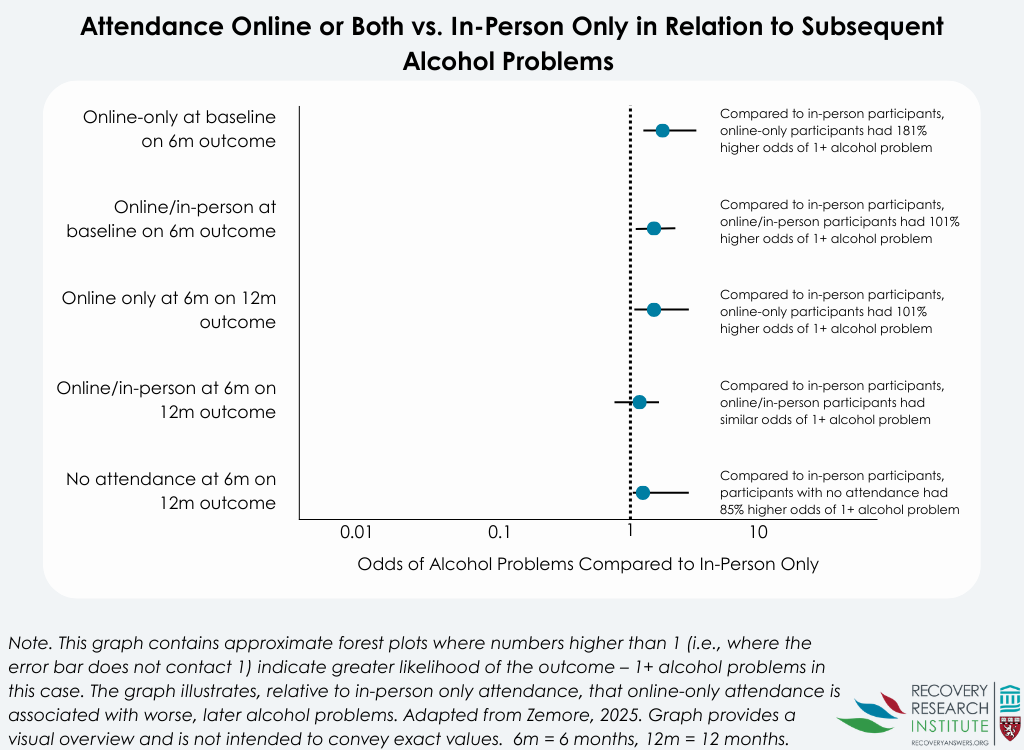
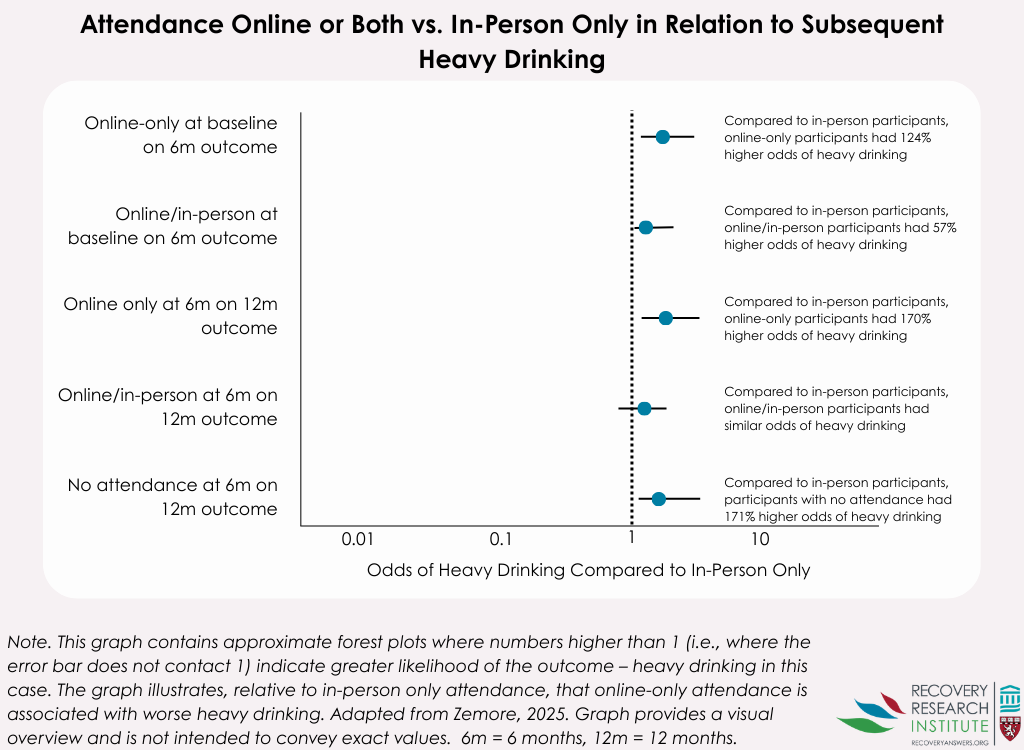
Compared to individuals who attended meetings in person only, those who attended meetings exclusively online experienced poorer alcohol outcomes at both the 6- and 12-month follow-ups. Specifically, online-only attendees were more than twice as likely to report heavy drinking and alcohol problems at both 6 and 12 months and were about half as likely to be abstinent compared to those who attended meetings in person only (see graphs below). Individuals who attended meetings using both online and in-person formats (online/in-person) showed a more mixed pattern. At the 6-month follow-up, online/in-person group attendees had similar abstinence but were about twice as likely to report alcohol problems and more than 1.5 times as likely to report heavy drinking compared to in-person only attendees. By the 12-month follow-up, however, all alcohol outcomes among online/in-person attendees were comparable to those attending in-person only. That said, outcomes were better for online attendees compared to no attendance on alcohol abstinence and heavy drinking, but not alcohol problems.
Differences in outcomes were explained by levels of mutual-help group involvement
Consistent with past studies, participants who attended online meetings only, reported significantly lower levels of group involvement than those attending meetings in person only. In contrast, the online/in-person group reported involvement levels similar to those of in-person only attendees. Mediation analyses showed that lower active mutual-help group involvement among online-only attendees partially explained their worse alcohol outcomes. Importantly, higher involvement was associated with better alcohol outcomes regardless of attendance mode. On the averaged mutual-help group involvement scale, controlling for other variables, going from 0 to 1 (i.e., meeting all 5 involvement indicators) increased the odds of abstinence almost 4-fold (3.81). It also was associated with significantly lower likelihood of heavy drinking and (non-significantly) lower likelihood alcohol-related problems.
Attendance mode was associated with differences in participant characteristics
Attendance mode was also related to baseline demographic and clinical characteristics. Compared to in-person only attendees, those attending meetings online only or through both formats tended to be younger, more likely to belong to a racial or ethnic minority group, and higher on lifetime alcohol use disorder severity. They were also less likely to be abstinent at baseline. Online-only attendees differed further in that they were more highly educated, more likely to attend non-12-step mutual-help groups (Women for Sobriety and LifeRing), less likely to report prior specialty treatment for alcohol problems, and less likely to endorse a goal of lifetime abstinence.
Mutual-help group attendance overall is associated with meaningful improvements in alcohol-related outcomes over time, but attendance mode may matter. Adults with alcohol use disorder who attended meetings in person only or through a combination of in-person and online formats experienced better alcohol outcomes than those who attended meetings exclusively online. These findings build on prior work showing that participation in any mutual-help group format is generally associated with improved outcomes. Specifically, individuals attending meetings online only were 2-3 times more likely to report heavy drinking and alcohol-related problems at follow-ups and were less likely to be abstinent compared to those attending in-person meetings only. Individuals who attended meetings using both online and in-person formats showed a more mixed pattern, with poorer outcomes relative to in-person only attendees at 6 months but comparable outcomes by 12 months. Together, findings here suggest that online meetings alone may be less protective for some individuals, whereas incorporating in-person attendance may help preserve or strengthen the recovery-related benefits of mutual-help group participation. Of note, online-only attendance was more common among participants attending LifeRing and Women for Sobriety, less common among those ever attending treatment, and less common among those with an abstinence goal.
Findings do, however, clarify why attendance mode is associated with different outcomes by highlighting the central role of mutual-help group involvement. Participants who attended meetings exclusively online reported significantly lower levels of involvement than those attending meetings in person or through both formats, a pattern consistent with prior research. Mediation analyses showed that these lower levels of involvement largely explained the poorer alcohol outcomes observed among online-only attendees. While analyses controlled for many predictors of outcome – to try and establish a causal relationship between attendance mode and alcohol outcomes – they did not control for abstinence vs. non-abstinence goals. While this was not examined in the study, it is possible that this factor could also explain, in part, worse outcomes for the online-only group.
Importantly, higher involvement was associated with better alcohol outcomes regardless of attendance mode, reinforcing prior evidence that mutual-help group involvement predicts better recovery-related outcomes beyond meeting attendance alone. Although online meetings may be helpful for individuals who are able to become actively involved (e.g., obtaining and working with a sponsor, etc.), achieving this level of engagement may be more challenging without in-person participation. In part, this may because at in-person meetings, there are greater opportunities for informal social connection – the ones that are made prior to and following the actual meeting (the so-called “meeting before the meeting” and “the meeting after the meeting”). Online meetings do not lend themselves well to such pre- and post-meeting side conversations, because everyone is always together typically on one screen making this very difficult. Thus, obtaining or chatting with a sponsor or exchanging phone numbers with other participants is more difficult to achieve. Such results underscore the importance of strategies that actively promote more active involvement among online attendees, such as encouraging regular attendance, finding a way to foster peer connections outside of meetings, and expanding opportunities for service and leadership in the virtual settings.
Taken together, these findings indicate that in-person mutual-help group attendance may be more useful, on average, than exclusive reliance on online meetings for supporting recovery from alcohol use disorder. That said, online meetings may serve as an optimal choice for some – at least initially. Perhaps to find out more about the nature and scope of such meetings, without investing in travel time. Online meeting attendance may also serve as a useful supplement for others who are also attending in person. This study suggests that, all other things being equal, incorporating some in-person participation appears to help individuals achieve higher levels of engagement and is associated with more favorable alcohol outcomes over time. When feasible, individuals may benefit from including in-person meetings as part of their recovery support.
For adults with alcohol use disorder, participation in mutual-help groups is associated with improved alcohol-related outcomes over time; however, how individuals attend these groups matters. Individuals who attended meetings in person only or through both in-person and online formats experienced more favorable alcohol outcomes than those who attended meetings exclusively online. Importantly, these differences were explained by lower levels of mutual-help group involvement among online-only participants (e.g., having a sponsor/mentor or engaging in service or leadership roles). While online meetings may increase accessibility and provide meaningful recovery support, exclusive reliance on online meetings may make it more difficult for some individuals to achieve the level of involvement that appears critical for maximizing recovery-related benefits. Incorporating in-person participation in addition to online, may help maximize the benefits of mutual-help group participation.
Zemore, S. E., Li, L., Lui, C. K., Timko, C., Martinez, P., & Mericle, A. (2025). Effectiveness of online mutual-help group attendance for adults with alcohol use disorders in the pooled, longitudinal, US National PAL Study cohorts. Drug and Alcohol Dependence, 277. doi: 10.1016/j.drugalcdep.2025.112919.
Mutual-help groups, such as Alcoholics Anonymous and non-12-step options like SMART Recovery, LifeRing Secular Recovery, and Women for Sobriety, are among the most widely used recovery supports for individuals in or seeking recovery from alcohol use disorder.
Decades of research show that in-person participation in mutual-help groups – particularly meeting attendance combined with active group involvement beyond simply attending meetings (e.g., having a sponsor, speaking at meetings, engaging in service or leadership roles) – is associated with improved alcohol outcomes, including higher rates of abstinence and fewer alcohol-related problems. In recent years, however, online mutual-help group meetings have expanded rapidly, especially during and after the COVID-19 pandemic. Online meetings may improve access for individuals who face barriers to in-person attendance, such as geographic isolation, mobility limitations, stigma, or competing work and family responsibilities. Despite their growing use, relatively little is known about whether attending online meetings is as effective as attending in person, or whether combining online and in-person participation yields similar benefits.
A small number of recent studies using the same underlying data source as the present study examined associations between mutual-help group attendance mode and alcohol outcomes. These studies found that any form of mutual-help group participation – online, in-person, or both – was generally associated with better alcohol outcomes, including higher odds of abstinence and lower odds of heavy drinking and alcohol-related problems. However, individuals who attended meetings exclusively online tended to report lower levels of group involvement than those attending in-person only.
Because attendance mode and alcohol outcomes were assessed for overlapping time periods, prior studies could not determine whether attending meetings online or in person influenced later drinking outcomes, or whether individuals’ drinking patterns or recovery goals (e.g., abstinence vs. moderation) influenced how they chose to attend meetings.
In addition, earlier studies did not examine whether differences in alcohol outcomes across attendance modes could be explained by differences in levels of group involvement, nor whether involvement provided similar benefits regardless of how meetings were attended.
This study sought to build on prior work by using pooled longitudinal data to examine whether mutual-help group attendance mode (in-person only, online only, both) predicted later alcohol outcomes, and whether any differences were explained by levels of mutual-help group involvement. The researchers hypothesized that individuals who attended meetings exclusively online would experience poorer alcohol-related outcomes compared to those who attended meetings in person, and that these differences would be explained by lower levels of mutual-help group involvement among online-only attendees. The study also explored whether being actively involved in a mutual-help group was equally beneficial for alcohol outcomes, regardless of whether meetings were attended online, in person, or through both formats.
This study used pooled longitudinal data from 2 cohorts (2015 and 2021) of the Peer Alternatives in Addiction Study. The combined sample included 1,152 adults with a lifetime diagnosis of alcohol use disorder who had attended at least 1 mutual-help group meeting in the previous 30 days at baseline. Participants completed online surveys at baseline and again at 6-month (n = 966) and 12-month (n = 962) follow-ups.
Mutual-help group measures included past 30-day in-person and online meeting attendance and past 30-day mutual-help group involvement. Involvement was assessed using 5 dichotomous (yes/no) items capturing both meeting attendance frequency (weekly vs. less than weekly/none) and participation in core group activities adapted from the Alcoholics Anonymous Affiliation Scale (e.g., having a home group, having close friends or a sponsor to call on for help, volunteering or providing service at a meeting in the past 30 days, and leading meetings in past 30 days). Meeting attendance mode was categorized based on past-30-day meeting attendance as in-person only, online only, or both. A total group involvement score was calculated by averaging responses across the 5 involvement items. Alcohol outcomes were assessed at all timepoints and included self-reported alcohol abstinence (abstinent or used alcohol in past 6 months), heavy drinking (number of days during the past month consumed 4 or more drinks for women or 5 or more drinks for men; recoded to 1 or more or 0 days), and alcohol-related problems (any or none in the past 6 months, measured using 5 items from the Short Index of Alcohol Problems).
For the analyses, the study examined whether baseline demographic characteristics (age, race/ethnicity, marital status, education, employment status, annual household income) differed by mutual-help group attendance mode (online only, in-person only, both in-person and online). They then analyzed whether attendance mode and involvement at 1 time point predicted alcohol outcomes at the next assessment, while accounting for relevant demographic and clinical factors, study cohort (2015 or 2021), survey wave (6 or 12 months), and baseline alcohol outcomes. This approach strengthened confidence in the findings by ensuring that meeting attendance mode and involvement occurred before the alcohol outcomes being examined.
Alcohol outcomes differed by mutual-help group attendance mode
Compared to individuals who attended meetings in person only, those who attended meetings exclusively online experienced poorer alcohol outcomes at both the 6- and 12-month follow-ups. Specifically, online-only attendees were more than twice as likely to report heavy drinking and alcohol problems at both 6 and 12 months and were about half as likely to be abstinent compared to those who attended meetings in person only (see graphs below). Individuals who attended meetings using both online and in-person formats (online/in-person) showed a more mixed pattern. At the 6-month follow-up, online/in-person group attendees had similar abstinence but were about twice as likely to report alcohol problems and more than 1.5 times as likely to report heavy drinking compared to in-person only attendees. By the 12-month follow-up, however, all alcohol outcomes among online/in-person attendees were comparable to those attending in-person only. That said, outcomes were better for online attendees compared to no attendance on alcohol abstinence and heavy drinking, but not alcohol problems.
Differences in outcomes were explained by levels of mutual-help group involvement
Consistent with past studies, participants who attended online meetings only, reported significantly lower levels of group involvement than those attending meetings in person only. In contrast, the online/in-person group reported involvement levels similar to those of in-person only attendees. Mediation analyses showed that lower active mutual-help group involvement among online-only attendees partially explained their worse alcohol outcomes. Importantly, higher involvement was associated with better alcohol outcomes regardless of attendance mode. On the averaged mutual-help group involvement scale, controlling for other variables, going from 0 to 1 (i.e., meeting all 5 involvement indicators) increased the odds of abstinence almost 4-fold (3.81). It also was associated with significantly lower likelihood of heavy drinking and (non-significantly) lower likelihood alcohol-related problems.
Attendance mode was associated with differences in participant characteristics
Attendance mode was also related to baseline demographic and clinical characteristics. Compared to in-person only attendees, those attending meetings online only or through both formats tended to be younger, more likely to belong to a racial or ethnic minority group, and higher on lifetime alcohol use disorder severity. They were also less likely to be abstinent at baseline. Online-only attendees differed further in that they were more highly educated, more likely to attend non-12-step mutual-help groups (Women for Sobriety and LifeRing), less likely to report prior specialty treatment for alcohol problems, and less likely to endorse a goal of lifetime abstinence.
Mutual-help group attendance overall is associated with meaningful improvements in alcohol-related outcomes over time, but attendance mode may matter. Adults with alcohol use disorder who attended meetings in person only or through a combination of in-person and online formats experienced better alcohol outcomes than those who attended meetings exclusively online. These findings build on prior work showing that participation in any mutual-help group format is generally associated with improved outcomes. Specifically, individuals attending meetings online only were 2-3 times more likely to report heavy drinking and alcohol-related problems at follow-ups and were less likely to be abstinent compared to those attending in-person meetings only. Individuals who attended meetings using both online and in-person formats showed a more mixed pattern, with poorer outcomes relative to in-person only attendees at 6 months but comparable outcomes by 12 months. Together, findings here suggest that online meetings alone may be less protective for some individuals, whereas incorporating in-person attendance may help preserve or strengthen the recovery-related benefits of mutual-help group participation. Of note, online-only attendance was more common among participants attending LifeRing and Women for Sobriety, less common among those ever attending treatment, and less common among those with an abstinence goal.
Findings do, however, clarify why attendance mode is associated with different outcomes by highlighting the central role of mutual-help group involvement. Participants who attended meetings exclusively online reported significantly lower levels of involvement than those attending meetings in person or through both formats, a pattern consistent with prior research. Mediation analyses showed that these lower levels of involvement largely explained the poorer alcohol outcomes observed among online-only attendees. While analyses controlled for many predictors of outcome – to try and establish a causal relationship between attendance mode and alcohol outcomes – they did not control for abstinence vs. non-abstinence goals. While this was not examined in the study, it is possible that this factor could also explain, in part, worse outcomes for the online-only group.
Importantly, higher involvement was associated with better alcohol outcomes regardless of attendance mode, reinforcing prior evidence that mutual-help group involvement predicts better recovery-related outcomes beyond meeting attendance alone. Although online meetings may be helpful for individuals who are able to become actively involved (e.g., obtaining and working with a sponsor, etc.), achieving this level of engagement may be more challenging without in-person participation. In part, this may because at in-person meetings, there are greater opportunities for informal social connection – the ones that are made prior to and following the actual meeting (the so-called “meeting before the meeting” and “the meeting after the meeting”). Online meetings do not lend themselves well to such pre- and post-meeting side conversations, because everyone is always together typically on one screen making this very difficult. Thus, obtaining or chatting with a sponsor or exchanging phone numbers with other participants is more difficult to achieve. Such results underscore the importance of strategies that actively promote more active involvement among online attendees, such as encouraging regular attendance, finding a way to foster peer connections outside of meetings, and expanding opportunities for service and leadership in the virtual settings.
Taken together, these findings indicate that in-person mutual-help group attendance may be more useful, on average, than exclusive reliance on online meetings for supporting recovery from alcohol use disorder. That said, online meetings may serve as an optimal choice for some – at least initially. Perhaps to find out more about the nature and scope of such meetings, without investing in travel time. Online meeting attendance may also serve as a useful supplement for others who are also attending in person. This study suggests that, all other things being equal, incorporating some in-person participation appears to help individuals achieve higher levels of engagement and is associated with more favorable alcohol outcomes over time. When feasible, individuals may benefit from including in-person meetings as part of their recovery support.
For adults with alcohol use disorder, participation in mutual-help groups is associated with improved alcohol-related outcomes over time; however, how individuals attend these groups matters. Individuals who attended meetings in person only or through both in-person and online formats experienced more favorable alcohol outcomes than those who attended meetings exclusively online. Importantly, these differences were explained by lower levels of mutual-help group involvement among online-only participants (e.g., having a sponsor/mentor or engaging in service or leadership roles). While online meetings may increase accessibility and provide meaningful recovery support, exclusive reliance on online meetings may make it more difficult for some individuals to achieve the level of involvement that appears critical for maximizing recovery-related benefits. Incorporating in-person participation in addition to online, may help maximize the benefits of mutual-help group participation.
Zemore, S. E., Li, L., Lui, C. K., Timko, C., Martinez, P., & Mericle, A. (2025). Effectiveness of online mutual-help group attendance for adults with alcohol use disorders in the pooled, longitudinal, US National PAL Study cohorts. Drug and Alcohol Dependence, 277. doi: 10.1016/j.drugalcdep.2025.112919.







Mutual-help groups, such as Alcoholics Anonymous and non-12-step options like SMART Recovery, LifeRing Secular Recovery, and Women for Sobriety, are among the most widely used recovery supports for individuals in or seeking recovery from alcohol use disorder.
Decades of research show that in-person participation in mutual-help groups – particularly meeting attendance combined with active group involvement beyond simply attending meetings (e.g., having a sponsor, speaking at meetings, engaging in service or leadership roles) – is associated with improved alcohol outcomes, including higher rates of abstinence and fewer alcohol-related problems. In recent years, however, online mutual-help group meetings have expanded rapidly, especially during and after the COVID-19 pandemic. Online meetings may improve access for individuals who face barriers to in-person attendance, such as geographic isolation, mobility limitations, stigma, or competing work and family responsibilities. Despite their growing use, relatively little is known about whether attending online meetings is as effective as attending in person, or whether combining online and in-person participation yields similar benefits.
A small number of recent studies using the same underlying data source as the present study examined associations between mutual-help group attendance mode and alcohol outcomes. These studies found that any form of mutual-help group participation – online, in-person, or both – was generally associated with better alcohol outcomes, including higher odds of abstinence and lower odds of heavy drinking and alcohol-related problems. However, individuals who attended meetings exclusively online tended to report lower levels of group involvement than those attending in-person only.
Because attendance mode and alcohol outcomes were assessed for overlapping time periods, prior studies could not determine whether attending meetings online or in person influenced later drinking outcomes, or whether individuals’ drinking patterns or recovery goals (e.g., abstinence vs. moderation) influenced how they chose to attend meetings.
In addition, earlier studies did not examine whether differences in alcohol outcomes across attendance modes could be explained by differences in levels of group involvement, nor whether involvement provided similar benefits regardless of how meetings were attended.
This study sought to build on prior work by using pooled longitudinal data to examine whether mutual-help group attendance mode (in-person only, online only, both) predicted later alcohol outcomes, and whether any differences were explained by levels of mutual-help group involvement. The researchers hypothesized that individuals who attended meetings exclusively online would experience poorer alcohol-related outcomes compared to those who attended meetings in person, and that these differences would be explained by lower levels of mutual-help group involvement among online-only attendees. The study also explored whether being actively involved in a mutual-help group was equally beneficial for alcohol outcomes, regardless of whether meetings were attended online, in person, or through both formats.
This study used pooled longitudinal data from 2 cohorts (2015 and 2021) of the Peer Alternatives in Addiction Study. The combined sample included 1,152 adults with a lifetime diagnosis of alcohol use disorder who had attended at least 1 mutual-help group meeting in the previous 30 days at baseline. Participants completed online surveys at baseline and again at 6-month (n = 966) and 12-month (n = 962) follow-ups.
Mutual-help group measures included past 30-day in-person and online meeting attendance and past 30-day mutual-help group involvement. Involvement was assessed using 5 dichotomous (yes/no) items capturing both meeting attendance frequency (weekly vs. less than weekly/none) and participation in core group activities adapted from the Alcoholics Anonymous Affiliation Scale (e.g., having a home group, having close friends or a sponsor to call on for help, volunteering or providing service at a meeting in the past 30 days, and leading meetings in past 30 days). Meeting attendance mode was categorized based on past-30-day meeting attendance as in-person only, online only, or both. A total group involvement score was calculated by averaging responses across the 5 involvement items. Alcohol outcomes were assessed at all timepoints and included self-reported alcohol abstinence (abstinent or used alcohol in past 6 months), heavy drinking (number of days during the past month consumed 4 or more drinks for women or 5 or more drinks for men; recoded to 1 or more or 0 days), and alcohol-related problems (any or none in the past 6 months, measured using 5 items from the Short Index of Alcohol Problems).
For the analyses, the study examined whether baseline demographic characteristics (age, race/ethnicity, marital status, education, employment status, annual household income) differed by mutual-help group attendance mode (online only, in-person only, both in-person and online). They then analyzed whether attendance mode and involvement at 1 time point predicted alcohol outcomes at the next assessment, while accounting for relevant demographic and clinical factors, study cohort (2015 or 2021), survey wave (6 or 12 months), and baseline alcohol outcomes. This approach strengthened confidence in the findings by ensuring that meeting attendance mode and involvement occurred before the alcohol outcomes being examined.
Alcohol outcomes differed by mutual-help group attendance mode
Compared to individuals who attended meetings in person only, those who attended meetings exclusively online experienced poorer alcohol outcomes at both the 6- and 12-month follow-ups. Specifically, online-only attendees were more than twice as likely to report heavy drinking and alcohol problems at both 6 and 12 months and were about half as likely to be abstinent compared to those who attended meetings in person only (see graphs below). Individuals who attended meetings using both online and in-person formats (online/in-person) showed a more mixed pattern. At the 6-month follow-up, online/in-person group attendees had similar abstinence but were about twice as likely to report alcohol problems and more than 1.5 times as likely to report heavy drinking compared to in-person only attendees. By the 12-month follow-up, however, all alcohol outcomes among online/in-person attendees were comparable to those attending in-person only. That said, outcomes were better for online attendees compared to no attendance on alcohol abstinence and heavy drinking, but not alcohol problems.
Differences in outcomes were explained by levels of mutual-help group involvement
Consistent with past studies, participants who attended online meetings only, reported significantly lower levels of group involvement than those attending meetings in person only. In contrast, the online/in-person group reported involvement levels similar to those of in-person only attendees. Mediation analyses showed that lower active mutual-help group involvement among online-only attendees partially explained their worse alcohol outcomes. Importantly, higher involvement was associated with better alcohol outcomes regardless of attendance mode. On the averaged mutual-help group involvement scale, controlling for other variables, going from 0 to 1 (i.e., meeting all 5 involvement indicators) increased the odds of abstinence almost 4-fold (3.81). It also was associated with significantly lower likelihood of heavy drinking and (non-significantly) lower likelihood alcohol-related problems.
Attendance mode was associated with differences in participant characteristics
Attendance mode was also related to baseline demographic and clinical characteristics. Compared to in-person only attendees, those attending meetings online only or through both formats tended to be younger, more likely to belong to a racial or ethnic minority group, and higher on lifetime alcohol use disorder severity. They were also less likely to be abstinent at baseline. Online-only attendees differed further in that they were more highly educated, more likely to attend non-12-step mutual-help groups (Women for Sobriety and LifeRing), less likely to report prior specialty treatment for alcohol problems, and less likely to endorse a goal of lifetime abstinence.
Mutual-help group attendance overall is associated with meaningful improvements in alcohol-related outcomes over time, but attendance mode may matter. Adults with alcohol use disorder who attended meetings in person only or through a combination of in-person and online formats experienced better alcohol outcomes than those who attended meetings exclusively online. These findings build on prior work showing that participation in any mutual-help group format is generally associated with improved outcomes. Specifically, individuals attending meetings online only were 2-3 times more likely to report heavy drinking and alcohol-related problems at follow-ups and were less likely to be abstinent compared to those attending in-person meetings only. Individuals who attended meetings using both online and in-person formats showed a more mixed pattern, with poorer outcomes relative to in-person only attendees at 6 months but comparable outcomes by 12 months. Together, findings here suggest that online meetings alone may be less protective for some individuals, whereas incorporating in-person attendance may help preserve or strengthen the recovery-related benefits of mutual-help group participation. Of note, online-only attendance was more common among participants attending LifeRing and Women for Sobriety, less common among those ever attending treatment, and less common among those with an abstinence goal.
Findings do, however, clarify why attendance mode is associated with different outcomes by highlighting the central role of mutual-help group involvement. Participants who attended meetings exclusively online reported significantly lower levels of involvement than those attending meetings in person or through both formats, a pattern consistent with prior research. Mediation analyses showed that these lower levels of involvement largely explained the poorer alcohol outcomes observed among online-only attendees. While analyses controlled for many predictors of outcome – to try and establish a causal relationship between attendance mode and alcohol outcomes – they did not control for abstinence vs. non-abstinence goals. While this was not examined in the study, it is possible that this factor could also explain, in part, worse outcomes for the online-only group.
Importantly, higher involvement was associated with better alcohol outcomes regardless of attendance mode, reinforcing prior evidence that mutual-help group involvement predicts better recovery-related outcomes beyond meeting attendance alone. Although online meetings may be helpful for individuals who are able to become actively involved (e.g., obtaining and working with a sponsor, etc.), achieving this level of engagement may be more challenging without in-person participation. In part, this may because at in-person meetings, there are greater opportunities for informal social connection – the ones that are made prior to and following the actual meeting (the so-called “meeting before the meeting” and “the meeting after the meeting”). Online meetings do not lend themselves well to such pre- and post-meeting side conversations, because everyone is always together typically on one screen making this very difficult. Thus, obtaining or chatting with a sponsor or exchanging phone numbers with other participants is more difficult to achieve. Such results underscore the importance of strategies that actively promote more active involvement among online attendees, such as encouraging regular attendance, finding a way to foster peer connections outside of meetings, and expanding opportunities for service and leadership in the virtual settings.
Taken together, these findings indicate that in-person mutual-help group attendance may be more useful, on average, than exclusive reliance on online meetings for supporting recovery from alcohol use disorder. That said, online meetings may serve as an optimal choice for some – at least initially. Perhaps to find out more about the nature and scope of such meetings, without investing in travel time. Online meeting attendance may also serve as a useful supplement for others who are also attending in person. This study suggests that, all other things being equal, incorporating some in-person participation appears to help individuals achieve higher levels of engagement and is associated with more favorable alcohol outcomes over time. When feasible, individuals may benefit from including in-person meetings as part of their recovery support.
For adults with alcohol use disorder, participation in mutual-help groups is associated with improved alcohol-related outcomes over time; however, how individuals attend these groups matters. Individuals who attended meetings in person only or through both in-person and online formats experienced more favorable alcohol outcomes than those who attended meetings exclusively online. Importantly, these differences were explained by lower levels of mutual-help group involvement among online-only participants (e.g., having a sponsor/mentor or engaging in service or leadership roles). While online meetings may increase accessibility and provide meaningful recovery support, exclusive reliance on online meetings may make it more difficult for some individuals to achieve the level of involvement that appears critical for maximizing recovery-related benefits. Incorporating in-person participation in addition to online, may help maximize the benefits of mutual-help group participation.
Zemore, S. E., Li, L., Lui, C. K., Timko, C., Martinez, P., & Mericle, A. (2025). Effectiveness of online mutual-help group attendance for adults with alcohol use disorders in the pooled, longitudinal, US National PAL Study cohorts. Drug and Alcohol Dependence, 277. doi: 10.1016/j.drugalcdep.2025.112919.