WHAT PROBLEM DOES THIS STUDY ADDRESS?
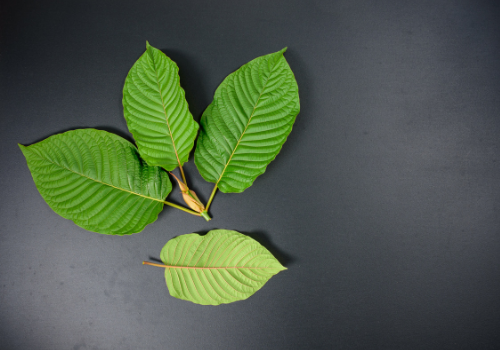
Kratom is a federally legal, widely available herbal supplement that is unregulated in about half of states, which some people use to manage conditions such as anxiety, depression, pain, and substance use disorder. People commonly report stimulant-like effects at lower doses and opioid- or sedative-like effects at higher doses, although effects vary across products and individuals. This dose-dependent pattern has not been firmly established in studies. In addition, some individuals in substance use disorder recovery use kratom as a substitute for drugs, in particular for opioids like heroin. Although some people report using kratom to improve mood or relieve substance-related cravings and withdrawal symptoms, research has not established its safety and effectiveness for treating mood disorders or substance use disorders. The US Food and Drug Administration has warned about kratom’s potential for addiction, liver damage, and seizures. In addition, lack of uniform regulation has resulted in the availability of higher-potency, synthetically-derived kratom products like 7-hydroxymitragynine (commonly referred to as 7-OH) and elevated risk of contaminant exposure, which can lead to severe medical outcomes including death. This study estimated how common kratom use is in the US and whether people who use kratom are more likely to report substance use disorder or mental health problems.
HOW WAS THIS STUDY CONDUCTED?
This was a repeated cross-sectional analysis of National Survey on Drug Use and Health survey data from 2021-2024. Each year’s survey reaches a new group of people, so this study could describe broader changes over time but could not follow individuals. The National Survey on Drug Use and Health is an annual survey administered by the Substance Abuse and Mental Health Services Administration (best known by the acronym SAMHSA) to US-based individuals aged 12 or more years. Participant data are collected via a multistage process including in-person interviewing and web-based survey administration. About 232,000 people took part. About half of those contacted completed the survey; all answers were self-reported.
Participants were asked about lifetime and past-year use of kratom in any form, including powder, pills, or leaf. The article did not report a separate assessment of 7-OH products. Past-year mental health was assessed via the psychiatric module of the National Survey on Drug Use and Health. People were asked about major depression, serious psychological distress, and suicidal thoughts in the past year. Past-year serious psychological distress was assessed among adults aged 18 or older using National Survey on Drug Use and Health’s psychiatric assessment module. The National Survey on Drug Use and Health defines this outcome using a score of 13 or higher on the 6-item Kessler Psychological Distress Scale. In addition, participants reported past-year nonmedical substance use (including cannabis, stimulants, and opioids). Substance use disorder was estimated from survey questions about symptoms, not from a clinical interview and diagnosis. Results for mental health and substance use compared people who used kratom with people who never had, and accounted for differences in age, sex, race, income, education, and where people live.
WHAT DID THIS STUDY FIND?
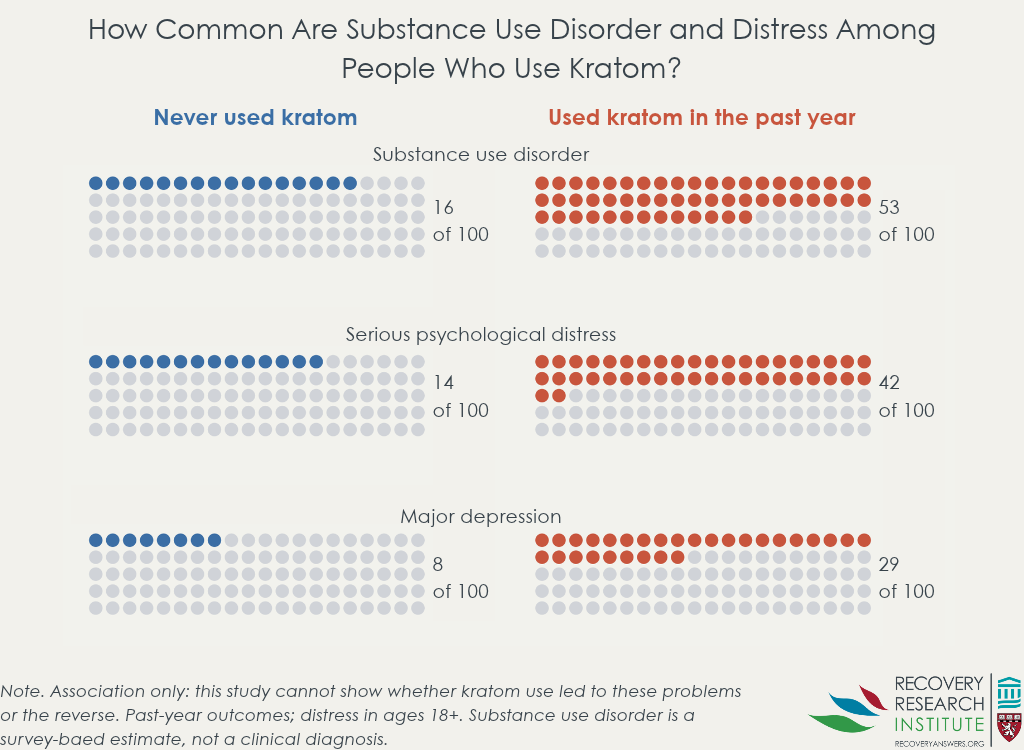
Two in 100 people aged 12 and older (1.9%) had ever used kratom in 2024, up slightly from 1.6% in 2021. Use in the past year stayed about the same, at less than 1 in 100 people. Kratom use was most common among adults aged 21 to 34, about 3 in 100 of whom had ever used it and about 1 in 100 of whom had used it in the past year. About 2/3 of people who used kratom also used cannabis in the past year, compared with 2 in 10 people who never used kratom. More than half had a substance use disorder, compared with about 1 in 6 people who never used kratom. About 4 in 10 people who used kratom reported serious psychological distress in the past year, compared with about 1 in 7 people who never used it.
After accounting for demographic differences, people who used kratom were roughly 3 to 5 times as likely to have a substance use disorder or serious psychological distress. They were also more likely to have major depression and suicidal thoughts. The pattern was similar for people who last used kratom more than a year ago and those who used it in the past year. Additional analyses showed that compared to those who never used kratom, those who used kratom in their lifetime or in the past year were more likely to report suicidal ideation. Distress was also higher among people who used kratom but no alcohol or other drugs (about 1 in 4) than among people who never used kratom, although this estimate is imprecise because few people fell in this group. About 4 in 10 people who used kratom reported being in recovery from a substance use problem.
WHAT ARE THE IMPLICATIONS OF THE STUDY FINDINGS?
Although fewer than 2% of respondents reported ever using kratom in each survey year, these estimates may not capture the full extent of use. The survey excluded people in institutions such as prisons and relied on self-reported use, which may be underreported. The findings also need to be considered within a broader market of kratom and related products, including products containing concentrated 7-OH. Although 7-OH occurs naturally in trace amounts in kratom, products with added or enhanced concentrations are distinct from traditional kratom leaf products and may have different risks. Some consumers may not recognize these products as kratom-related or know what they contain. Because the article did not report a separate assessment of 7-OH products, it is unclear whether respondents included them when reporting kratom use. Furthermore, the cross-sectional nature of this study can’t allow us to determine how kratom may impact health. Although kratom use was associated with psychological distress, depression, and suicidal ideation, it is unclear if kratom contributed to these problems or if people are using kratom to address such preexisting issues. Given that previous research found that people report using kratom to self-medicate mental health and substance use disorder symptoms, it is possible that participants who reported kratom use were already experiencing such health challenges. Other substance use or shared risk factors may also explain the links. Studies that follow people over time, and that examine the effects of state kratom regulations, are needed.
BOTTOM LINE
Lifetime kratom use in the US population increased slightly between 2021 and 2024 and people who reported using kratom were much more likely to report a substance use disorder and psychological distress, though this survey cannot show whether kratom use contributed to these problems. Overall use is low but may be underestimated.
- For individuals and families seeking recovery: People who use kratom may be more likely to have a substance use disorder or serious distress. This study cannot say whether kratom helps or harms. Anyone seeking or in recovery who is using or considering kratom should talk with a health care provider.
- For treatment professionals and treatment systems: More than half of people who used kratom met criteria for a substance use disorder, so asking patients about kratom use is a sensible part of assessment. Kratom is not detected by standard drug tests, so it may go unnoticed unless patients are asked.
- For scientists: Studies that follow people over time are needed to clarify whether kratom use precedes or follows substance use and mental health problems. Future work should also evaluate the impact of state kratom regulations.
- For policy makers: Kratom regulation is highly varied across the US, despite limited evidence for its therapeutic effects and known potentially dangerous side effects. This study underscores the need for data-driven policies that address the potential public health impact of kratom use.
CITATIONS
McCabe, S. E., Bogan, R. C., Dickinson, K., McCabe, V. V., Menke, N. B., & Schepis, T. S. (2026). Kratom use and associations with mental health in the United States. Journal of Addiction Medicine, 20(6), e262-e265. doi: 10.1097/ADM.0000000000001701.