WHAT PROBLEM DOES THIS STUDY ADDRESS?
Mutual-help organizations are free, peer-led organizations that support individuals with substance use disorder and related problems. Alcoholics Anonymous has been found to be an effective intervention for alcohol us disorder, and its mechanisms of behavior change have been extensively studied. A closely related, less well studied 12-step program, Narcotics Anonymous (NA) holds more than 72,000 meetings weekly across 143 countries, and the program caters to individuals with a variety of primary substances. Although attendance and engagement in the program may be associated with improved substance use and other positive behavior changes, less research has explored the specific components of NA that members credit with contributing to those changes. In this study, the researcher interviewed members with at least 2 years of self-reported abstinence to explore the internal mechanisms they believed resulted from participating in NA.
HOW WAS THIS STUDY CONDUCTED?
This was a retrospective qualitative study that asked members of NA with 2+ years of abstinence to reflect on how long-term recovery differed from early recovery and active substance use. The researcher asked specific questions exploring how participants’ perspectives of themselves, others, and the world had changed over time, such as “How have your views of yourself changed? Your views of others? The world?” and “If you could name one thing that is key to maintaining your recovery, what would it be?” The researcher recruited members of NA through snowball sampling, which involves asking each participant to suggest another potential participant. Of the 14 participants interviewed, 11 lived in Mississippi, 4 identified as a sexual minority, the average age was 42 years, and participants reported an average of 11 years of abstinence (the range was 6 to 18 years). The study did not report how long participants had been active NA members, only their years of self-reported abstinence. Interviews were conducted via Zoom, audio recorded, transcribed, and analyzed. The researcher employed thematic analysis to identify themes representing internal mechanisms of behavior change.
WHAT DID THIS STUDY FIND?
The analysis revealed 3 themes, all related to identity processes, as possible mechanisms of behavior change that support long-term recovery: believing life can be different, knowing and loving self, and pro-social regard for others. Collectively, these themes suggest that long-term recovery involved changes in how participants viewed the world, themselves, and other people.
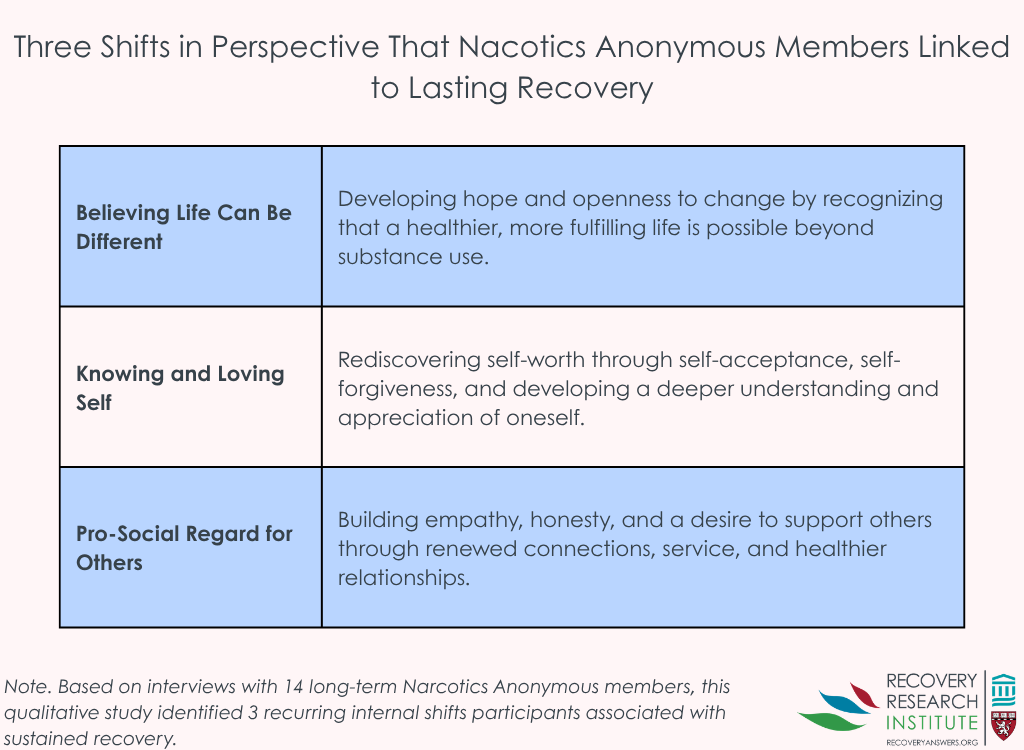
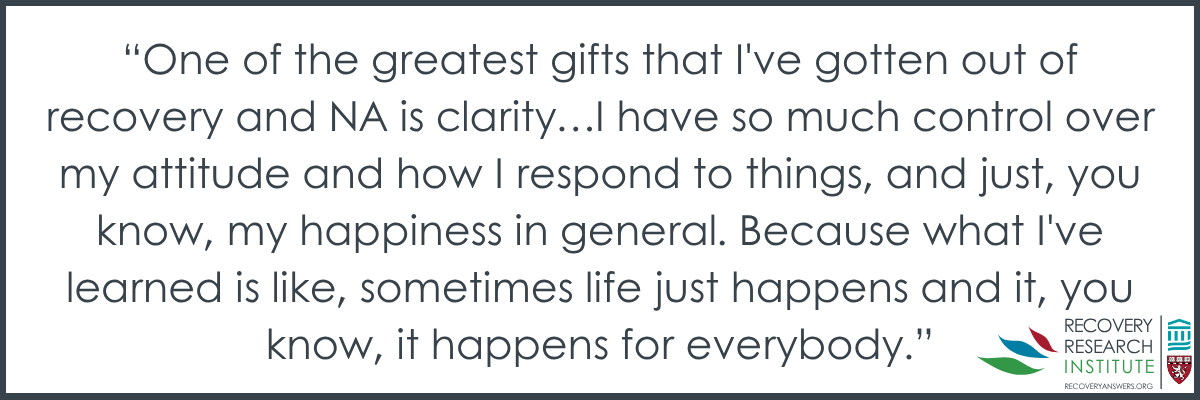
The theme of believing life can be different was the most prominent and included the subthemes of readiness/commitment for change, hope, and open-mindedness. Participants described perspective shifts that fundamentally changed how they viewed the world and their ability to respond to life’s challenges.
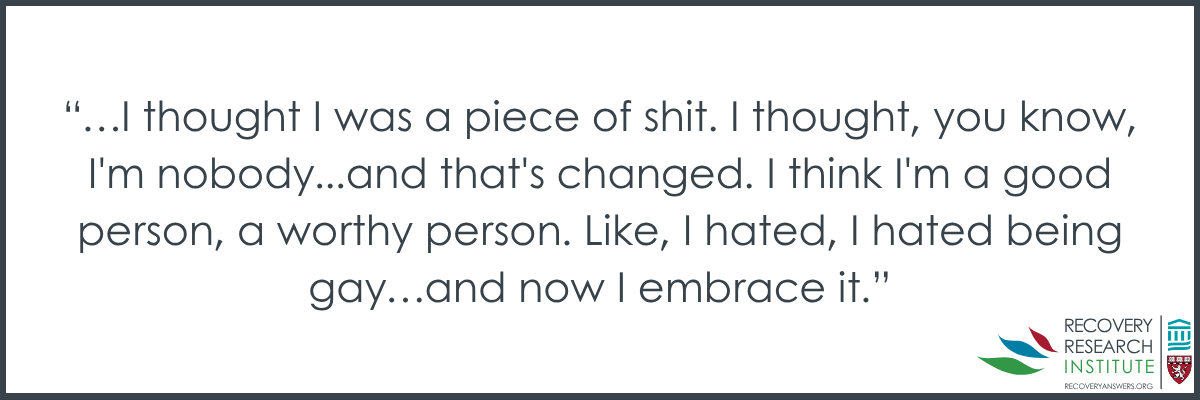
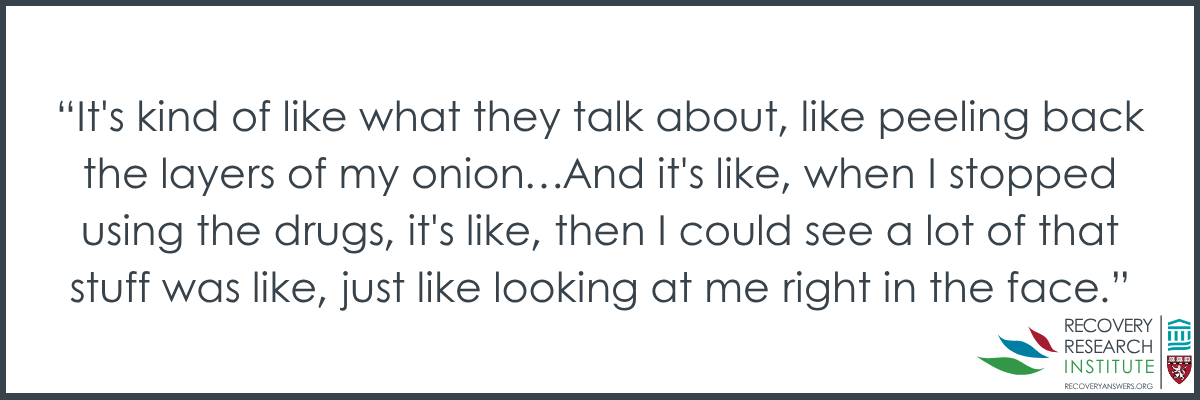
The theme of knowing and loving self-reflected participants’ shift from negative perceptions of self to greater self-acceptance, self-discovery, and self-compassion. Subthemes included self-acceptance, self-discovery, giving grace, and mental clarity.
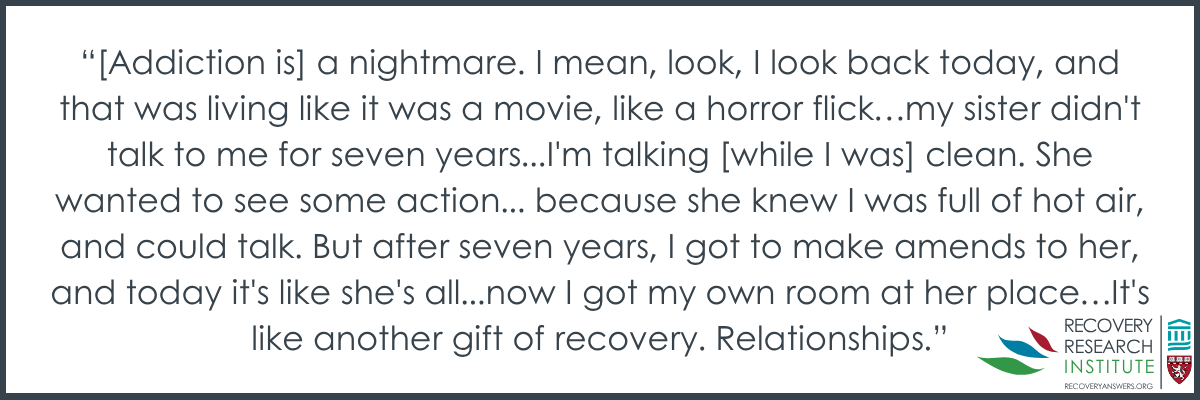
The final theme, pro-social regard for others, highlighted participants’ shift from viewing others with suspicion or as opportunities for personal gain to recognizing the humanity in others and wanting to help them. Three subthemes emerged: honesty, selflessness, and trust and dependability.

WHAT ARE THE IMPLICATIONS OF THE STUDY FINDINGS?
Mutual-help organizations like NA, are free and widely available. Yet, there has been limited research on NA’s mechanisms of behavior change. The findings from these participants suggest that meaningful changes in identity were associated with participation in the program and were perceived to support recovery. The findings from this study identified 3 key mechanisms of change that adults in long-term recovery believed were facilitated by NA. Specifically, the findings suggest that sustained recovery may involve deep identity-level shifts, not just abstinence; participants described moving from hopelessness to believing their lives could change, from self-loathing to self-acceptance, and from suspicion or self-interest toward genuine concern for others. The findings also highlight that change is not only possible, but that individuals with long-term recovery experience changes in how they view themselves, others, and the world. Participants perceived these identity shifts as contributing to their stable recovery and other positive outcomes. These 3 key identity shifts provide promising targets for future measurement, intervention development, and research, although the peer-led and community-based organizational structure of mutual-help organizations, may not be replicable in clinical settings. Because participants were recruited primarily from Mississippi and were nearly all White, and relied on memories from years earlier, findings may not generalize to other regions, populations, or recovery pathways.
BOTTOM LINE
Adult members of NA in long-term recovery described how engagement in the program was connected to changes in how they viewed themselves, others, and the world. These identity shifts suggest that important mechanisms of identity change may be measurable and could inform future intervention development, though this requires confirmation through study designs that test these patterns more directly.
- For individuals and families seeking recovery: Mutual-help organizations, such as NA, are free, peer-led resources available in most communities. Among people in long-term recovery, participation in NA was associated with meaningful life shifts that went beyond substance use, such as feeling more hopeful about the future, developing greater self-acceptance, and becoming more honest and supportive in relationships with family and friends. For individuals and families, this suggests that mutual-help involvement may support not just abstinence, but broader personal and relational growth.
- For treatment professionals and treatment systems: A large body of evidence, including a Cochrane systematic review, supports the effectiveness of Alcoholics Anonymous, and has identified several mechanisms through which it helps people recover, such as changes in social networks, motivation, and coping skills. Much less is known about whether these same mechanisms apply to NA. This study’s findings suggest that key identity-level changes, such as increased hope, self-acceptance, and concern for others, may support long-term recovery and were perceived by participants to be facilitated through engagement in NA. Linking clients to mutual-help organizations and other recovery support services that foster these kinds of identity-level changes may support long-term recovery.
- For scientists: Future research would benefit from replicating this study with participants from other geographic regions, more diverse demographic backgrounds (e.g., non-White participants), and other recovery pathways beyond Twelve-Step programs. Additionally, longitudinal qualitative and quantitative research could examine how these mechanisms develop over time and the extent to which they are associated with recovery outcomes (e.g., substance use, quality of life), rather than relying on retrospective accounts.
- For policy makers: This study’s firsthand accounts offer a counter-narrative to stigmatizing assumptions about people with histories of opioid and polysubstance use, underscoring the value of supporting free, community-based recovery resources like NA as a complement to formal treatment systems, especially in under-resourced areas.
CITATIONS
Pace, S. R. (2026). “There were people like me there that used like I did, but yet had found a way out.” A qualitative study of long-term Narcotics Anonymous participants. Journal of Substance Use and Addiction Treatment, 189. doi: 10.1016/j.josat.2026.210029.