What is “successful” methadone treatment? Views from patients and staff
Historically, successful methadone treatment for opioid use disorder has been defined by the absence of negative outcomes, including opioid use, opioid overdose, and criminal justice involvement. Whether patients and staff view methadone treatment goals in this way, or perhaps also aim for other outcomes – the building of recovery capital, for example – has been understudied. This study explored how patients and program staff in a methadone treatment program define successful outcomes.
In 2024, over 2 million people aged 12 or older received medications for opioid use disorder in the previous year, which only accounts for 17% of those with an opioid use disorder. What successful treatment entails for those with opioid use disorder is not consistent. Historically, successful outcomes of treatment include reductions in opioid use, opioid overdose risk, and criminal justice involvement. However, person-centered markers of success (e.g., employment obtainment, subjectively feeling happier and doing better) are often not accounted for in traditional measures of successful treatment. The development and implementation of person-centered measures of success may encourage more individuals to engage with treatment, especially related to medications for opioid use disorder, and increase quality of life among individuals with opioid use disorder.
Although medications for opioid use disorder like methadone are helpful, even among those who do receive methadone, maintaining patient engagement in care remains challenging. One potential explanation is the misalignment between the opioid treatment program policies and measures of success and patients’ markers of successful treatment. This study explored how patients receiving methadone and staff at an opioid treatment program define successful treatment. By examining areas of overlap and divergence between patient and staff perspectives, the findings highlight opportunities for opioid treatment programs to better align services and policies with person-centered definitions of success.
HOW WAS THIS STUDY CONDUCTED?
This qualitative study was conducted through the University of Maryland Addiction Treatment Center, which is a large, community-based outpatient opioid treatment program in West Baltimore. The program treats over 500 patients per day on average and offers primary care, infectious disease care, psychiatry, psychological counseling, addiction counseling, individual and group therapy, home health services, social worker services, peer recovery specialist services, and case management alongside methadone medication. In line with SAMHSA regulations and guidelines for methadone treatment provision, methadone at this treatment program was dispensed daily (Monday through Saturday) with a possible take-home dose provided on Sunday. All patients were required to complete monthly drug testing. Those that missed 30 or more consecutive days of attendance were administratively discharged. Patients were only prescribed take-home doses if they had 90 consecutive days of negative toxicology screens for alcohol and other drug use.
All study participants were given the option to do either individual or small group interviews (also known as focus groups) in order to accommodate varying work schedules and personal preferences. Three staff focus groups and 2 patient focus groups took place, with a maximum of 6 people in a single group and a total of 22 participants opting for a focus group. Questions asked in the interview and focus groups sought to capture how participants defined success in methadone treatment. When participants were unsure, sought clarification, or gave short or unclear answers, interviewers or focus group facilitators used prompts informed by prior research identifying three key aspects of successful treatment: maintaining sobriety, improving personal health, and contributing to one’s community. All participants received a $25 gift card for their time. All the interviews and focus groups were recorded, transcribed, and thematically analyzed. Researchers reviewed each transcript and sought to identify patterns that then resulted in themes and subthemes.
There were 32 total participants in this study. There were 20 patients currently enrolled in the methadone treatment program. They were 48 years old on average, 60% Black, and 70% male. There were 12 staff participants: 8 clinical staff and 4 peer recovery specialists. These participants were recruited through flyers, announcements, word of mouth, and voluntary referrals. Among the clinical staff there were 6 counselors, a social worker, and a nurse practitioner. They were 49 years old on average, 75% Black, and 42% male.
WHAT DID THIS STUDY FIND?
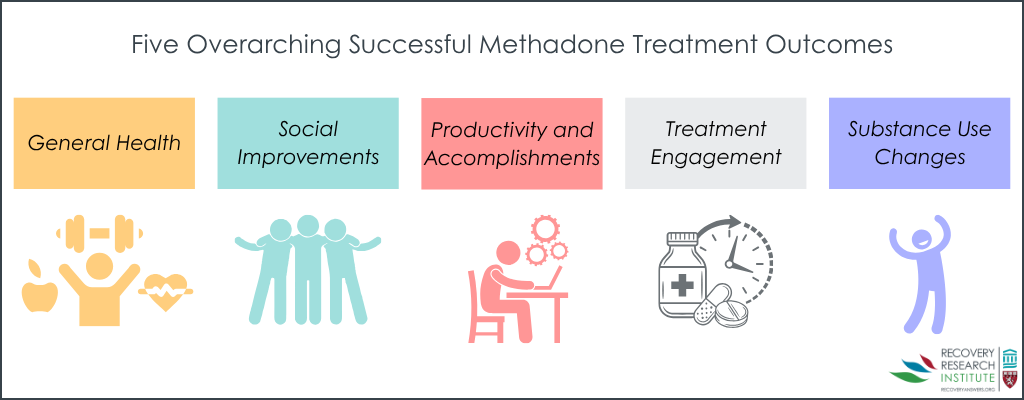
Staff and patients agreed on 5 primary themes to define successful treatment Opioid treatment program staff and patients agreed on 5 overarching themes of successful treatment:
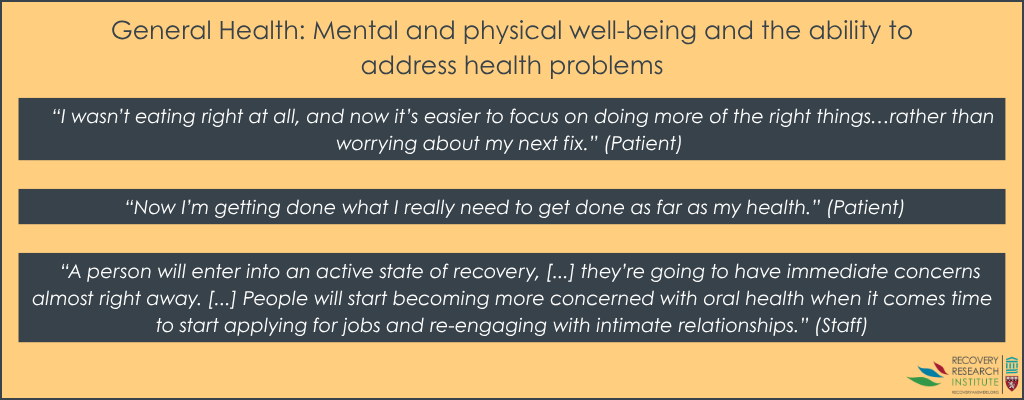
General Health: Mental and physical well-being and the ability to address health problems.
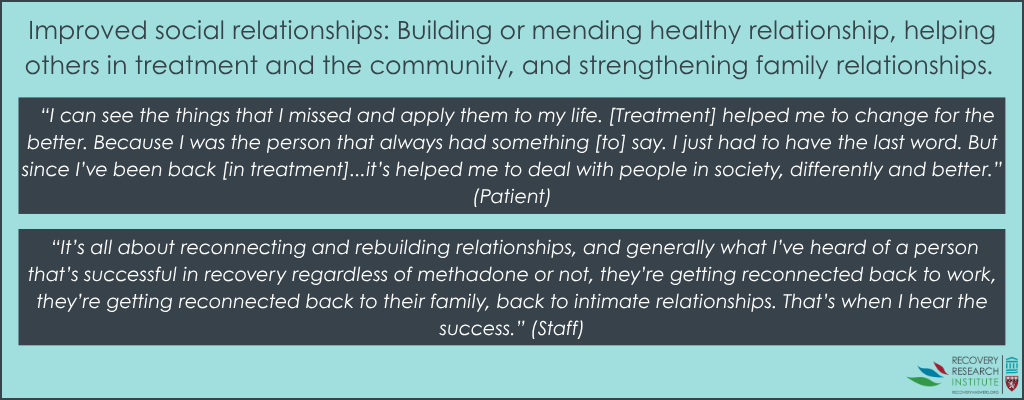
Improved social relationships: Building or mending healthy relationship, helping others in treatment and the community, and strengthening family relationships.
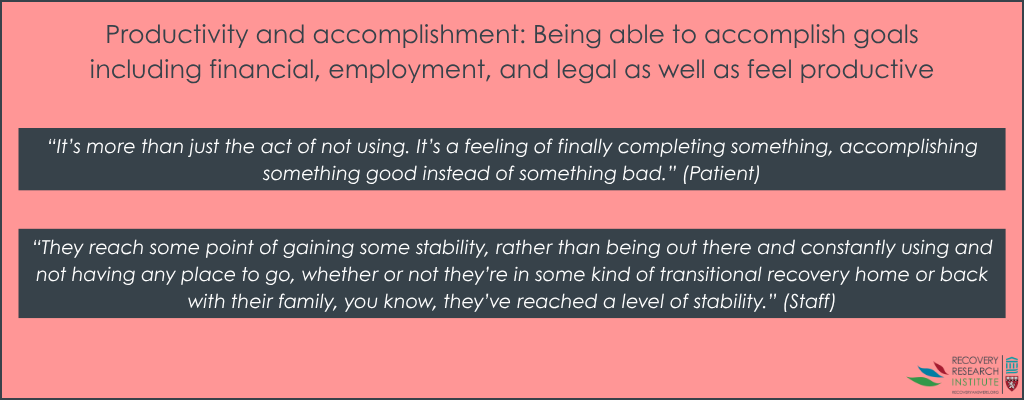
Productivity and accomplishment: Being able to accomplish goals including financial, employment, and legal as well as feel productive.
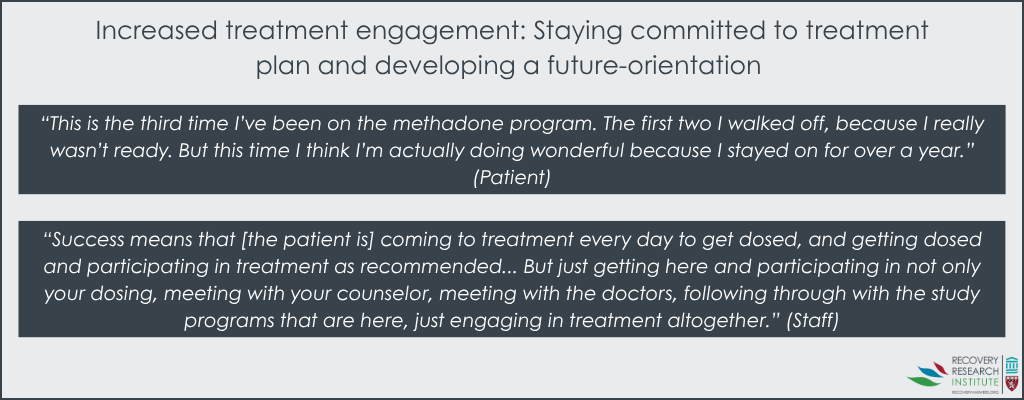
Increased treatment engagement: Staying committed to treatment plan and developing a future-orientation.
Changes in substance use-related behaviors: Including long-term reductions in substance use and related consequences as well as returning to recovery after a period of use.
There were distinct differences in some staff and patient subthemes of successful treatment
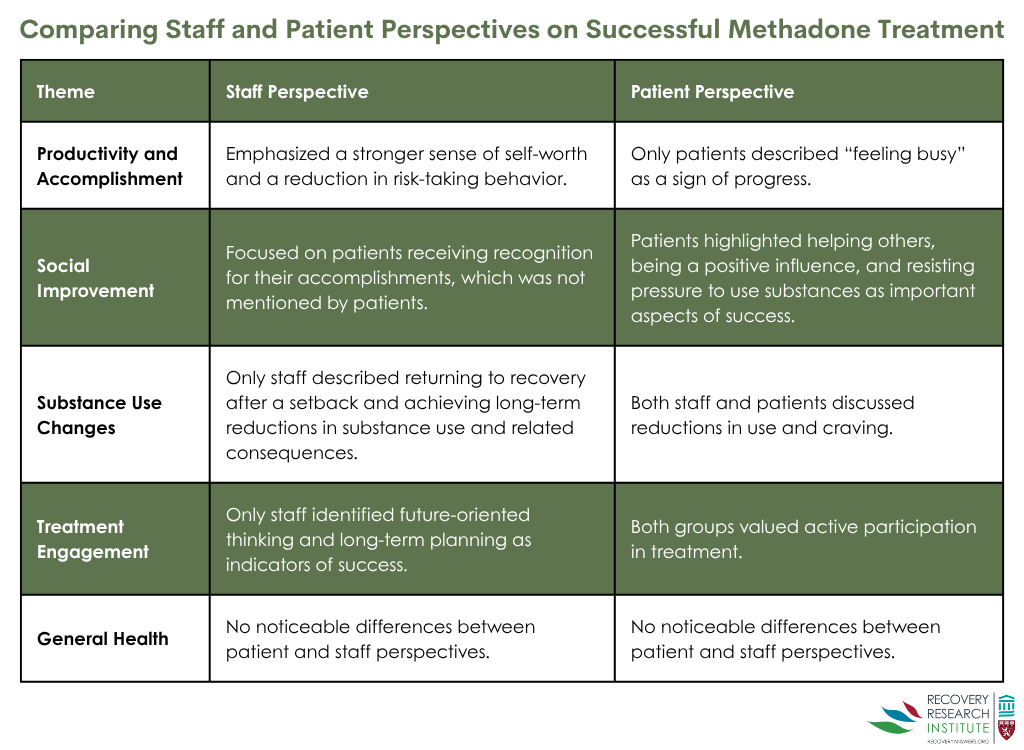
Although staff and patients generally agreed on the 5 overarching themes of successful treatment, they described different components within those themes.
WHAT ARE THE IMPLICATIONS OF THE STUDY FINDINGS?
Like previous research on person-centered views of treatment success, patients and staff highlighted several factors that included, but were not limited to, substance use and treatment attendance. Specifically, they jointly identified 5 broad markers of treatment: general health improvements, productivity and accomplishment, social improvements, substance use changes, and treatment engagement. There were, however, some divergent views between patients and staff. For example, patients solely noted feeling busy as an aspect of success, while staff independently noted long-term reduction of substance use and related consequences. While there were some differences, patients and staff generally had overlapping views of treatment success.
In recent years, researchers and individuals with lived or living experience of substance use have called for a shift away from prioritizing abstinence in treatment and recovery support services. Instead, they advocate for more flexible, person-centered goals, including abstinence, that are guided by the priorities of those directly affected. Indicators of success that have been identified in other studies include improved psychological well-being, relationships, and role functioning, tapering off medications for opioid use disorder, and decreased stigma and shame. The present study builds upon previous findings with this sample of low-income and racial minority patients enrolled in a methadone treatment program.
The findings reinforce prior evidence that desired markers of successful treatment often extend beyond substance use outcomes. While a focus on reducing or quitting substance use is likely to lead to many other improvements in functioning, this study illustrates that encouraging broader goals may help engage and retain more patients, that can lead ultimately to elimination of use or reduced use, and sustained remission. This study is particularly relevant for methadone treatment programs, which are typically governed by regulations that focus narrowly on attendance, abstinence, and criminal justice involvement, often overlooking broader indicators of success. Future research should examine whether adapting methadone program policies to align with success as defined by individuals with lived and living experience could promote sustained engagement and long-term recovery.
The patient participants in this study were limited to those that were actively engaged in the methadone treatment program. Thus, important perspectives of those that are not enrolled were absent. The sample was also small and while important themes were revealed it is unclear whether a larger and more diverse sample might produce additional or amplified themes.
Focus groups and interviews often elicit different types of qualitative data. Interviews can often be more context- or role-specific. In contrast, focus groups can allow for shared storytelling, emergent themes, and a more supportive environment to discuss sensitive topics related to opioid treatment programs. Some individuals in the study provided their perspectives in focus groups, and others through individual interviews. Whether the findings would generalize if using only one qualitative approach or the other is unclear.
Though the unique nature of the sample was also a strength of the study, generalizing results beyond methadone treatment in Baltimore should be done with appropriate caution.
BOTTOM LINE
Findings from this qualitative study of patient and staff perspectives suggest that successful methadone treatment includes improvements in general health, productivity and accomplishment, social relationships, substance use, and treatment engagement. Notably, the study focused on racial minority patients who were primarily low-income and enrolled in a methadone treatment program. The results suggest it may be helpful for methadone programs to incorporate broader, person-centered outcomes into future program policies to support long-term recovery.
For individuals and families seeking recovery: This study highlights how individuals receiving methadone for opioid use disorder view success beyond opioid use and treatment attendance. If you or a loved one is receiving medications for opioid use disorder, it would likely be beneficial to discuss your personal goals beyond substance use and how to approach them with your recovery support providers.
For treatment professionals and treatment systems: This study found that patients receiving methadone for opioid use disorder viewed treatment success as a holistic process that featured more than just abstinence and attending the treatment program. Exploring and support patient-centered goals in addition to reduced use may improve patient experiences and outcomes.
For scientists: This qualitative study recruited patients enrolled in a methadone treatment program as well as staff to explore the markers of successful treatment according to these stakeholders. This study explicitly sought perspectives of primarily Black and low-income individuals. Findings echo previous work supporting definitions of treatment success that extend beyond substance use and program attendance. Future work is needed to explore how methadone policies and program rules may be shaped to center these patient-driven markers of success. Furthermore, building and identifying structural and community resources to support these more comprehensive approaches would likely improve patient outcomes.
For policy makers: Funding and policy that aids patient-centered definitions of treatment success may help improve engagement and recovery outcomes among adults with opioid use disorder as well as reduce societal cost of opioid use disorder.
In 2024, over 2 million people aged 12 or older received medications for opioid use disorder in the previous year, which only accounts for 17% of those with an opioid use disorder. What successful treatment entails for those with opioid use disorder is not consistent. Historically, successful outcomes of treatment include reductions in opioid use, opioid overdose risk, and criminal justice involvement. However, person-centered markers of success (e.g., employment obtainment, subjectively feeling happier and doing better) are often not accounted for in traditional measures of successful treatment. The development and implementation of person-centered measures of success may encourage more individuals to engage with treatment, especially related to medications for opioid use disorder, and increase quality of life among individuals with opioid use disorder.
Although medications for opioid use disorder like methadone are helpful, even among those who do receive methadone, maintaining patient engagement in care remains challenging. One potential explanation is the misalignment between the opioid treatment program policies and measures of success and patients’ markers of successful treatment. This study explored how patients receiving methadone and staff at an opioid treatment program define successful treatment. By examining areas of overlap and divergence between patient and staff perspectives, the findings highlight opportunities for opioid treatment programs to better align services and policies with person-centered definitions of success.
HOW WAS THIS STUDY CONDUCTED?
This qualitative study was conducted through the University of Maryland Addiction Treatment Center, which is a large, community-based outpatient opioid treatment program in West Baltimore. The program treats over 500 patients per day on average and offers primary care, infectious disease care, psychiatry, psychological counseling, addiction counseling, individual and group therapy, home health services, social worker services, peer recovery specialist services, and case management alongside methadone medication. In line with SAMHSA regulations and guidelines for methadone treatment provision, methadone at this treatment program was dispensed daily (Monday through Saturday) with a possible take-home dose provided on Sunday. All patients were required to complete monthly drug testing. Those that missed 30 or more consecutive days of attendance were administratively discharged. Patients were only prescribed take-home doses if they had 90 consecutive days of negative toxicology screens for alcohol and other drug use.
All study participants were given the option to do either individual or small group interviews (also known as focus groups) in order to accommodate varying work schedules and personal preferences. Three staff focus groups and 2 patient focus groups took place, with a maximum of 6 people in a single group and a total of 22 participants opting for a focus group. Questions asked in the interview and focus groups sought to capture how participants defined success in methadone treatment. When participants were unsure, sought clarification, or gave short or unclear answers, interviewers or focus group facilitators used prompts informed by prior research identifying three key aspects of successful treatment: maintaining sobriety, improving personal health, and contributing to one’s community. All participants received a $25 gift card for their time. All the interviews and focus groups were recorded, transcribed, and thematically analyzed. Researchers reviewed each transcript and sought to identify patterns that then resulted in themes and subthemes.
There were 32 total participants in this study. There were 20 patients currently enrolled in the methadone treatment program. They were 48 years old on average, 60% Black, and 70% male. There were 12 staff participants: 8 clinical staff and 4 peer recovery specialists. These participants were recruited through flyers, announcements, word of mouth, and voluntary referrals. Among the clinical staff there were 6 counselors, a social worker, and a nurse practitioner. They were 49 years old on average, 75% Black, and 42% male.
WHAT DID THIS STUDY FIND?
Staff and patients agreed on 5 primary themes to define successful treatment Opioid treatment program staff and patients agreed on 5 overarching themes of successful treatment:
General Health: Mental and physical well-being and the ability to address health problems.
Improved social relationships: Building or mending healthy relationship, helping others in treatment and the community, and strengthening family relationships.
Productivity and accomplishment: Being able to accomplish goals including financial, employment, and legal as well as feel productive.
Increased treatment engagement: Staying committed to treatment plan and developing a future-orientation.
Changes in substance use-related behaviors: Including long-term reductions in substance use and related consequences as well as returning to recovery after a period of use.
There were distinct differences in some staff and patient subthemes of successful treatment
Although staff and patients generally agreed on the 5 overarching themes of successful treatment, they described different components within those themes.
WHAT ARE THE IMPLICATIONS OF THE STUDY FINDINGS?
Like previous research on person-centered views of treatment success, patients and staff highlighted several factors that included, but were not limited to, substance use and treatment attendance. Specifically, they jointly identified 5 broad markers of treatment: general health improvements, productivity and accomplishment, social improvements, substance use changes, and treatment engagement. There were, however, some divergent views between patients and staff. For example, patients solely noted feeling busy as an aspect of success, while staff independently noted long-term reduction of substance use and related consequences. While there were some differences, patients and staff generally had overlapping views of treatment success.
In recent years, researchers and individuals with lived or living experience of substance use have called for a shift away from prioritizing abstinence in treatment and recovery support services. Instead, they advocate for more flexible, person-centered goals, including abstinence, that are guided by the priorities of those directly affected. Indicators of success that have been identified in other studies include improved psychological well-being, relationships, and role functioning, tapering off medications for opioid use disorder, and decreased stigma and shame. The present study builds upon previous findings with this sample of low-income and racial minority patients enrolled in a methadone treatment program.
The findings reinforce prior evidence that desired markers of successful treatment often extend beyond substance use outcomes. While a focus on reducing or quitting substance use is likely to lead to many other improvements in functioning, this study illustrates that encouraging broader goals may help engage and retain more patients, that can lead ultimately to elimination of use or reduced use, and sustained remission. This study is particularly relevant for methadone treatment programs, which are typically governed by regulations that focus narrowly on attendance, abstinence, and criminal justice involvement, often overlooking broader indicators of success. Future research should examine whether adapting methadone program policies to align with success as defined by individuals with lived and living experience could promote sustained engagement and long-term recovery.
The patient participants in this study were limited to those that were actively engaged in the methadone treatment program. Thus, important perspectives of those that are not enrolled were absent. The sample was also small and while important themes were revealed it is unclear whether a larger and more diverse sample might produce additional or amplified themes.
Focus groups and interviews often elicit different types of qualitative data. Interviews can often be more context- or role-specific. In contrast, focus groups can allow for shared storytelling, emergent themes, and a more supportive environment to discuss sensitive topics related to opioid treatment programs. Some individuals in the study provided their perspectives in focus groups, and others through individual interviews. Whether the findings would generalize if using only one qualitative approach or the other is unclear.
Though the unique nature of the sample was also a strength of the study, generalizing results beyond methadone treatment in Baltimore should be done with appropriate caution.
BOTTOM LINE
Findings from this qualitative study of patient and staff perspectives suggest that successful methadone treatment includes improvements in general health, productivity and accomplishment, social relationships, substance use, and treatment engagement. Notably, the study focused on racial minority patients who were primarily low-income and enrolled in a methadone treatment program. The results suggest it may be helpful for methadone programs to incorporate broader, person-centered outcomes into future program policies to support long-term recovery.
For individuals and families seeking recovery: This study highlights how individuals receiving methadone for opioid use disorder view success beyond opioid use and treatment attendance. If you or a loved one is receiving medications for opioid use disorder, it would likely be beneficial to discuss your personal goals beyond substance use and how to approach them with your recovery support providers.
For treatment professionals and treatment systems: This study found that patients receiving methadone for opioid use disorder viewed treatment success as a holistic process that featured more than just abstinence and attending the treatment program. Exploring and support patient-centered goals in addition to reduced use may improve patient experiences and outcomes.
For scientists: This qualitative study recruited patients enrolled in a methadone treatment program as well as staff to explore the markers of successful treatment according to these stakeholders. This study explicitly sought perspectives of primarily Black and low-income individuals. Findings echo previous work supporting definitions of treatment success that extend beyond substance use and program attendance. Future work is needed to explore how methadone policies and program rules may be shaped to center these patient-driven markers of success. Furthermore, building and identifying structural and community resources to support these more comprehensive approaches would likely improve patient outcomes.
For policy makers: Funding and policy that aids patient-centered definitions of treatment success may help improve engagement and recovery outcomes among adults with opioid use disorder as well as reduce societal cost of opioid use disorder.
In 2024, over 2 million people aged 12 or older received medications for opioid use disorder in the previous year, which only accounts for 17% of those with an opioid use disorder. What successful treatment entails for those with opioid use disorder is not consistent. Historically, successful outcomes of treatment include reductions in opioid use, opioid overdose risk, and criminal justice involvement. However, person-centered markers of success (e.g., employment obtainment, subjectively feeling happier and doing better) are often not accounted for in traditional measures of successful treatment. The development and implementation of person-centered measures of success may encourage more individuals to engage with treatment, especially related to medications for opioid use disorder, and increase quality of life among individuals with opioid use disorder.
Although medications for opioid use disorder like methadone are helpful, even among those who do receive methadone, maintaining patient engagement in care remains challenging. One potential explanation is the misalignment between the opioid treatment program policies and measures of success and patients’ markers of successful treatment. This study explored how patients receiving methadone and staff at an opioid treatment program define successful treatment. By examining areas of overlap and divergence between patient and staff perspectives, the findings highlight opportunities for opioid treatment programs to better align services and policies with person-centered definitions of success.
HOW WAS THIS STUDY CONDUCTED?
This qualitative study was conducted through the University of Maryland Addiction Treatment Center, which is a large, community-based outpatient opioid treatment program in West Baltimore. The program treats over 500 patients per day on average and offers primary care, infectious disease care, psychiatry, psychological counseling, addiction counseling, individual and group therapy, home health services, social worker services, peer recovery specialist services, and case management alongside methadone medication. In line with SAMHSA regulations and guidelines for methadone treatment provision, methadone at this treatment program was dispensed daily (Monday through Saturday) with a possible take-home dose provided on Sunday. All patients were required to complete monthly drug testing. Those that missed 30 or more consecutive days of attendance were administratively discharged. Patients were only prescribed take-home doses if they had 90 consecutive days of negative toxicology screens for alcohol and other drug use.
All study participants were given the option to do either individual or small group interviews (also known as focus groups) in order to accommodate varying work schedules and personal preferences. Three staff focus groups and 2 patient focus groups took place, with a maximum of 6 people in a single group and a total of 22 participants opting for a focus group. Questions asked in the interview and focus groups sought to capture how participants defined success in methadone treatment. When participants were unsure, sought clarification, or gave short or unclear answers, interviewers or focus group facilitators used prompts informed by prior research identifying three key aspects of successful treatment: maintaining sobriety, improving personal health, and contributing to one’s community. All participants received a $25 gift card for their time. All the interviews and focus groups were recorded, transcribed, and thematically analyzed. Researchers reviewed each transcript and sought to identify patterns that then resulted in themes and subthemes.
There were 32 total participants in this study. There were 20 patients currently enrolled in the methadone treatment program. They were 48 years old on average, 60% Black, and 70% male. There were 12 staff participants: 8 clinical staff and 4 peer recovery specialists. These participants were recruited through flyers, announcements, word of mouth, and voluntary referrals. Among the clinical staff there were 6 counselors, a social worker, and a nurse practitioner. They were 49 years old on average, 75% Black, and 42% male.
WHAT DID THIS STUDY FIND?
Staff and patients agreed on 5 primary themes to define successful treatment Opioid treatment program staff and patients agreed on 5 overarching themes of successful treatment:
General Health: Mental and physical well-being and the ability to address health problems.
Improved social relationships: Building or mending healthy relationship, helping others in treatment and the community, and strengthening family relationships.
Productivity and accomplishment: Being able to accomplish goals including financial, employment, and legal as well as feel productive.
Increased treatment engagement: Staying committed to treatment plan and developing a future-orientation.
Changes in substance use-related behaviors: Including long-term reductions in substance use and related consequences as well as returning to recovery after a period of use.
There were distinct differences in some staff and patient subthemes of successful treatment
Although staff and patients generally agreed on the 5 overarching themes of successful treatment, they described different components within those themes.
WHAT ARE THE IMPLICATIONS OF THE STUDY FINDINGS?
Like previous research on person-centered views of treatment success, patients and staff highlighted several factors that included, but were not limited to, substance use and treatment attendance. Specifically, they jointly identified 5 broad markers of treatment: general health improvements, productivity and accomplishment, social improvements, substance use changes, and treatment engagement. There were, however, some divergent views between patients and staff. For example, patients solely noted feeling busy as an aspect of success, while staff independently noted long-term reduction of substance use and related consequences. While there were some differences, patients and staff generally had overlapping views of treatment success.
In recent years, researchers and individuals with lived or living experience of substance use have called for a shift away from prioritizing abstinence in treatment and recovery support services. Instead, they advocate for more flexible, person-centered goals, including abstinence, that are guided by the priorities of those directly affected. Indicators of success that have been identified in other studies include improved psychological well-being, relationships, and role functioning, tapering off medications for opioid use disorder, and decreased stigma and shame. The present study builds upon previous findings with this sample of low-income and racial minority patients enrolled in a methadone treatment program.
The findings reinforce prior evidence that desired markers of successful treatment often extend beyond substance use outcomes. While a focus on reducing or quitting substance use is likely to lead to many other improvements in functioning, this study illustrates that encouraging broader goals may help engage and retain more patients, that can lead ultimately to elimination of use or reduced use, and sustained remission. This study is particularly relevant for methadone treatment programs, which are typically governed by regulations that focus narrowly on attendance, abstinence, and criminal justice involvement, often overlooking broader indicators of success. Future research should examine whether adapting methadone program policies to align with success as defined by individuals with lived and living experience could promote sustained engagement and long-term recovery.
The patient participants in this study were limited to those that were actively engaged in the methadone treatment program. Thus, important perspectives of those that are not enrolled were absent. The sample was also small and while important themes were revealed it is unclear whether a larger and more diverse sample might produce additional or amplified themes.
Focus groups and interviews often elicit different types of qualitative data. Interviews can often be more context- or role-specific. In contrast, focus groups can allow for shared storytelling, emergent themes, and a more supportive environment to discuss sensitive topics related to opioid treatment programs. Some individuals in the study provided their perspectives in focus groups, and others through individual interviews. Whether the findings would generalize if using only one qualitative approach or the other is unclear.
Though the unique nature of the sample was also a strength of the study, generalizing results beyond methadone treatment in Baltimore should be done with appropriate caution.
BOTTOM LINE
Findings from this qualitative study of patient and staff perspectives suggest that successful methadone treatment includes improvements in general health, productivity and accomplishment, social relationships, substance use, and treatment engagement. Notably, the study focused on racial minority patients who were primarily low-income and enrolled in a methadone treatment program. The results suggest it may be helpful for methadone programs to incorporate broader, person-centered outcomes into future program policies to support long-term recovery.
For individuals and families seeking recovery: This study highlights how individuals receiving methadone for opioid use disorder view success beyond opioid use and treatment attendance. If you or a loved one is receiving medications for opioid use disorder, it would likely be beneficial to discuss your personal goals beyond substance use and how to approach them with your recovery support providers.
For treatment professionals and treatment systems: This study found that patients receiving methadone for opioid use disorder viewed treatment success as a holistic process that featured more than just abstinence and attending the treatment program. Exploring and support patient-centered goals in addition to reduced use may improve patient experiences and outcomes.
For scientists: This qualitative study recruited patients enrolled in a methadone treatment program as well as staff to explore the markers of successful treatment according to these stakeholders. This study explicitly sought perspectives of primarily Black and low-income individuals. Findings echo previous work supporting definitions of treatment success that extend beyond substance use and program attendance. Future work is needed to explore how methadone policies and program rules may be shaped to center these patient-driven markers of success. Furthermore, building and identifying structural and community resources to support these more comprehensive approaches would likely improve patient outcomes.
For policy makers: Funding and policy that aids patient-centered definitions of treatment success may help improve engagement and recovery outcomes among adults with opioid use disorder as well as reduce societal cost of opioid use disorder.