WHAT PROBLEM DOES THIS STUDY ADDRESS?
Humor is a common part of the human experience, yet the psychological study of humor and its therapeutic applications is a relatively recent development. Humor-based interventions have included both passive activities, such as watching comedy videos, and active skill-building approaches designed to help individuals cope with stress and reframe difficult experiences. This work has been influenced by positive psychology and research on personality and humor styles, which suggests that people differ in how they use and respond to humor. Prior studies have found that humor-based interventions can reduce symptoms of depression and anxiety among adults. However, little is known about whether humor may play a supportive role in recovery from substance use disorders. The present study explored how adults in methadone treatment for opioid use disorder perceived the role of humor in their daily lives and recovery experiences.
HOW WAS THIS STUDY CONDUCTED?
This qualitative study included 11 adults receiving outpatient treatment for opioid use disorder at a treatment center in Columbus, Ohio. Participants were recruited from a larger primary study examining enjoyable experiences during recovery and had previously expressed interest in participating in additional research. All participants were receiving methadone and had been in recovery for less than 2 years; 45% were in recovery for less than 6 months, 27% for 6-12 months, and 27% for more than 12 months. Most participants identified as White, non-Hispanic, and female. With respect to age, 36% were 25-34 years old, 36% were 35-44, and 27% were 45 and older.
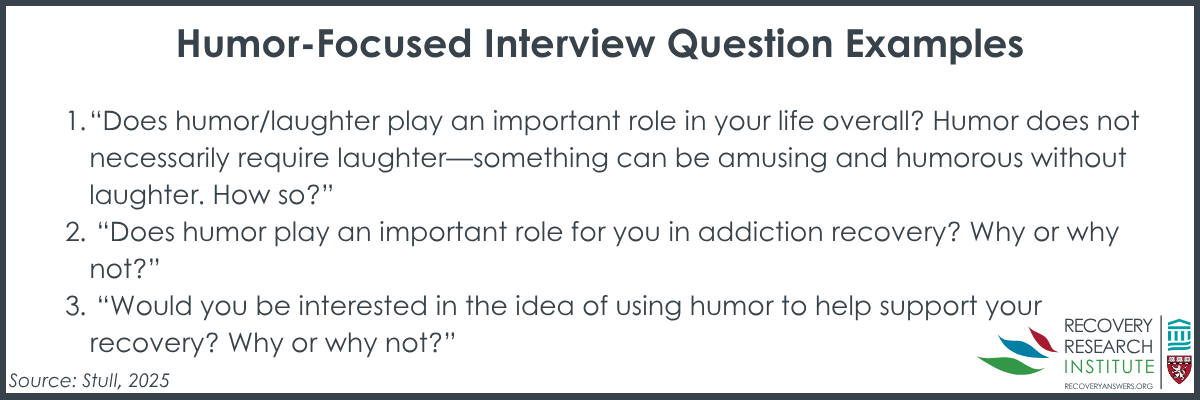
Participants completed in-person, semi-structured interviews at the treatment clinic that explored whether humor was important in their daily lives and whether it played a role in supporting recovery (see graphic below for example interview questions). Interviews were audio-recorded, transcribed, and analyzed using a thematic approach to identify recurring themes and patterns.
WHAT DID THIS STUDY FIND?
Most participants indicated that humor played an important role in their lives, and many felt it was also important for their recovery.
“One thing that really keeps me going, I guess, is humor.”
“I think humor should be used to support everything in life, really. I really think it makes
a huge difference. You know, raising our vibration. We should always be striving for a
state of joy and gratitude and humor.”
Participants did have mixed feelings about using addiction humor, specifically, in a humor-based intervention. Most were in favor of doing so, but a few preferred only including general humor. Some concerns were related to a fatigue around identity associated with addiction-related groups, while another was the possibility for lapsing into unhelpful “war stories”.
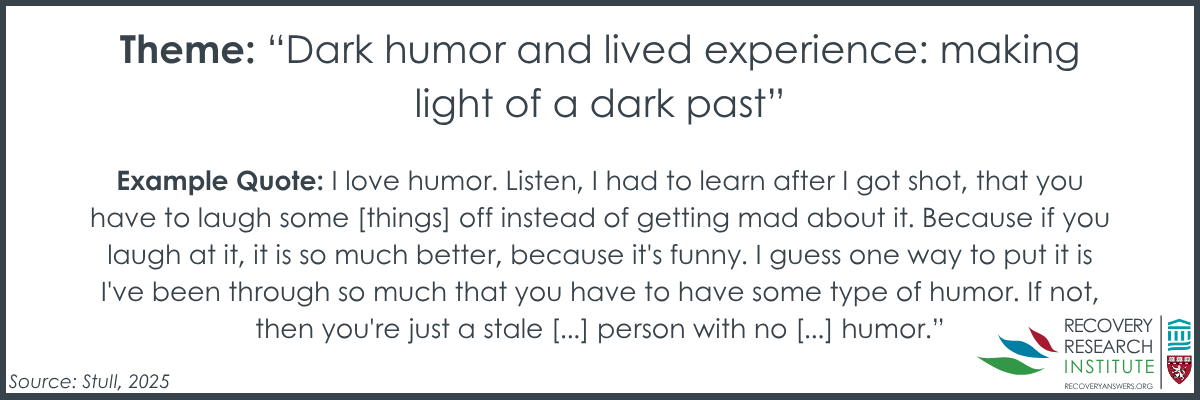
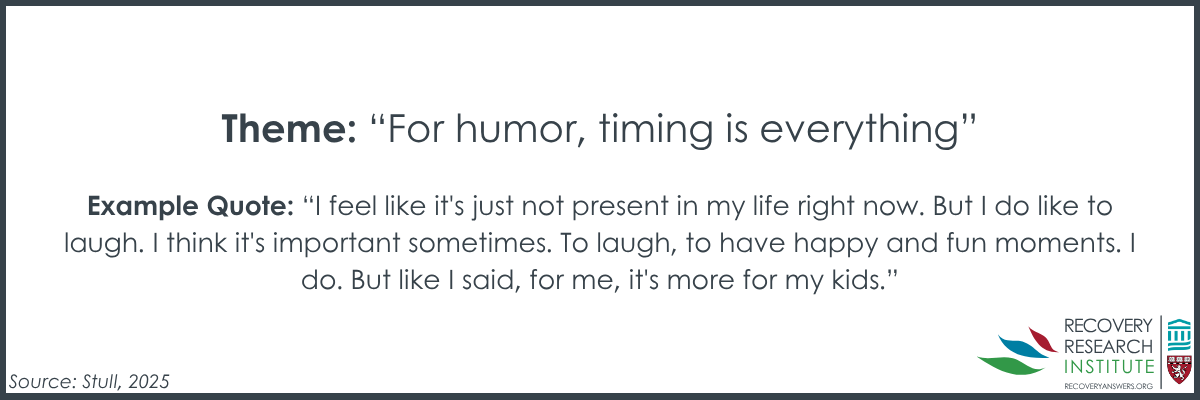
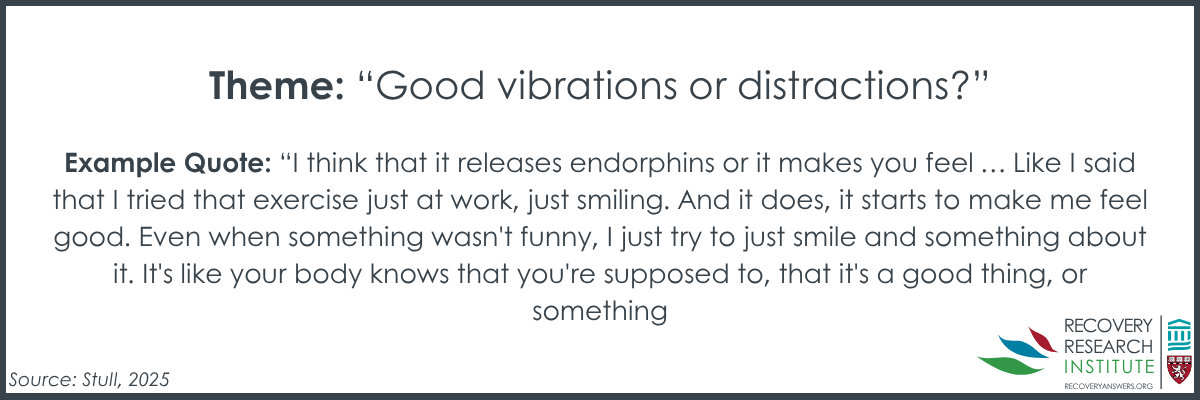
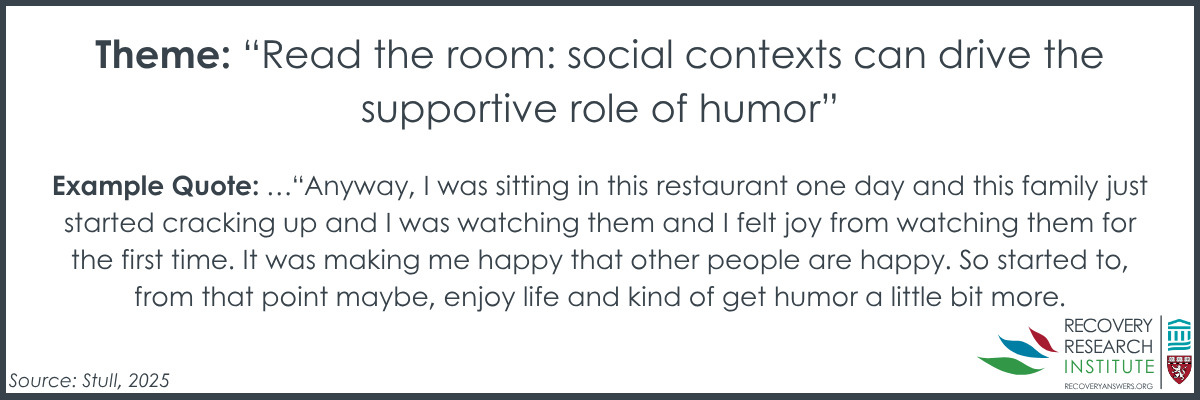
Four themes emerged from the interviews on humor in recovery as shown in the breakout boxes below.
WHAT ARE THE IMPLICATIONS OF THE STUDY FINDINGS?
Although humor is often viewed as beneficial for emotional well-being, there has been limited empirical research examining its role in recovery from substance use disorders. This study found that adults in methadone treatment for opioid use disorder generally viewed humor as supportive in their daily lives and recovery experiences. Participants described humor as helping them cope with difficult experiences, improve mood, strengthen social connections, and shift attention away from stress and substance use. At the same time, the findings highlighted important variability in how humor was experienced, including differences in the type of humor preferred, the timing of humor, and the social contexts in which humor felt supportive or unhelpful. The authors suggest that humor may function both as a facilitator of recovery and as a sign of improved well-being during recovery. Additional research is needed to better understand how humor-based interventions could be tailored to support individuals recovering from substance use disorders.
BOTTOM LINE
Adults in methadone treatment for opioid use disorder in this study generally viewed humor as supportive in both their daily lives and recovery experiences. These findings highlight the potential value of humor-based approaches within substance use disorder treatment and recovery support services. Whether interventions based on humor could be developed and tested remains an open question.
- For individuals and families seeking recovery: If you or a family member are seeking treatment or recovery services, it may be helpful to consider the role humor can play in coping, connection, and overall well-being during the recovery process.
- For treatment professionals and treatment systems: Although there is currently limited evidence on humor-based interventions within substance use disorder treatment and recovery support services, the findings from this study suggest that many individuals in recovery view humor as supportive in their daily lives and recovery experiences. Treatment professionals may benefit from approaching humor expressed by clients with nonjudgmental curiosity, recognizing that humor may serve important coping, relational, or emotional functions. The findings also suggest value in exploring whether thoughtfully tailored humor-based approaches could complement existing treatment and recovery support services.
- For scientists: The researchers in this study interviewed 11 adults in methadone treatment for opioid use disorder to better understand the role of humor in recovery and whether humor-based interventions may be helpful. Overall, participants viewed humor as supportive, although there were differences in the types of humor people preferred, when humor felt helpful, and the social situations in which humor was supportive or unhelpful. Future research should continue exploring how humor-based interventions may support treatment and recovery services. It may also be important to examine whether experiences with humor differ across regions, cultures, and recovery pathways.
- For policy makers: The findings from this study suggest that many adults in recovery view humor as supportive in their daily lives and recovery experiences. Continued investment in research on strength-based and recovery-oriented approaches, including humor-based interventions, may help identify additional ways to support well-being and engagement in treatment and recovery services. Further research is needed to determine whether humor-based approaches can be effectively integrated into substance use disorder treatment and recovery support systems.
CITATIONS
Stull, S. W., Wakely, M. E., Saunders, E. C., Jacobson, N. C., Marsch, L., & Lanza, S. T. (2025). A qualitative study investigating the role of humor in supporting recovery from addiction. Open Science Framework. doi: 10.31219/osf.io/k58fd_v1.