Better with time? Meaning and purpose in life among older adults in alcohol use disorder recovery
Meaning and purpose in life are considered core components of recovery capital, yet little is known about how these qualities take shape for older adults (>50 years) in recovery from alcohol use disorder. This study explored whether personal- and recovery-related factors – such as gender, the age at which alcohol problems began, recovery pathway, and number of years in recovery – were associated with meaning and purpose among older adults in recovery.
Recovery capital – the physical, psychological, and social resources that individuals draw on to initiate and sustain recovery – is linked with improved outcomes such as reduced substance use and enhanced well-being. Within this framework, meaning and purpose in life represent a key domain, reflecting how individuals make sense of their lives, set long-term goals, and orient themselves toward the future. Although meaning and purpose are important in later life, where they are associated with better health and greater social engagement, they have rarely been examined among older adults (aged 50+) with, or in recovery from, alcohol use disorder. This gap is notable because many older adults face life transitions such as the death of a loved one, retirement, declining health, and social isolation, all of which may strain or diminish a sense of meaning and purpose. Moreover, about 1/3 of older adults with alcohol use disorder develop problems for the first time later in life, with women particularly vulnerable to late onset drinking problems, while others develop and resolve alcohol problems earlier in life and may accumulate many years of recovery by older adulthood. Despite these varied pathways, little is known about which personal or recovery-related factors contribute to meaning and purpose among older adults in recovery from alcohol use disorder. This study addressed that gap by examining whether gender, age of alcohol-problem onset, recovery pathway, and number of years in recovery were associated with meaning and purpose among adults aged 50 or older in recovery from alcohol use disorder.
HOW WAS THIS STUDY CONDUCTED?
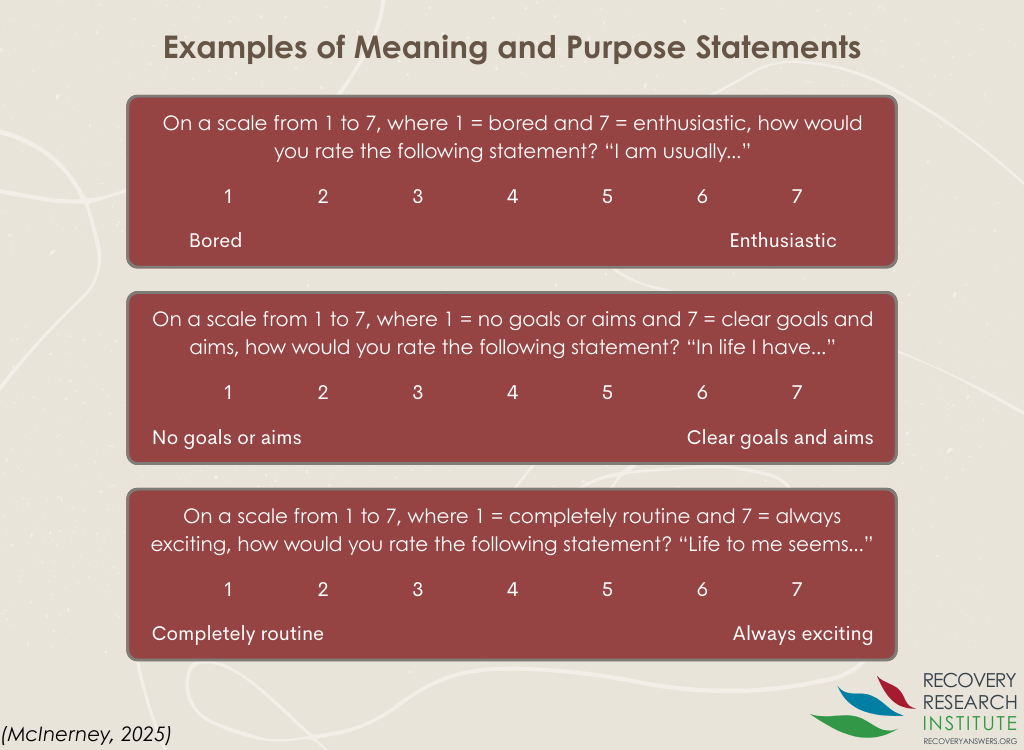
This study was an online cross-sectional survey of 381 adults in the United Kingdom aged 50 and older who identified as being in abstinence-based recovery from a serious alcohol problem. Participants were recruited through mutual-help groups (e.g., Alcoholics Anonymous, SMART Recovery), other recovery organizations, and social media, resulting in a self-selected sample providing single time-point self-reports – a design that limits causal interpretation. Meaning and purpose in life were assessed through self-report measures that captured both how meaningful and purposeful individuals perceived their lives to be and the extent to which they were actively searching for meaning (see graphic below).
The researchers examined whether 4 factors – gender, age of alcohol-problem onset, recovery pathway, and years in recovery – were associated with meaning and purpose. Alcohol-problem onset was categorized as early versus late based on whether participants reported developing drinking problems before or after age 45, an approach that relied on retrospective recall and may be subject to bias. Group-comparison analyses were then conducted to determine whether these personal and recovery-related factors were linked to differences in meaning and purpose in life among the sample of older adults in alcohol use disorder recovery.
WHAT DID THIS STUDY FIND?
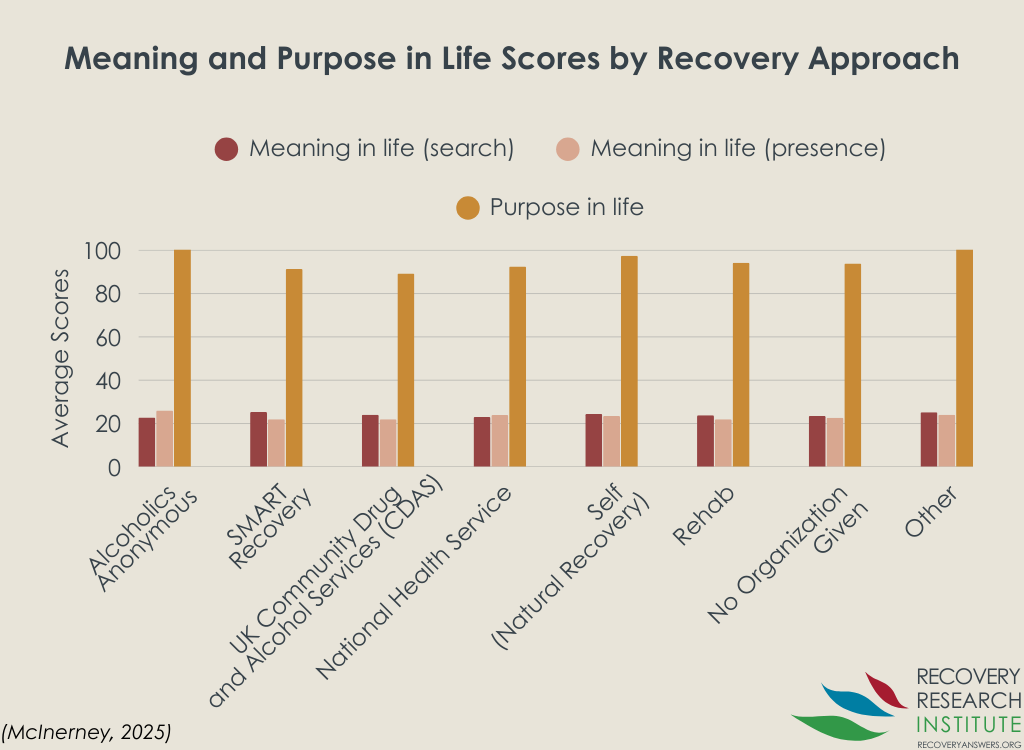
Older adults with more years in recovery reported higher levels of meaning and purpose in life, regardless of their gender, when their alcohol problems began, or which recovery pathway they used. Individuals who developed alcohol problems later in life reported greater levels of actively searching for meaning, yet early- and late-onset groups showed similar levels of purpose and a similar sense that their lives were meaningful. The distinction here is between the late-onset group’s greater levels of searching for meaning and despite similar current levels of meaningfulness. These similar levels of meaning were true even though the early-onset group had been in recovery for much longer on average than the late-onset group (12 years vs. 3 years). Men and women also reported comparable levels of meaning and purpose, despite women making up a larger share of the late-onset group. Recovery pathway generally made little difference with one exception (see graph below); individuals that credited Alcoholics Anonymous (AA) with “finding/beginning their recovery” had descriptively higher levels of purpose in life. Other pathways including different mutual-help groups, treatment services, or no organization at all were associated with similar levels of meaning and purpose.
WHAT ARE THE IMPLICATIONS OF THE STUDY FINDINGS?
Findings suggest that meaning and purpose in life are higher among older adults with more continuous years in recovery. The similar levels of meaning and purpose reported by early- and late-onset groups – despite large differences in average years in recovery – are consistent with prior research showing that well-being and functioning tend to improve most steeply during the first few years of recovery before leveling off over time. Another possible explanation is that individuals with late-onset alcohol problems may retain or enter recovery with resources (e.g., careers, relationships) that support meaning early on, whereas those with earlier-onset problems may not have accrued these resources before developing alcohol problems at a younger age and therefore build them more gradually over many years in recovery. That said, older adults with fewer years in recovery were more likely to be actively searching for meaning. It could be that they were using alcohol, in part, as a way to cope with lower levels of meaning. This underscores the value of ongoing recovery supports – such as long-term recovery management check-ups – to help individuals clarify goals, reconnect with purposeful roles, and engage in meaning-enhancing activities (e.g., volunteering, mentoring others in recovery, participating in community or faith-based groups). Finally, the higher levels of purpose in life for those who entered recovery through AA is noteworthy given the organization’s emphasis on spirituality and well-being more generally, which might promote active efforts to identify one’s purpose in life. Because this study used a single-time point, self-report design, it cannot determine whether more years in recovery increases meaning and purpose or whether higher meaning and purpose helps sustain recovery, but probably both directions are true. Still, the overall pattern points to meaning and purpose as potentially important components of recovery capital for older adults in long-term recovery from alcohol use disorder.
This study was an online cross-sectional survey with self-selected sample that chose to participate (rather than a representative sample) – this design does not allow for causal interpretations between time in recovery and meaning and purpose.
Alcohol-problem onset was categorized as early versus late based on whether participants reported developing drinking problems before or after age 45, an approach that relied on retrospective recall and may be subject to bias.
BOTTOM LINE
Higher levels of meaning and purpose in life are linked with longer durations of recovery from alcohol problems among adults aged 50 and older, regardless of gender, when their alcohol problems began, or which recovery pathway they used. Early recovery in later adulthood may be a period of active searching for meaning, suggesting that older adults newer to recovery may benefit from supports that help clarify goals and values, establish purpose, and address life events that may have contributed to alcohol problems. As recovery continues, meaning and purpose may strengthen and help support long-term recovery, although future longitudinal studies are needed to confirm these relationships and build on findings from this cross-sectional study.
For individuals and families seeking recovery: Recovery can begin at any stage of life, including older adulthood. Early recovery may be a time when older adults reflect on their experiences and search for renewed meaning and direction in life. Support from family members and friends during this period may be helpful as older adults explore and develop this renewed sense of meaning and purpose. Loved ones can encourage activities that strengthen meaning and purpose, such as setting personal goals, attending mutual-help group meetings, helping others in recovery, or engaging in volunteer roles.
For treatment professionals and treatment systems: Older adults in early recovery may benefit from ongoing interventions that support meaning-making and cultivate a sense of purpose. Assisting older adults in early recovery with setting goals, identifying personal values, and engaging in meaningful activities (e.g., volunteering, participating in mutual-help group meetings, or helping others in recovery) can provide structure and strengthen their sense of purpose. Recovery management check-ups that incorporate meaning-focused conversations and connect individuals with purposeful roles and activities may be particularly useful for older adults navigating early recovery.
For scientists: The association between meaning and purpose in life and time in recovery among older adults observed in this cross-sectional study reflects correlation only and cannot determine what contributes to changes in meaning or purpose over time, nor whether meaning and purpose influence long-term recovery or vice versa. It is likely, however, that this relationship is a reciprocal one where both are true. Future longitudinal research is needed to examine how meaning and purpose develop throughout recovery from alcohol problems among older adults, what factors shape these trajectories, and how they may vary across individuals based on characteristics such as gender, age of onset, and recovery pathway. Additional work could also develop and evaluate tailored recovery management check-ups that help older adults cope with stressful life events (e.g., divorce, job loss, retirement, or loss of loved ones) and support activities like goal setting and social engagement, which may strengthen meaning and purpose in recovery during later adulthood.
For policy makers: As the population ages and alcohol-related problems among older adults continue to rise, investing in services that support recovery and reduce harmful drinking in this group can help ease growing public health and societal burdens. Funding programs that assist older adults in reducing or quitting alcohol use – and that help them develop meaningful goals and engage in activities that promote a sense of purpose – may strengthen their health, well-being, and long-term recovery.
Recovery capital – the physical, psychological, and social resources that individuals draw on to initiate and sustain recovery – is linked with improved outcomes such as reduced substance use and enhanced well-being. Within this framework, meaning and purpose in life represent a key domain, reflecting how individuals make sense of their lives, set long-term goals, and orient themselves toward the future. Although meaning and purpose are important in later life, where they are associated with better health and greater social engagement, they have rarely been examined among older adults (aged 50+) with, or in recovery from, alcohol use disorder. This gap is notable because many older adults face life transitions such as the death of a loved one, retirement, declining health, and social isolation, all of which may strain or diminish a sense of meaning and purpose. Moreover, about 1/3 of older adults with alcohol use disorder develop problems for the first time later in life, with women particularly vulnerable to late onset drinking problems, while others develop and resolve alcohol problems earlier in life and may accumulate many years of recovery by older adulthood. Despite these varied pathways, little is known about which personal or recovery-related factors contribute to meaning and purpose among older adults in recovery from alcohol use disorder. This study addressed that gap by examining whether gender, age of alcohol-problem onset, recovery pathway, and number of years in recovery were associated with meaning and purpose among adults aged 50 or older in recovery from alcohol use disorder.
HOW WAS THIS STUDY CONDUCTED?
This study was an online cross-sectional survey of 381 adults in the United Kingdom aged 50 and older who identified as being in abstinence-based recovery from a serious alcohol problem. Participants were recruited through mutual-help groups (e.g., Alcoholics Anonymous, SMART Recovery), other recovery organizations, and social media, resulting in a self-selected sample providing single time-point self-reports – a design that limits causal interpretation. Meaning and purpose in life were assessed through self-report measures that captured both how meaningful and purposeful individuals perceived their lives to be and the extent to which they were actively searching for meaning (see graphic below).
The researchers examined whether 4 factors – gender, age of alcohol-problem onset, recovery pathway, and years in recovery – were associated with meaning and purpose. Alcohol-problem onset was categorized as early versus late based on whether participants reported developing drinking problems before or after age 45, an approach that relied on retrospective recall and may be subject to bias. Group-comparison analyses were then conducted to determine whether these personal and recovery-related factors were linked to differences in meaning and purpose in life among the sample of older adults in alcohol use disorder recovery.
WHAT DID THIS STUDY FIND?
Older adults with more years in recovery reported higher levels of meaning and purpose in life, regardless of their gender, when their alcohol problems began, or which recovery pathway they used. Individuals who developed alcohol problems later in life reported greater levels of actively searching for meaning, yet early- and late-onset groups showed similar levels of purpose and a similar sense that their lives were meaningful. The distinction here is between the late-onset group’s greater levels of searching for meaning and despite similar current levels of meaningfulness. These similar levels of meaning were true even though the early-onset group had been in recovery for much longer on average than the late-onset group (12 years vs. 3 years). Men and women also reported comparable levels of meaning and purpose, despite women making up a larger share of the late-onset group. Recovery pathway generally made little difference with one exception (see graph below); individuals that credited Alcoholics Anonymous (AA) with “finding/beginning their recovery” had descriptively higher levels of purpose in life. Other pathways including different mutual-help groups, treatment services, or no organization at all were associated with similar levels of meaning and purpose.
WHAT ARE THE IMPLICATIONS OF THE STUDY FINDINGS?
Findings suggest that meaning and purpose in life are higher among older adults with more continuous years in recovery. The similar levels of meaning and purpose reported by early- and late-onset groups – despite large differences in average years in recovery – are consistent with prior research showing that well-being and functioning tend to improve most steeply during the first few years of recovery before leveling off over time. Another possible explanation is that individuals with late-onset alcohol problems may retain or enter recovery with resources (e.g., careers, relationships) that support meaning early on, whereas those with earlier-onset problems may not have accrued these resources before developing alcohol problems at a younger age and therefore build them more gradually over many years in recovery. That said, older adults with fewer years in recovery were more likely to be actively searching for meaning. It could be that they were using alcohol, in part, as a way to cope with lower levels of meaning. This underscores the value of ongoing recovery supports – such as long-term recovery management check-ups – to help individuals clarify goals, reconnect with purposeful roles, and engage in meaning-enhancing activities (e.g., volunteering, mentoring others in recovery, participating in community or faith-based groups). Finally, the higher levels of purpose in life for those who entered recovery through AA is noteworthy given the organization’s emphasis on spirituality and well-being more generally, which might promote active efforts to identify one’s purpose in life. Because this study used a single-time point, self-report design, it cannot determine whether more years in recovery increases meaning and purpose or whether higher meaning and purpose helps sustain recovery, but probably both directions are true. Still, the overall pattern points to meaning and purpose as potentially important components of recovery capital for older adults in long-term recovery from alcohol use disorder.
This study was an online cross-sectional survey with self-selected sample that chose to participate (rather than a representative sample) – this design does not allow for causal interpretations between time in recovery and meaning and purpose.
Alcohol-problem onset was categorized as early versus late based on whether participants reported developing drinking problems before or after age 45, an approach that relied on retrospective recall and may be subject to bias.
BOTTOM LINE
Higher levels of meaning and purpose in life are linked with longer durations of recovery from alcohol problems among adults aged 50 and older, regardless of gender, when their alcohol problems began, or which recovery pathway they used. Early recovery in later adulthood may be a period of active searching for meaning, suggesting that older adults newer to recovery may benefit from supports that help clarify goals and values, establish purpose, and address life events that may have contributed to alcohol problems. As recovery continues, meaning and purpose may strengthen and help support long-term recovery, although future longitudinal studies are needed to confirm these relationships and build on findings from this cross-sectional study.
For individuals and families seeking recovery: Recovery can begin at any stage of life, including older adulthood. Early recovery may be a time when older adults reflect on their experiences and search for renewed meaning and direction in life. Support from family members and friends during this period may be helpful as older adults explore and develop this renewed sense of meaning and purpose. Loved ones can encourage activities that strengthen meaning and purpose, such as setting personal goals, attending mutual-help group meetings, helping others in recovery, or engaging in volunteer roles.
For treatment professionals and treatment systems: Older adults in early recovery may benefit from ongoing interventions that support meaning-making and cultivate a sense of purpose. Assisting older adults in early recovery with setting goals, identifying personal values, and engaging in meaningful activities (e.g., volunteering, participating in mutual-help group meetings, or helping others in recovery) can provide structure and strengthen their sense of purpose. Recovery management check-ups that incorporate meaning-focused conversations and connect individuals with purposeful roles and activities may be particularly useful for older adults navigating early recovery.
For scientists: The association between meaning and purpose in life and time in recovery among older adults observed in this cross-sectional study reflects correlation only and cannot determine what contributes to changes in meaning or purpose over time, nor whether meaning and purpose influence long-term recovery or vice versa. It is likely, however, that this relationship is a reciprocal one where both are true. Future longitudinal research is needed to examine how meaning and purpose develop throughout recovery from alcohol problems among older adults, what factors shape these trajectories, and how they may vary across individuals based on characteristics such as gender, age of onset, and recovery pathway. Additional work could also develop and evaluate tailored recovery management check-ups that help older adults cope with stressful life events (e.g., divorce, job loss, retirement, or loss of loved ones) and support activities like goal setting and social engagement, which may strengthen meaning and purpose in recovery during later adulthood.
For policy makers: As the population ages and alcohol-related problems among older adults continue to rise, investing in services that support recovery and reduce harmful drinking in this group can help ease growing public health and societal burdens. Funding programs that assist older adults in reducing or quitting alcohol use – and that help them develop meaningful goals and engage in activities that promote a sense of purpose – may strengthen their health, well-being, and long-term recovery.
Recovery capital – the physical, psychological, and social resources that individuals draw on to initiate and sustain recovery – is linked with improved outcomes such as reduced substance use and enhanced well-being. Within this framework, meaning and purpose in life represent a key domain, reflecting how individuals make sense of their lives, set long-term goals, and orient themselves toward the future. Although meaning and purpose are important in later life, where they are associated with better health and greater social engagement, they have rarely been examined among older adults (aged 50+) with, or in recovery from, alcohol use disorder. This gap is notable because many older adults face life transitions such as the death of a loved one, retirement, declining health, and social isolation, all of which may strain or diminish a sense of meaning and purpose. Moreover, about 1/3 of older adults with alcohol use disorder develop problems for the first time later in life, with women particularly vulnerable to late onset drinking problems, while others develop and resolve alcohol problems earlier in life and may accumulate many years of recovery by older adulthood. Despite these varied pathways, little is known about which personal or recovery-related factors contribute to meaning and purpose among older adults in recovery from alcohol use disorder. This study addressed that gap by examining whether gender, age of alcohol-problem onset, recovery pathway, and number of years in recovery were associated with meaning and purpose among adults aged 50 or older in recovery from alcohol use disorder.
HOW WAS THIS STUDY CONDUCTED?
This study was an online cross-sectional survey of 381 adults in the United Kingdom aged 50 and older who identified as being in abstinence-based recovery from a serious alcohol problem. Participants were recruited through mutual-help groups (e.g., Alcoholics Anonymous, SMART Recovery), other recovery organizations, and social media, resulting in a self-selected sample providing single time-point self-reports – a design that limits causal interpretation. Meaning and purpose in life were assessed through self-report measures that captured both how meaningful and purposeful individuals perceived their lives to be and the extent to which they were actively searching for meaning (see graphic below).
The researchers examined whether 4 factors – gender, age of alcohol-problem onset, recovery pathway, and years in recovery – were associated with meaning and purpose. Alcohol-problem onset was categorized as early versus late based on whether participants reported developing drinking problems before or after age 45, an approach that relied on retrospective recall and may be subject to bias. Group-comparison analyses were then conducted to determine whether these personal and recovery-related factors were linked to differences in meaning and purpose in life among the sample of older adults in alcohol use disorder recovery.
WHAT DID THIS STUDY FIND?
Older adults with more years in recovery reported higher levels of meaning and purpose in life, regardless of their gender, when their alcohol problems began, or which recovery pathway they used. Individuals who developed alcohol problems later in life reported greater levels of actively searching for meaning, yet early- and late-onset groups showed similar levels of purpose and a similar sense that their lives were meaningful. The distinction here is between the late-onset group’s greater levels of searching for meaning and despite similar current levels of meaningfulness. These similar levels of meaning were true even though the early-onset group had been in recovery for much longer on average than the late-onset group (12 years vs. 3 years). Men and women also reported comparable levels of meaning and purpose, despite women making up a larger share of the late-onset group. Recovery pathway generally made little difference with one exception (see graph below); individuals that credited Alcoholics Anonymous (AA) with “finding/beginning their recovery” had descriptively higher levels of purpose in life. Other pathways including different mutual-help groups, treatment services, or no organization at all were associated with similar levels of meaning and purpose.
WHAT ARE THE IMPLICATIONS OF THE STUDY FINDINGS?
Findings suggest that meaning and purpose in life are higher among older adults with more continuous years in recovery. The similar levels of meaning and purpose reported by early- and late-onset groups – despite large differences in average years in recovery – are consistent with prior research showing that well-being and functioning tend to improve most steeply during the first few years of recovery before leveling off over time. Another possible explanation is that individuals with late-onset alcohol problems may retain or enter recovery with resources (e.g., careers, relationships) that support meaning early on, whereas those with earlier-onset problems may not have accrued these resources before developing alcohol problems at a younger age and therefore build them more gradually over many years in recovery. That said, older adults with fewer years in recovery were more likely to be actively searching for meaning. It could be that they were using alcohol, in part, as a way to cope with lower levels of meaning. This underscores the value of ongoing recovery supports – such as long-term recovery management check-ups – to help individuals clarify goals, reconnect with purposeful roles, and engage in meaning-enhancing activities (e.g., volunteering, mentoring others in recovery, participating in community or faith-based groups). Finally, the higher levels of purpose in life for those who entered recovery through AA is noteworthy given the organization’s emphasis on spirituality and well-being more generally, which might promote active efforts to identify one’s purpose in life. Because this study used a single-time point, self-report design, it cannot determine whether more years in recovery increases meaning and purpose or whether higher meaning and purpose helps sustain recovery, but probably both directions are true. Still, the overall pattern points to meaning and purpose as potentially important components of recovery capital for older adults in long-term recovery from alcohol use disorder.
This study was an online cross-sectional survey with self-selected sample that chose to participate (rather than a representative sample) – this design does not allow for causal interpretations between time in recovery and meaning and purpose.
Alcohol-problem onset was categorized as early versus late based on whether participants reported developing drinking problems before or after age 45, an approach that relied on retrospective recall and may be subject to bias.
BOTTOM LINE
Higher levels of meaning and purpose in life are linked with longer durations of recovery from alcohol problems among adults aged 50 and older, regardless of gender, when their alcohol problems began, or which recovery pathway they used. Early recovery in later adulthood may be a period of active searching for meaning, suggesting that older adults newer to recovery may benefit from supports that help clarify goals and values, establish purpose, and address life events that may have contributed to alcohol problems. As recovery continues, meaning and purpose may strengthen and help support long-term recovery, although future longitudinal studies are needed to confirm these relationships and build on findings from this cross-sectional study.
For individuals and families seeking recovery: Recovery can begin at any stage of life, including older adulthood. Early recovery may be a time when older adults reflect on their experiences and search for renewed meaning and direction in life. Support from family members and friends during this period may be helpful as older adults explore and develop this renewed sense of meaning and purpose. Loved ones can encourage activities that strengthen meaning and purpose, such as setting personal goals, attending mutual-help group meetings, helping others in recovery, or engaging in volunteer roles.
For treatment professionals and treatment systems: Older adults in early recovery may benefit from ongoing interventions that support meaning-making and cultivate a sense of purpose. Assisting older adults in early recovery with setting goals, identifying personal values, and engaging in meaningful activities (e.g., volunteering, participating in mutual-help group meetings, or helping others in recovery) can provide structure and strengthen their sense of purpose. Recovery management check-ups that incorporate meaning-focused conversations and connect individuals with purposeful roles and activities may be particularly useful for older adults navigating early recovery.
For scientists: The association between meaning and purpose in life and time in recovery among older adults observed in this cross-sectional study reflects correlation only and cannot determine what contributes to changes in meaning or purpose over time, nor whether meaning and purpose influence long-term recovery or vice versa. It is likely, however, that this relationship is a reciprocal one where both are true. Future longitudinal research is needed to examine how meaning and purpose develop throughout recovery from alcohol problems among older adults, what factors shape these trajectories, and how they may vary across individuals based on characteristics such as gender, age of onset, and recovery pathway. Additional work could also develop and evaluate tailored recovery management check-ups that help older adults cope with stressful life events (e.g., divorce, job loss, retirement, or loss of loved ones) and support activities like goal setting and social engagement, which may strengthen meaning and purpose in recovery during later adulthood.
For policy makers: As the population ages and alcohol-related problems among older adults continue to rise, investing in services that support recovery and reduce harmful drinking in this group can help ease growing public health and societal burdens. Funding programs that assist older adults in reducing or quitting alcohol use – and that help them develop meaningful goals and engage in activities that promote a sense of purpose – may strengthen their health, well-being, and long-term recovery.