Not just whether, but how often and when, adolescents misuse prescription stimulants predicts later cocaine use
Existing evidence finds that nonmedical prescription stimulant use (e.g., Adderall) during adolescence is linked to later cocaine use. However, previous studies only consider whether or not nonmedical prescription stimulant use occurred, not how much and how recent the use was. This study expands on current “yes/no” consideration of nonmedical prescription stimulant use examining how often and how recent use occurred in order to help identify adolescents at greater risk of later cocaine use.
Prescription stimulants are commonly prescribed for attention deficit hyperactivity disorder. They can support health and well-being when prescribed by a doctor and taken as intended. However, their nonmedical use (i.e., on one’s own, without a doctor’s prescription or, with a prescription but taken not as prescribed) can have the opposite effect, and such use is on the rise.
Across US secondary schools from 2005 to 2020, 8% of students received prescription stimulants for ADHD while 6% reported nonmedical use of prescription stimulants. The nonmedical use of prescription substances has been linked to later substance use disorder symptoms, especially for young people. In addition to later substance use disorder symptoms broadly, prescription stimulant misuse relates to cocaine use specifically. Adolescents who report prescription stimulant misuse are more likely to report cocaine or methamphetamine initiation and use during young adulthood. Although there is evidence of a link between nonmedical prescription stimulant use and later cocaine use, existing studies tend to look at the presence or absence of lifetime nonmedical use of prescription stimulants (yes/no). There may be unique risk profiles based on the frequency and recency of adolescent nonmedical prescription stimulant use.
This study sought to address this gap by examining if adolescents who used more frequently and more recently had higher likelihoods of cocaine use in young adulthood. Identifying adolescents who may be more likely to use cocaine later in life can help intervention and prevention developers tailor their programs for greater effectiveness and reach.
HOW WAS THIS STUDY CONDUCTED?
This study pooled 2 waves of nationally representative data collected from 1976 to 2020 from the Monitoring the Future Panel study. The Monitoring the Future project begun in 1975 studies changes in the beliefs, attitudes, and behavior of young people in the US. It is one of the longest standing nationally representative means of seeing trends in substance use behavior among youth. The Panel study extends the project by surveying individuals from their graduating senior year through their adult life. For this study, the first wave of data featured a nationally representative cohort of 12th graders in the US, and the second wave included the random selection of participants that were followed up with at 19 or 20 years of age (i.e., 1-2 years of follow-up window).
Two nonmedical prescription stimulant use variables were used for this study: lifetime frequency of nonmedical prescription stimulant use and recency of nonmedical prescription stimulant use. The frequency question asked participants on how many occasions they had used prescription stimulants nonmedically (i.e., “on your own, without a doctor telling you to take them”) in their lifetime, during the past 12 months, and during the past 30 days. Responses were recoded to represent lifetime frequency of use: no lifetime use, 1–2 times (i.e., experimental), 3-9 times (i.e., occasional), 10+ times (i.e., regular). Recency of use was categorized as no lifetime use, prior-to-past-year only, past-year without past-month, and past-month use. There were 108,487 12th grade students included in this first wave. At follow-up, participants reported the number of occasions they used cocaine and crack cocaine in the past 12 months. Responses were combined and dichotomized to represent any past-year cocaine use at follow-up. There were 56,795 participants that were included in this second wave.
Two primary analyses were conducted: (1) to examine how the frequency of nonmedical prescription stimulant use in 12th grade related to the odds of first-time cocaine use 1–2 years later, and (2) to assess how the recency of stimulant misuse in 12th grade was associated with the odds of first-time cocaine use 1–2 years later. Additional analyses were conducted to investigate the impact of cohort year of participation (i.e., to determine if individuals from each 10-year time period may have had unique experiences that increase or decrease the risk of nonmedical prescription stimulant use on later cocaine use). All models looking at cocaine initiation excluded people who had already used cocaine when the study started. Models adjusted for a range of demographic and behavioral factors, including sex; race and ethnicity; parental education level; geographic region; and urban, suburban, or rural residence. Cohort year was included, along with educational intentions (plans to complete a four-year degree). Substance use covariates included lifetime cannabis and other illicit drug use, past-month cigarette use, and past-2-week binge drinking.
WHAT DID THIS STUDY FIND?
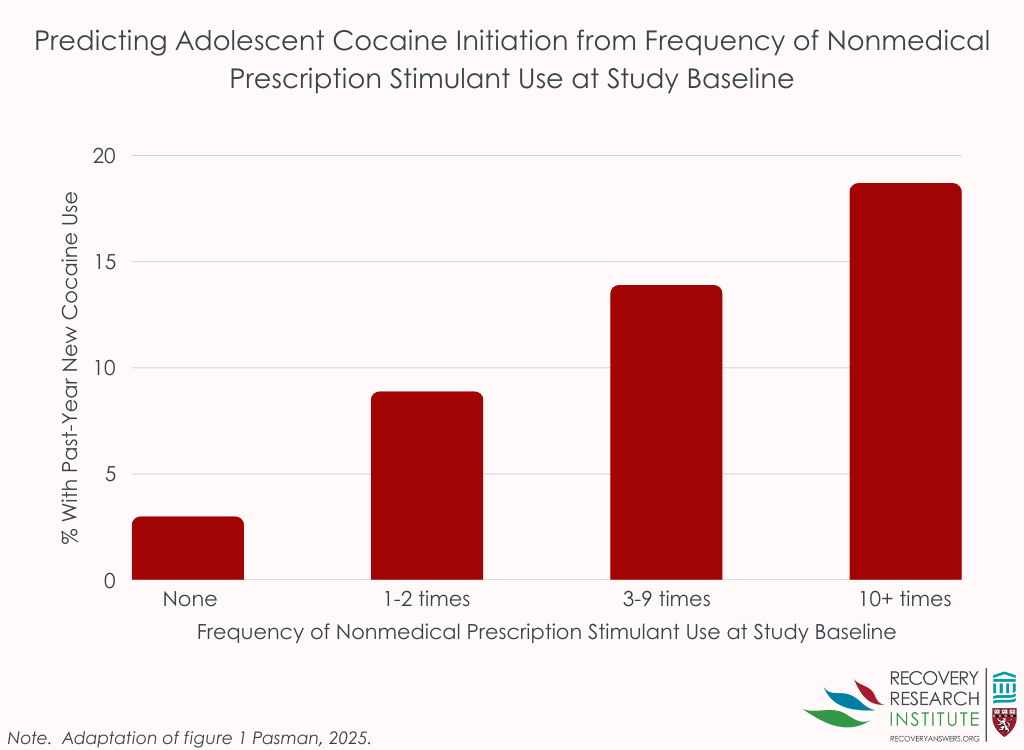
The odds of cocaine use increased as the frequency of nonmedical prescription stimulant use in adolescence rose
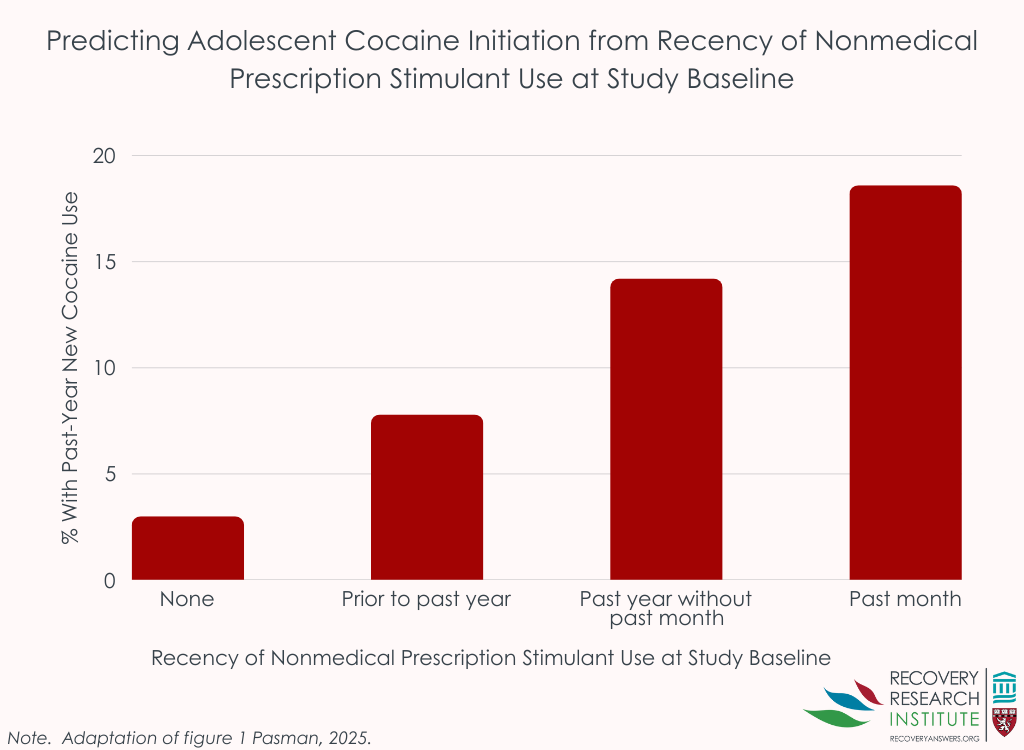
Most 12th graders (74%) reported no lifetime nonmedical prescription stimulant use, with 7%, 8%, and 11% reporting 1–2 times, 3-9 times, and 10+ times, respectively. Similarly, 6% reported prior-to-past-year use only; 8% reported past-year without past-month use; and 12% reported past-month use. There was 15% of the sample that had any lifetime cocaine use at the start of the study. At follow-up, 4.2% reported past-year incident (first-time) cocaine use.
Any nonmedical prescription stimulant use during adolescence was associated with higher odds of new (incident) cocaine use in young adulthood. Controlling for all demographic and behavioral factors, compared to those with no lifetime use, the odds of past-year cocaine use at follow-up were 1.3 times greater among those reporting use 1–2 times (i.e., experimental), 1.6 times greater among those reporting 3-9 times (i.e., occasional), and 2.0 times greater among those reporting 10+ times (i.e., regular). These results were similar irrespective of cohort year. See graph below for raw, weighted percentages of cocaine use at follow-up by frequency of nonmedical stimulant use in 12th grade.
Using conventional benchmarks for interpreting odds ratios, experimental nonmedical prescription stimulant use showed a small association with later cocaine use, occasional nonmedical prescription stimulant use showed a medium association, and regular nonmedical prescription stimulant use showed medium-to-large associations.
The odds of cocaine use increased as the recency of nonmedical prescription stimulant use in adolescence rose
Compared to those reporting no nonmedical prescription stimulant use, those that had used in the past-year without past-month were 1.7 times more likely, and those that used in the past-month were 2.1 times more likely to use cocaine for the first time in young adulthood. However, nonmedical prescription stimulant use prior to past-year at baseline was not associated with later, first-time cocaine use. These results were similar irrespective of when they joined the study. Nonmedical prescription stimulant use that occurred more than a year prior showed a negligible association with later cocaine use, whereas past-year without past-month nonmedical prescription stimulant use demonstrated a medium association and past-month nonmedical prescription stimulant use showed a medium-to-large association. See graph below for raw percentages of cocaine use by recency of nonmedical prescription stimulant use at baseline.
WHAT ARE THE IMPLICATIONS OF THE STUDY FINDINGS?
In this large, nationally representative study, both the frequency and recency of adolescent nonmedical prescription stimulant use showed a clear dose–response relationship with later cocaine use. Higher and more recent nonmedical prescription stimulant use during adolescence was associated with progressively greater odds of initiating cocaine use in young adulthood. This study extends prior work by adding important nuance to the relationship between adolescent nonmedical prescription stimulant use and cocaine use in young adulthood. These findings suggest that prevention efforts may benefit from tailoring messaging and intervention intensity based on the frequency and recency of nonmedical prescription stimulant misuse. For example, those reporting 1–2 lifetime use occasions may benefit from prevention messaging, individuals reporting 10+ may need more intensive oversight, intervention, and referral to treatment.
Although nonmedical prescription stimulant misuse remained an independent predictor of cocaine use, several other substance use behaviors (not described above in detail) were also associated with increased risk. Lifetime cannabis use at baseline (i.e., in 12th grade) showed the strongest association, with more than six-fold higher odds of later initiating cocaine use, while other illicit drug use, nonmedical use of other prescription drugs, recent cigarette smoking, and binge drinking were each associated with small to moderate increases in risk. Policies and strategies aimed at preventing nonmedical prescription drug use, especially prescription stimulants, are critical. The results of this study demonstrate that any nonmedical prescription stimulant use during adolescence is linked to cocaine use in young adulthood, even after accounting for other important factors. This work extends prior research by showing that adolescents who misuse prescription stimulants more frequently or more recently may benefit from more intensive prevention and intervention efforts.
The study does not account for reasons for nonmedical prescription stimulant use. It is possible that some adolescents are using to address underlying symptoms but do not have access to a healthcare provider or prescriptions.
There is also the possibility that adolescents and young adults struggle to accurately recall their nonmedical prescription stimulant and cocaine use (i.e., recall bias).
The study does not include participants enrolled in non-traditional education environments (e.g., recovery high schools, homeschooled), detained in juvenile detention, or engaged in in-patient treatment settings. However, excluding these likely reduces the relationship between nonmedical prescription stimulant use given the increased incidence of cocaine and other drug use among these individuals.
BOTTOM LINE
Any amount of nonmedical prescription stimulant use during adolescence is associated with higher odds of cocaine use in young adulthood, but risk increases with more frequent and more recent use. More work is needed to understand what types of prevention, intervention, and treatment strategies best align with nonmedical prescription stimulant use profiles.
For individuals and families seeking recovery: The nonmedical use of prescription stimulants can be dangerous and lead to negative consequences, including later cocaine use and developing a substance use disorder. In households where prescription medications are used for physical or mental health needs, safe storage and clear guidance on managing these medicines outside the home are essential. Young people, in particular, should be prepared to navigate situations where peers may pressure them to share or sell their medications and should understand the risks of using prescription drugs in any manner not directed by a clinician. If you or someone close to you has used prescription stimulants in ways not directed by a doctor, consulting a healthcare professional may help identify safe and healthy next steps.
For treatment professionals and treatment systems: The availability of prescription substances in the local environment is a risk for young people to engage in nonmedical use of those substances. This study found that as frequency and recency of nonmedical prescription stimulant use rose so too do the odds of later cocaine use. Creating opportunities to discuss, screen, and refer to treatment as needed youth who are actively engaged in nonmedical use of prescription stimulants may help reduce time to problem resolution and reduce related consequences for young people. This study also highlights a dose-response relationship that may help identify those individuals that need more intense intervention strategies.
For scientists: This large, nationally representative panel study extends previous scholarship on the relationship between adolescent nonmedical use of prescription stimulants and later cocaine use. Findings indicate that the odds of later cocaine use increase with nonmedical use of prescription stimulants becomes more frequent and recent. Future work may build on the efficacy of tailored interventions based on a young person’s risk profile (e.g., experimental vs occasional vs regular). Further work is needed to identify the strongest indicators of future problematic substance use. For example, lifetime cannabis use in adolescence was more strongly associated with later cocaine use than nonmedical prescription stimulant use. Developing screening approaches that balance efficiency (i.e., brief tools) with accuracy in identifying youth who need the most support may help reduce substance-related harms and consequences.
For policy makers: Any nonmedical use of prescription stimulants during adolescence is associated with later cocaine use, and the risk increases with more frequent and recent nonmedical use of prescription stimulants. There is a need to fund research that explores and identifies structural and tailored solutions to help reduce the incidence and prevalence of nonmedical use of prescription stimulants among adolescence. This study suggests that additional screening and resources to address adolescent substance use may prevent later individual and community-level consequences.
Prescription stimulants are commonly prescribed for attention deficit hyperactivity disorder. They can support health and well-being when prescribed by a doctor and taken as intended. However, their nonmedical use (i.e., on one’s own, without a doctor’s prescription or, with a prescription but taken not as prescribed) can have the opposite effect, and such use is on the rise.
Across US secondary schools from 2005 to 2020, 8% of students received prescription stimulants for ADHD while 6% reported nonmedical use of prescription stimulants. The nonmedical use of prescription substances has been linked to later substance use disorder symptoms, especially for young people. In addition to later substance use disorder symptoms broadly, prescription stimulant misuse relates to cocaine use specifically. Adolescents who report prescription stimulant misuse are more likely to report cocaine or methamphetamine initiation and use during young adulthood. Although there is evidence of a link between nonmedical prescription stimulant use and later cocaine use, existing studies tend to look at the presence or absence of lifetime nonmedical use of prescription stimulants (yes/no). There may be unique risk profiles based on the frequency and recency of adolescent nonmedical prescription stimulant use.
This study sought to address this gap by examining if adolescents who used more frequently and more recently had higher likelihoods of cocaine use in young adulthood. Identifying adolescents who may be more likely to use cocaine later in life can help intervention and prevention developers tailor their programs for greater effectiveness and reach.
HOW WAS THIS STUDY CONDUCTED?
This study pooled 2 waves of nationally representative data collected from 1976 to 2020 from the Monitoring the Future Panel study. The Monitoring the Future project begun in 1975 studies changes in the beliefs, attitudes, and behavior of young people in the US. It is one of the longest standing nationally representative means of seeing trends in substance use behavior among youth. The Panel study extends the project by surveying individuals from their graduating senior year through their adult life. For this study, the first wave of data featured a nationally representative cohort of 12th graders in the US, and the second wave included the random selection of participants that were followed up with at 19 or 20 years of age (i.e., 1-2 years of follow-up window).
Two nonmedical prescription stimulant use variables were used for this study: lifetime frequency of nonmedical prescription stimulant use and recency of nonmedical prescription stimulant use. The frequency question asked participants on how many occasions they had used prescription stimulants nonmedically (i.e., “on your own, without a doctor telling you to take them”) in their lifetime, during the past 12 months, and during the past 30 days. Responses were recoded to represent lifetime frequency of use: no lifetime use, 1–2 times (i.e., experimental), 3-9 times (i.e., occasional), 10+ times (i.e., regular). Recency of use was categorized as no lifetime use, prior-to-past-year only, past-year without past-month, and past-month use. There were 108,487 12th grade students included in this first wave. At follow-up, participants reported the number of occasions they used cocaine and crack cocaine in the past 12 months. Responses were combined and dichotomized to represent any past-year cocaine use at follow-up. There were 56,795 participants that were included in this second wave.
Two primary analyses were conducted: (1) to examine how the frequency of nonmedical prescription stimulant use in 12th grade related to the odds of first-time cocaine use 1–2 years later, and (2) to assess how the recency of stimulant misuse in 12th grade was associated with the odds of first-time cocaine use 1–2 years later. Additional analyses were conducted to investigate the impact of cohort year of participation (i.e., to determine if individuals from each 10-year time period may have had unique experiences that increase or decrease the risk of nonmedical prescription stimulant use on later cocaine use). All models looking at cocaine initiation excluded people who had already used cocaine when the study started. Models adjusted for a range of demographic and behavioral factors, including sex; race and ethnicity; parental education level; geographic region; and urban, suburban, or rural residence. Cohort year was included, along with educational intentions (plans to complete a four-year degree). Substance use covariates included lifetime cannabis and other illicit drug use, past-month cigarette use, and past-2-week binge drinking.
WHAT DID THIS STUDY FIND?
The odds of cocaine use increased as the frequency of nonmedical prescription stimulant use in adolescence rose
Most 12th graders (74%) reported no lifetime nonmedical prescription stimulant use, with 7%, 8%, and 11% reporting 1–2 times, 3-9 times, and 10+ times, respectively. Similarly, 6% reported prior-to-past-year use only; 8% reported past-year without past-month use; and 12% reported past-month use. There was 15% of the sample that had any lifetime cocaine use at the start of the study. At follow-up, 4.2% reported past-year incident (first-time) cocaine use.
Any nonmedical prescription stimulant use during adolescence was associated with higher odds of new (incident) cocaine use in young adulthood. Controlling for all demographic and behavioral factors, compared to those with no lifetime use, the odds of past-year cocaine use at follow-up were 1.3 times greater among those reporting use 1–2 times (i.e., experimental), 1.6 times greater among those reporting 3-9 times (i.e., occasional), and 2.0 times greater among those reporting 10+ times (i.e., regular). These results were similar irrespective of cohort year. See graph below for raw, weighted percentages of cocaine use at follow-up by frequency of nonmedical stimulant use in 12th grade.
Using conventional benchmarks for interpreting odds ratios, experimental nonmedical prescription stimulant use showed a small association with later cocaine use, occasional nonmedical prescription stimulant use showed a medium association, and regular nonmedical prescription stimulant use showed medium-to-large associations.
The odds of cocaine use increased as the recency of nonmedical prescription stimulant use in adolescence rose
Compared to those reporting no nonmedical prescription stimulant use, those that had used in the past-year without past-month were 1.7 times more likely, and those that used in the past-month were 2.1 times more likely to use cocaine for the first time in young adulthood. However, nonmedical prescription stimulant use prior to past-year at baseline was not associated with later, first-time cocaine use. These results were similar irrespective of when they joined the study. Nonmedical prescription stimulant use that occurred more than a year prior showed a negligible association with later cocaine use, whereas past-year without past-month nonmedical prescription stimulant use demonstrated a medium association and past-month nonmedical prescription stimulant use showed a medium-to-large association. See graph below for raw percentages of cocaine use by recency of nonmedical prescription stimulant use at baseline.
WHAT ARE THE IMPLICATIONS OF THE STUDY FINDINGS?
In this large, nationally representative study, both the frequency and recency of adolescent nonmedical prescription stimulant use showed a clear dose–response relationship with later cocaine use. Higher and more recent nonmedical prescription stimulant use during adolescence was associated with progressively greater odds of initiating cocaine use in young adulthood. This study extends prior work by adding important nuance to the relationship between adolescent nonmedical prescription stimulant use and cocaine use in young adulthood. These findings suggest that prevention efforts may benefit from tailoring messaging and intervention intensity based on the frequency and recency of nonmedical prescription stimulant misuse. For example, those reporting 1–2 lifetime use occasions may benefit from prevention messaging, individuals reporting 10+ may need more intensive oversight, intervention, and referral to treatment.
Although nonmedical prescription stimulant misuse remained an independent predictor of cocaine use, several other substance use behaviors (not described above in detail) were also associated with increased risk. Lifetime cannabis use at baseline (i.e., in 12th grade) showed the strongest association, with more than six-fold higher odds of later initiating cocaine use, while other illicit drug use, nonmedical use of other prescription drugs, recent cigarette smoking, and binge drinking were each associated with small to moderate increases in risk. Policies and strategies aimed at preventing nonmedical prescription drug use, especially prescription stimulants, are critical. The results of this study demonstrate that any nonmedical prescription stimulant use during adolescence is linked to cocaine use in young adulthood, even after accounting for other important factors. This work extends prior research by showing that adolescents who misuse prescription stimulants more frequently or more recently may benefit from more intensive prevention and intervention efforts.
The study does not account for reasons for nonmedical prescription stimulant use. It is possible that some adolescents are using to address underlying symptoms but do not have access to a healthcare provider or prescriptions.
There is also the possibility that adolescents and young adults struggle to accurately recall their nonmedical prescription stimulant and cocaine use (i.e., recall bias).
The study does not include participants enrolled in non-traditional education environments (e.g., recovery high schools, homeschooled), detained in juvenile detention, or engaged in in-patient treatment settings. However, excluding these likely reduces the relationship between nonmedical prescription stimulant use given the increased incidence of cocaine and other drug use among these individuals.
BOTTOM LINE
Any amount of nonmedical prescription stimulant use during adolescence is associated with higher odds of cocaine use in young adulthood, but risk increases with more frequent and more recent use. More work is needed to understand what types of prevention, intervention, and treatment strategies best align with nonmedical prescription stimulant use profiles.
For individuals and families seeking recovery: The nonmedical use of prescription stimulants can be dangerous and lead to negative consequences, including later cocaine use and developing a substance use disorder. In households where prescription medications are used for physical or mental health needs, safe storage and clear guidance on managing these medicines outside the home are essential. Young people, in particular, should be prepared to navigate situations where peers may pressure them to share or sell their medications and should understand the risks of using prescription drugs in any manner not directed by a clinician. If you or someone close to you has used prescription stimulants in ways not directed by a doctor, consulting a healthcare professional may help identify safe and healthy next steps.
For treatment professionals and treatment systems: The availability of prescription substances in the local environment is a risk for young people to engage in nonmedical use of those substances. This study found that as frequency and recency of nonmedical prescription stimulant use rose so too do the odds of later cocaine use. Creating opportunities to discuss, screen, and refer to treatment as needed youth who are actively engaged in nonmedical use of prescription stimulants may help reduce time to problem resolution and reduce related consequences for young people. This study also highlights a dose-response relationship that may help identify those individuals that need more intense intervention strategies.
For scientists: This large, nationally representative panel study extends previous scholarship on the relationship between adolescent nonmedical use of prescription stimulants and later cocaine use. Findings indicate that the odds of later cocaine use increase with nonmedical use of prescription stimulants becomes more frequent and recent. Future work may build on the efficacy of tailored interventions based on a young person’s risk profile (e.g., experimental vs occasional vs regular). Further work is needed to identify the strongest indicators of future problematic substance use. For example, lifetime cannabis use in adolescence was more strongly associated with later cocaine use than nonmedical prescription stimulant use. Developing screening approaches that balance efficiency (i.e., brief tools) with accuracy in identifying youth who need the most support may help reduce substance-related harms and consequences.
For policy makers: Any nonmedical use of prescription stimulants during adolescence is associated with later cocaine use, and the risk increases with more frequent and recent nonmedical use of prescription stimulants. There is a need to fund research that explores and identifies structural and tailored solutions to help reduce the incidence and prevalence of nonmedical use of prescription stimulants among adolescence. This study suggests that additional screening and resources to address adolescent substance use may prevent later individual and community-level consequences.
Prescription stimulants are commonly prescribed for attention deficit hyperactivity disorder. They can support health and well-being when prescribed by a doctor and taken as intended. However, their nonmedical use (i.e., on one’s own, without a doctor’s prescription or, with a prescription but taken not as prescribed) can have the opposite effect, and such use is on the rise.
Across US secondary schools from 2005 to 2020, 8% of students received prescription stimulants for ADHD while 6% reported nonmedical use of prescription stimulants. The nonmedical use of prescription substances has been linked to later substance use disorder symptoms, especially for young people. In addition to later substance use disorder symptoms broadly, prescription stimulant misuse relates to cocaine use specifically. Adolescents who report prescription stimulant misuse are more likely to report cocaine or methamphetamine initiation and use during young adulthood. Although there is evidence of a link between nonmedical prescription stimulant use and later cocaine use, existing studies tend to look at the presence or absence of lifetime nonmedical use of prescription stimulants (yes/no). There may be unique risk profiles based on the frequency and recency of adolescent nonmedical prescription stimulant use.
This study sought to address this gap by examining if adolescents who used more frequently and more recently had higher likelihoods of cocaine use in young adulthood. Identifying adolescents who may be more likely to use cocaine later in life can help intervention and prevention developers tailor their programs for greater effectiveness and reach.
HOW WAS THIS STUDY CONDUCTED?
This study pooled 2 waves of nationally representative data collected from 1976 to 2020 from the Monitoring the Future Panel study. The Monitoring the Future project begun in 1975 studies changes in the beliefs, attitudes, and behavior of young people in the US. It is one of the longest standing nationally representative means of seeing trends in substance use behavior among youth. The Panel study extends the project by surveying individuals from their graduating senior year through their adult life. For this study, the first wave of data featured a nationally representative cohort of 12th graders in the US, and the second wave included the random selection of participants that were followed up with at 19 or 20 years of age (i.e., 1-2 years of follow-up window).
Two nonmedical prescription stimulant use variables were used for this study: lifetime frequency of nonmedical prescription stimulant use and recency of nonmedical prescription stimulant use. The frequency question asked participants on how many occasions they had used prescription stimulants nonmedically (i.e., “on your own, without a doctor telling you to take them”) in their lifetime, during the past 12 months, and during the past 30 days. Responses were recoded to represent lifetime frequency of use: no lifetime use, 1–2 times (i.e., experimental), 3-9 times (i.e., occasional), 10+ times (i.e., regular). Recency of use was categorized as no lifetime use, prior-to-past-year only, past-year without past-month, and past-month use. There were 108,487 12th grade students included in this first wave. At follow-up, participants reported the number of occasions they used cocaine and crack cocaine in the past 12 months. Responses were combined and dichotomized to represent any past-year cocaine use at follow-up. There were 56,795 participants that were included in this second wave.
Two primary analyses were conducted: (1) to examine how the frequency of nonmedical prescription stimulant use in 12th grade related to the odds of first-time cocaine use 1–2 years later, and (2) to assess how the recency of stimulant misuse in 12th grade was associated with the odds of first-time cocaine use 1–2 years later. Additional analyses were conducted to investigate the impact of cohort year of participation (i.e., to determine if individuals from each 10-year time period may have had unique experiences that increase or decrease the risk of nonmedical prescription stimulant use on later cocaine use). All models looking at cocaine initiation excluded people who had already used cocaine when the study started. Models adjusted for a range of demographic and behavioral factors, including sex; race and ethnicity; parental education level; geographic region; and urban, suburban, or rural residence. Cohort year was included, along with educational intentions (plans to complete a four-year degree). Substance use covariates included lifetime cannabis and other illicit drug use, past-month cigarette use, and past-2-week binge drinking.
WHAT DID THIS STUDY FIND?
The odds of cocaine use increased as the frequency of nonmedical prescription stimulant use in adolescence rose
Most 12th graders (74%) reported no lifetime nonmedical prescription stimulant use, with 7%, 8%, and 11% reporting 1–2 times, 3-9 times, and 10+ times, respectively. Similarly, 6% reported prior-to-past-year use only; 8% reported past-year without past-month use; and 12% reported past-month use. There was 15% of the sample that had any lifetime cocaine use at the start of the study. At follow-up, 4.2% reported past-year incident (first-time) cocaine use.
Any nonmedical prescription stimulant use during adolescence was associated with higher odds of new (incident) cocaine use in young adulthood. Controlling for all demographic and behavioral factors, compared to those with no lifetime use, the odds of past-year cocaine use at follow-up were 1.3 times greater among those reporting use 1–2 times (i.e., experimental), 1.6 times greater among those reporting 3-9 times (i.e., occasional), and 2.0 times greater among those reporting 10+ times (i.e., regular). These results were similar irrespective of cohort year. See graph below for raw, weighted percentages of cocaine use at follow-up by frequency of nonmedical stimulant use in 12th grade.
Using conventional benchmarks for interpreting odds ratios, experimental nonmedical prescription stimulant use showed a small association with later cocaine use, occasional nonmedical prescription stimulant use showed a medium association, and regular nonmedical prescription stimulant use showed medium-to-large associations.
The odds of cocaine use increased as the recency of nonmedical prescription stimulant use in adolescence rose
Compared to those reporting no nonmedical prescription stimulant use, those that had used in the past-year without past-month were 1.7 times more likely, and those that used in the past-month were 2.1 times more likely to use cocaine for the first time in young adulthood. However, nonmedical prescription stimulant use prior to past-year at baseline was not associated with later, first-time cocaine use. These results were similar irrespective of when they joined the study. Nonmedical prescription stimulant use that occurred more than a year prior showed a negligible association with later cocaine use, whereas past-year without past-month nonmedical prescription stimulant use demonstrated a medium association and past-month nonmedical prescription stimulant use showed a medium-to-large association. See graph below for raw percentages of cocaine use by recency of nonmedical prescription stimulant use at baseline.
WHAT ARE THE IMPLICATIONS OF THE STUDY FINDINGS?
In this large, nationally representative study, both the frequency and recency of adolescent nonmedical prescription stimulant use showed a clear dose–response relationship with later cocaine use. Higher and more recent nonmedical prescription stimulant use during adolescence was associated with progressively greater odds of initiating cocaine use in young adulthood. This study extends prior work by adding important nuance to the relationship between adolescent nonmedical prescription stimulant use and cocaine use in young adulthood. These findings suggest that prevention efforts may benefit from tailoring messaging and intervention intensity based on the frequency and recency of nonmedical prescription stimulant misuse. For example, those reporting 1–2 lifetime use occasions may benefit from prevention messaging, individuals reporting 10+ may need more intensive oversight, intervention, and referral to treatment.
Although nonmedical prescription stimulant misuse remained an independent predictor of cocaine use, several other substance use behaviors (not described above in detail) were also associated with increased risk. Lifetime cannabis use at baseline (i.e., in 12th grade) showed the strongest association, with more than six-fold higher odds of later initiating cocaine use, while other illicit drug use, nonmedical use of other prescription drugs, recent cigarette smoking, and binge drinking were each associated with small to moderate increases in risk. Policies and strategies aimed at preventing nonmedical prescription drug use, especially prescription stimulants, are critical. The results of this study demonstrate that any nonmedical prescription stimulant use during adolescence is linked to cocaine use in young adulthood, even after accounting for other important factors. This work extends prior research by showing that adolescents who misuse prescription stimulants more frequently or more recently may benefit from more intensive prevention and intervention efforts.
The study does not account for reasons for nonmedical prescription stimulant use. It is possible that some adolescents are using to address underlying symptoms but do not have access to a healthcare provider or prescriptions.
There is also the possibility that adolescents and young adults struggle to accurately recall their nonmedical prescription stimulant and cocaine use (i.e., recall bias).
The study does not include participants enrolled in non-traditional education environments (e.g., recovery high schools, homeschooled), detained in juvenile detention, or engaged in in-patient treatment settings. However, excluding these likely reduces the relationship between nonmedical prescription stimulant use given the increased incidence of cocaine and other drug use among these individuals.
BOTTOM LINE
Any amount of nonmedical prescription stimulant use during adolescence is associated with higher odds of cocaine use in young adulthood, but risk increases with more frequent and more recent use. More work is needed to understand what types of prevention, intervention, and treatment strategies best align with nonmedical prescription stimulant use profiles.
For individuals and families seeking recovery: The nonmedical use of prescription stimulants can be dangerous and lead to negative consequences, including later cocaine use and developing a substance use disorder. In households where prescription medications are used for physical or mental health needs, safe storage and clear guidance on managing these medicines outside the home are essential. Young people, in particular, should be prepared to navigate situations where peers may pressure them to share or sell their medications and should understand the risks of using prescription drugs in any manner not directed by a clinician. If you or someone close to you has used prescription stimulants in ways not directed by a doctor, consulting a healthcare professional may help identify safe and healthy next steps.
For treatment professionals and treatment systems: The availability of prescription substances in the local environment is a risk for young people to engage in nonmedical use of those substances. This study found that as frequency and recency of nonmedical prescription stimulant use rose so too do the odds of later cocaine use. Creating opportunities to discuss, screen, and refer to treatment as needed youth who are actively engaged in nonmedical use of prescription stimulants may help reduce time to problem resolution and reduce related consequences for young people. This study also highlights a dose-response relationship that may help identify those individuals that need more intense intervention strategies.
For scientists: This large, nationally representative panel study extends previous scholarship on the relationship between adolescent nonmedical use of prescription stimulants and later cocaine use. Findings indicate that the odds of later cocaine use increase with nonmedical use of prescription stimulants becomes more frequent and recent. Future work may build on the efficacy of tailored interventions based on a young person’s risk profile (e.g., experimental vs occasional vs regular). Further work is needed to identify the strongest indicators of future problematic substance use. For example, lifetime cannabis use in adolescence was more strongly associated with later cocaine use than nonmedical prescription stimulant use. Developing screening approaches that balance efficiency (i.e., brief tools) with accuracy in identifying youth who need the most support may help reduce substance-related harms and consequences.
For policy makers: Any nonmedical use of prescription stimulants during adolescence is associated with later cocaine use, and the risk increases with more frequent and recent nonmedical use of prescription stimulants. There is a need to fund research that explores and identifies structural and tailored solutions to help reduce the incidence and prevalence of nonmedical use of prescription stimulants among adolescence. This study suggests that additional screening and resources to address adolescent substance use may prevent later individual and community-level consequences.