Driving under the influence: Adding a brief web-intervention to driver education decreased misperceptions of peer alcohol and cannabis use

  • Home
  • Research
  • Driving under the influence: Adding a brief web-intervention to driver education decreased misperceptions of peer alcohol and cannabis use

In most developed countries, adolescence carries a heightened risk and greater prevalence of substance use experimentation. This coincides with the time when young people also get their driver’s license. Driving under the influence of alcohol or cannabis is dangerous, for the driver and passengers. This study examined the effects of a brief web-based intervention added to a driver education program on substance use, impaired driving behaviors and attitudes, and perceived peer alcohol and cannabis use norms.

Stay on the frontiers of
recovery science
with the free, monthly
Recovery Bulletin

l

WHAT PROBLEM DOES THIS STUDY ADDRESS?

Driving under the influence of alcohol, cannabis, or both can impair key driving abilities, including reaction time, attention and concentration, judgment and decision making, coordination, and lane control. Adolescents may be especially vulnerable to substance use and driving related harms. In the United States, most teens become eligible for a driver’s license by age 16, and many states require driver education before licensure for those under 18. These programs are typically offered through schools or private organizations. Embedding substance use education within driver education programming may help reduce substance use, correct misperceptions about peer substance use, and reduce permissive attitudes and risky behaviors related to driving under the influence or riding with an impaired driver.


HOW WAS THIS STUDY CONDUCTED?

This was a randomized controlled trial of webCHAT, a 30-minute, internet-based intervention aimed at addressing substance use beliefs and perceptions generally and specifically related to driving or riding with an impaired driver. The study team recruited and randomized 198 adolescents aged 15.5-17 years old that were enrolled in a ~30-hour program across 12 private driver education programs in Colorado. This intensive program includes information to address impaired driving and other risky behavior.

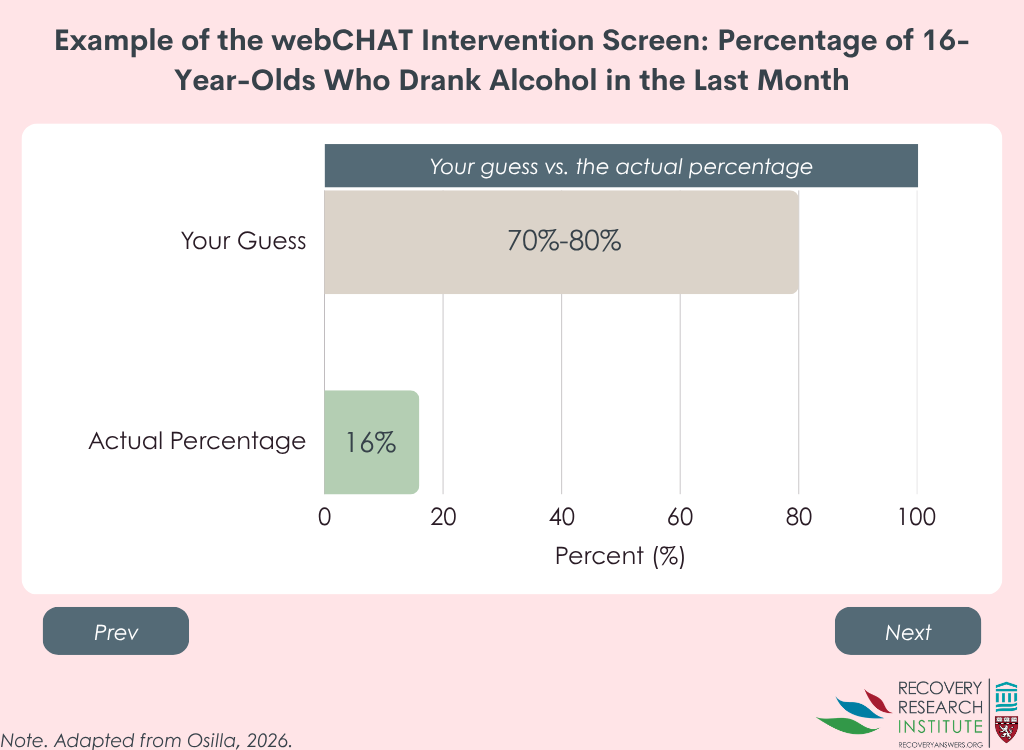
There were 106 (54%) that were assigned to receive the additional webCHAT intervention, which features motivational interviewing language that is nonjudgmental and promotes autonomy. It also incorporates personal normative feedback on peer alcohol and cannabis use (see graphic below) and provides personalized exercises exploring pros/cons of use and related protective behavioral strategies to prevent impaired driving and riding with impaired drivers. Participants completed surveys at baseline, 3-, and 6-months post-baseline. Although the groups were statistically similar on demographic and substance use characteristics, the sample was majority White non-Hispanic (80%). The high prevalence of adolescents identifying as White non-Hispanic and with the means to enroll in the private driver education program limits the authors ability to generalize their findings to other adolescents.

WHAT DID THIS STUDY FIND?

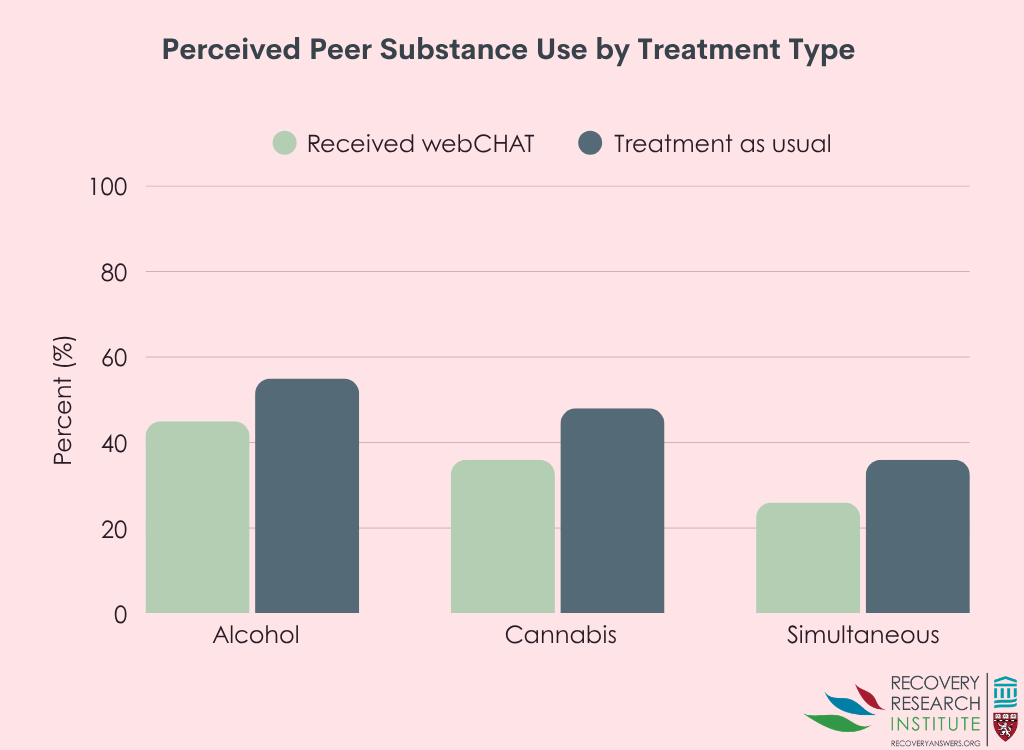
Adolescents who completed the approximately 30-minute web-based intervention were less likely to overestimate how many of their peers used alcohol, cannabis, or combined use compared with those who did not receive the intervention (see graph below). On average, the differences between the two groups were moderate in size, suggesting the program had a meaningful effect on adolescents’ perceptions of peer substance use. Adolescents who participated in the intervention were no less likely than those in the comparison group to report alcohol, cannabis, or combined use in the past 3 months; driving under the influence or riding with an impaired driver; or believing that their peers approved of those behaviors.

WHAT ARE THE IMPLICATIONS OF THE STUDY FINDINGS?

This study evaluated a 30-minute web-based intervention embedded within a 30-hour driver education program to examine its effects on adolescent substance use, perceived peer substance use, and attitudes and behaviors related to driving under the influence and riding with an impaired driver. Although brief relative to the broader driver education curriculum, the intervention was associated with lower perceived peer alcohol, cannabis, and combined substance use 6 months later. These findings are notable because misperceptions about peer substance use are consistently linked to greater likelihood of personal use among adolescents. The intervention, however, did not lead to changes in substance use or related outcomes within the 6-month study period. This may be because the standard program was already very intensive and addressed substance use and risky driving practices. Indeed, both groups had substantial reductions in substance use and permissive attitudes toward driving under the influence or riding with an impaired driver. Overall, this is good news. It could also be, as study authors point out, that more time is needed to detect potential changes associated with reductions in peer normative substance use behaviors. That said, the results suggest that brief web-based programs embedded within driver education may be a promising strategy for correcting peer substance use misperceptions during a key developmental period. Additional research is needed to better understand which intervention components drove changes in perceived peer use and why these changes did not translate into broader changes in driving-related attitudes or behaviors over the follow-up period.


BOTTOM LINE

This trial suggests that even a brief web-based intervention embedded within driver education can help adolescents develop more accurate perceptions of peer substance use. Additional research is needed to determine whether these changes lead to longer term reductions in substance use and driving related risk behaviors.


  • For individuals and families seeking recovery: If you or a loved one is learning to drive and uses substances or spends time with others who do, it is important to understand the health and safety risks associated with driving under the influence of alcohol, cannabis, or both, as well as riding with an impaired driver.
  • For treatment professionals and treatment systems: Driver education programs may offer a valuable opportunity to engage adolescents in substance use and impaired driving prevention at a time when they are highly motivated to participate. Findings from this study suggest that even a brief, 30-minute web-based intervention can help reduce misperceptions about peer substance use.
  • For scientists: Developing and testing brief, scalable interventions to address adolescent substance use, impaired driving attitudes and behaviors, and perceived peer alcohol and cannabis use norms is challenging, but driver education programs may provide a valuable setting for this work. Additional research is needed to understand why the intervention affected perceived peer substance use but not broader driving related attitudes or behaviors. Future studies may benefit from testing specific intervention components in a multi arm trial and continuing to involve adolescents in intervention development to ensure content is relevant and engaging.
  • For policy makers: Many adolescents participate in school based or private driver education programs as part of receiving a driver’s license. Findings from this study suggest that embedding substance use prevention content within driver education curricula may be a promising strategy. Additional funding is needed to develop, test, and evaluate these programs, particularly as substance use policies and norms continue to evolve.

CITATIONS

Osilla, K. C., Nameth, K., Rodriguez, A., Hummer, J. F., & D’Amico, E. J. (2026). Preventing alcohol and cannabis-impaired driving among adolescents: Effects of a web-intervention in a driver education program. Journal of Substance Use and Addiction Treatment, 186. doi: 10.1016/j.josat.2026.209945.


Stay on the Frontiers of
recovery science
with the free, monthly
Recovery Bulletin

l

WHAT PROBLEM DOES THIS STUDY ADDRESS?

Driving under the influence of alcohol, cannabis, or both can impair key driving abilities, including reaction time, attention and concentration, judgment and decision making, coordination, and lane control. Adolescents may be especially vulnerable to substance use and driving related harms. In the United States, most teens become eligible for a driver’s license by age 16, and many states require driver education before licensure for those under 18. These programs are typically offered through schools or private organizations. Embedding substance use education within driver education programming may help reduce substance use, correct misperceptions about peer substance use, and reduce permissive attitudes and risky behaviors related to driving under the influence or riding with an impaired driver.


HOW WAS THIS STUDY CONDUCTED?

This was a randomized controlled trial of webCHAT, a 30-minute, internet-based intervention aimed at addressing substance use beliefs and perceptions generally and specifically related to driving or riding with an impaired driver. The study team recruited and randomized 198 adolescents aged 15.5-17 years old that were enrolled in a ~30-hour program across 12 private driver education programs in Colorado. This intensive program includes information to address impaired driving and other risky behavior.

There were 106 (54%) that were assigned to receive the additional webCHAT intervention, which features motivational interviewing language that is nonjudgmental and promotes autonomy. It also incorporates personal normative feedback on peer alcohol and cannabis use (see graphic below) and provides personalized exercises exploring pros/cons of use and related protective behavioral strategies to prevent impaired driving and riding with impaired drivers. Participants completed surveys at baseline, 3-, and 6-months post-baseline. Although the groups were statistically similar on demographic and substance use characteristics, the sample was majority White non-Hispanic (80%). The high prevalence of adolescents identifying as White non-Hispanic and with the means to enroll in the private driver education program limits the authors ability to generalize their findings to other adolescents.


WHAT DID THIS STUDY FIND?

Adolescents who completed the approximately 30-minute web-based intervention were less likely to overestimate how many of their peers used alcohol, cannabis, or combined use compared with those who did not receive the intervention (see graph below). On average, the differences between the two groups were moderate in size, suggesting the program had a meaningful effect on adolescents’ perceptions of peer substance use. Adolescents who participated in the intervention were no less likely than those in the comparison group to report alcohol, cannabis, or combined use in the past 3 months; driving under the influence or riding with an impaired driver; or believing that their peers approved of those behaviors.


WHAT ARE THE IMPLICATIONS OF THE STUDY FINDINGS?

This study evaluated a 30-minute web-based intervention embedded within a 30-hour driver education program to examine its effects on adolescent substance use, perceived peer substance use, and attitudes and behaviors related to driving under the influence and riding with an impaired driver. Although brief relative to the broader driver education curriculum, the intervention was associated with lower perceived peer alcohol, cannabis, and combined substance use 6 months later. These findings are notable because misperceptions about peer substance use are consistently linked to greater likelihood of personal use among adolescents. The intervention, however, did not lead to changes in substance use or related outcomes within the 6-month study period. This may be because the standard program was already very intensive and addressed substance use and risky driving practices. Indeed, both groups had substantial reductions in substance use and permissive attitudes toward driving under the influence or riding with an impaired driver. Overall, this is good news. It could also be, as study authors point out, that more time is needed to detect potential changes associated with reductions in peer normative substance use behaviors. That said, the results suggest that brief web-based programs embedded within driver education may be a promising strategy for correcting peer substance use misperceptions during a key developmental period. Additional research is needed to better understand which intervention components drove changes in perceived peer use and why these changes did not translate into broader changes in driving-related attitudes or behaviors over the follow-up period.


BOTTOM LINE

This trial suggests that even a brief web-based intervention embedded within driver education can help adolescents develop more accurate perceptions of peer substance use. Additional research is needed to determine whether these changes lead to longer term reductions in substance use and driving related risk behaviors.


  • For individuals and families seeking recovery: If you or a loved one is learning to drive and uses substances or spends time with others who do, it is important to understand the health and safety risks associated with driving under the influence of alcohol, cannabis, or both, as well as riding with an impaired driver.
  • For treatment professionals and treatment systems: Driver education programs may offer a valuable opportunity to engage adolescents in substance use and impaired driving prevention at a time when they are highly motivated to participate. Findings from this study suggest that even a brief, 30-minute web-based intervention can help reduce misperceptions about peer substance use.
  • For scientists: Developing and testing brief, scalable interventions to address adolescent substance use, impaired driving attitudes and behaviors, and perceived peer alcohol and cannabis use norms is challenging, but driver education programs may provide a valuable setting for this work. Additional research is needed to understand why the intervention affected perceived peer substance use but not broader driving related attitudes or behaviors. Future studies may benefit from testing specific intervention components in a multi arm trial and continuing to involve adolescents in intervention development to ensure content is relevant and engaging.
  • For policy makers: Many adolescents participate in school based or private driver education programs as part of receiving a driver’s license. Findings from this study suggest that embedding substance use prevention content within driver education curricula may be a promising strategy. Additional funding is needed to develop, test, and evaluate these programs, particularly as substance use policies and norms continue to evolve.

CITATIONS

Osilla, K. C., Nameth, K., Rodriguez, A., Hummer, J. F., & D’Amico, E. J. (2026). Preventing alcohol and cannabis-impaired driving among adolescents: Effects of a web-intervention in a driver education program. Journal of Substance Use and Addiction Treatment, 186. doi: 10.1016/j.josat.2026.209945.


Share this article

l

WHAT PROBLEM DOES THIS STUDY ADDRESS?

Driving under the influence of alcohol, cannabis, or both can impair key driving abilities, including reaction time, attention and concentration, judgment and decision making, coordination, and lane control. Adolescents may be especially vulnerable to substance use and driving related harms. In the United States, most teens become eligible for a driver’s license by age 16, and many states require driver education before licensure for those under 18. These programs are typically offered through schools or private organizations. Embedding substance use education within driver education programming may help reduce substance use, correct misperceptions about peer substance use, and reduce permissive attitudes and risky behaviors related to driving under the influence or riding with an impaired driver.


HOW WAS THIS STUDY CONDUCTED?

This was a randomized controlled trial of webCHAT, a 30-minute, internet-based intervention aimed at addressing substance use beliefs and perceptions generally and specifically related to driving or riding with an impaired driver. The study team recruited and randomized 198 adolescents aged 15.5-17 years old that were enrolled in a ~30-hour program across 12 private driver education programs in Colorado. This intensive program includes information to address impaired driving and other risky behavior.

There were 106 (54%) that were assigned to receive the additional webCHAT intervention, which features motivational interviewing language that is nonjudgmental and promotes autonomy. It also incorporates personal normative feedback on peer alcohol and cannabis use (see graphic below) and provides personalized exercises exploring pros/cons of use and related protective behavioral strategies to prevent impaired driving and riding with impaired drivers. Participants completed surveys at baseline, 3-, and 6-months post-baseline. Although the groups were statistically similar on demographic and substance use characteristics, the sample was majority White non-Hispanic (80%). The high prevalence of adolescents identifying as White non-Hispanic and with the means to enroll in the private driver education program limits the authors ability to generalize their findings to other adolescents.


WHAT DID THIS STUDY FIND?

Adolescents who completed the approximately 30-minute web-based intervention were less likely to overestimate how many of their peers used alcohol, cannabis, or combined use compared with those who did not receive the intervention (see graph below). On average, the differences between the two groups were moderate in size, suggesting the program had a meaningful effect on adolescents’ perceptions of peer substance use. Adolescents who participated in the intervention were no less likely than those in the comparison group to report alcohol, cannabis, or combined use in the past 3 months; driving under the influence or riding with an impaired driver; or believing that their peers approved of those behaviors.


WHAT ARE THE IMPLICATIONS OF THE STUDY FINDINGS?

This study evaluated a 30-minute web-based intervention embedded within a 30-hour driver education program to examine its effects on adolescent substance use, perceived peer substance use, and attitudes and behaviors related to driving under the influence and riding with an impaired driver. Although brief relative to the broader driver education curriculum, the intervention was associated with lower perceived peer alcohol, cannabis, and combined substance use 6 months later. These findings are notable because misperceptions about peer substance use are consistently linked to greater likelihood of personal use among adolescents. The intervention, however, did not lead to changes in substance use or related outcomes within the 6-month study period. This may be because the standard program was already very intensive and addressed substance use and risky driving practices. Indeed, both groups had substantial reductions in substance use and permissive attitudes toward driving under the influence or riding with an impaired driver. Overall, this is good news. It could also be, as study authors point out, that more time is needed to detect potential changes associated with reductions in peer normative substance use behaviors. That said, the results suggest that brief web-based programs embedded within driver education may be a promising strategy for correcting peer substance use misperceptions during a key developmental period. Additional research is needed to better understand which intervention components drove changes in perceived peer use and why these changes did not translate into broader changes in driving-related attitudes or behaviors over the follow-up period.


BOTTOM LINE

This trial suggests that even a brief web-based intervention embedded within driver education can help adolescents develop more accurate perceptions of peer substance use. Additional research is needed to determine whether these changes lead to longer term reductions in substance use and driving related risk behaviors.


  • For individuals and families seeking recovery: If you or a loved one is learning to drive and uses substances or spends time with others who do, it is important to understand the health and safety risks associated with driving under the influence of alcohol, cannabis, or both, as well as riding with an impaired driver.
  • For treatment professionals and treatment systems: Driver education programs may offer a valuable opportunity to engage adolescents in substance use and impaired driving prevention at a time when they are highly motivated to participate. Findings from this study suggest that even a brief, 30-minute web-based intervention can help reduce misperceptions about peer substance use.
  • For scientists: Developing and testing brief, scalable interventions to address adolescent substance use, impaired driving attitudes and behaviors, and perceived peer alcohol and cannabis use norms is challenging, but driver education programs may provide a valuable setting for this work. Additional research is needed to understand why the intervention affected perceived peer substance use but not broader driving related attitudes or behaviors. Future studies may benefit from testing specific intervention components in a multi arm trial and continuing to involve adolescents in intervention development to ensure content is relevant and engaging.
  • For policy makers: Many adolescents participate in school based or private driver education programs as part of receiving a driver’s license. Findings from this study suggest that embedding substance use prevention content within driver education curricula may be a promising strategy. Additional funding is needed to develop, test, and evaluate these programs, particularly as substance use policies and norms continue to evolve.

CITATIONS

Osilla, K. C., Nameth, K., Rodriguez, A., Hummer, J. F., & D’Amico, E. J. (2026). Preventing alcohol and cannabis-impaired driving among adolescents: Effects of a web-intervention in a driver education program. Journal of Substance Use and Addiction Treatment, 186. doi: 10.1016/j.josat.2026.209945.


Share this article