WHAT PROBLEM DOES THIS STUDY ADDRESS?
In 2025, nearly half (49%) of US 12th graders reported lifetime alcohol use, and 23% reported having been drunk, underscoring continued risk despite historically high rates of abstinence among secondary school students. Substance use during adolescence is associated with elevated risk for later substance use disorders, making early prevention critical. Family-based prevention strategies are among the most effective approaches, particularly those that promote caregiver–child communication, monitoring, and clear expectations; however, many existing interventions are time intensive and difficult to scale. There is a need to identify modifiable, routinely occurring family processes that can serve as practical and sustainable intervention targets. Family meals represent one such opportunity. Prior research has consistently linked more frequent family meals with lower adolescent substance use, in part through enhanced communication, bonding, and parental monitoring. This study addresses the gap between evidence-based family prevention strategies and real-world feasibility by leveraging the routine of family meals as a scalable mechanism for improving parent–child communication about substance use.
HOW WAS THIS STUDY CONDUCTED?
This study used a randomized controlled trial design with 402 caregiver–child dyads. Eligible children were enrolled in fifth, sixth, or seventh grade at schools in Massachusetts, and caregivers and children were required to live together at least 50% of the time, allowing for diverse caregiving and household arrangements. Dyads were randomized to either the Substance Use Prevention Promoted by Eating family meals Regularly (SUPPER) intervention or an attention control condition. The SUPPER intervention consisted of a brief parent handbook (approximately 20 minutes to read), two coaching sessions (a 1-hour live session followed by a 30-minute phone session), and twice-weekly text messages delivered over 13 weeks. The control condition mirrored these components but focused on nutrition, physical activity, and negative talk about weight. Caregivers and children completed separate surveys at 3-, 6-, 12-, and 18-months post-randomization. Primary outcomes included the frequency of caregiver–child conversations about specific substances and targeted aspects of substance use communication, such as discussions of risks and parental expectations regarding alcohol and other drugs.
WHAT DID THIS STUDY FIND?
Caregivers assigned to the SUPPER intervention reported more frequent conversations about all substances examined (alcohol, cannabis, vaping, smoking, and other drug use) at the 3-month follow-up compared to caregivers in the control condition. At the 18-month follow-up, only conversations about alcohol remained significantly more frequent in the intervention group. Child-reported frequency of conversations followed a similar pattern, but differences were not statistically significant. Patterns of targeted substance use communication varied by topic and by caregiver versus child report. Of the ten targeted communication topics assessed, caregivers in the intervention were more likely than those in the control condition to report engaging in 9 topics at the 3-month follow-up, while children in the intervention group were more likely to report 3 of the 10 topics. These positive effects tended to persist over time. See graphs below for some key examples, including conversations warning about the dangers of alcohol and other drug use, as well as conversations about how to handle offers of alcohol and other drugs.
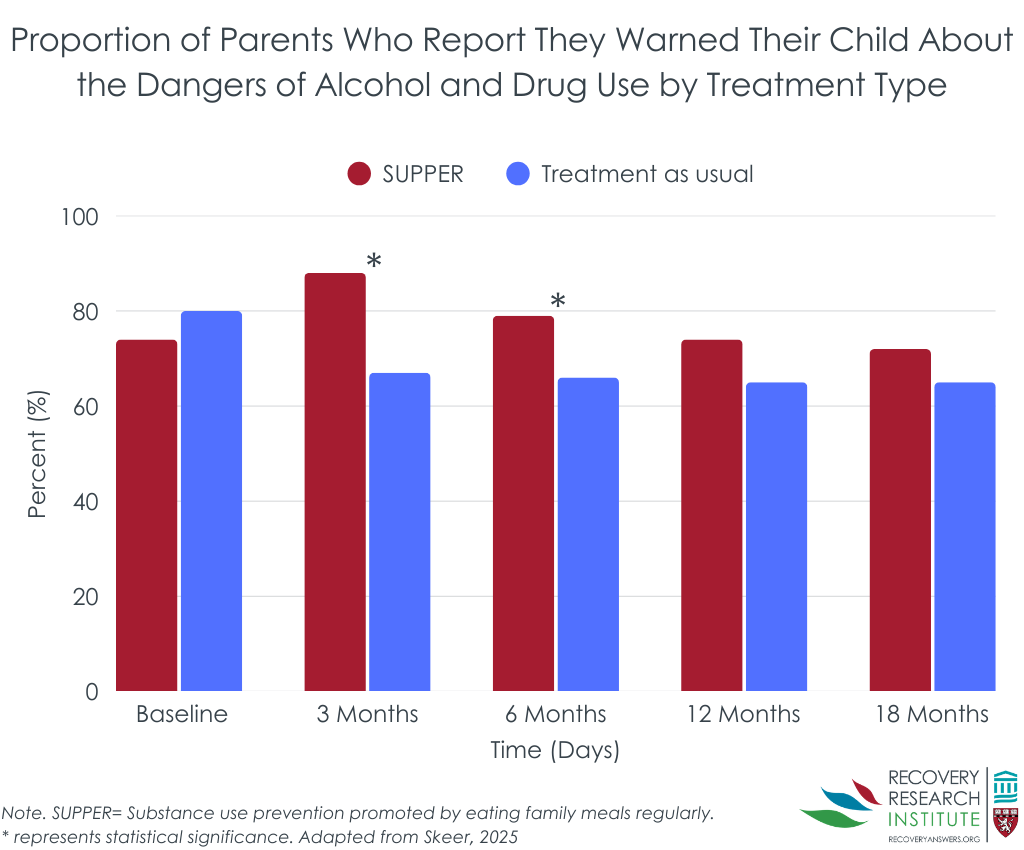
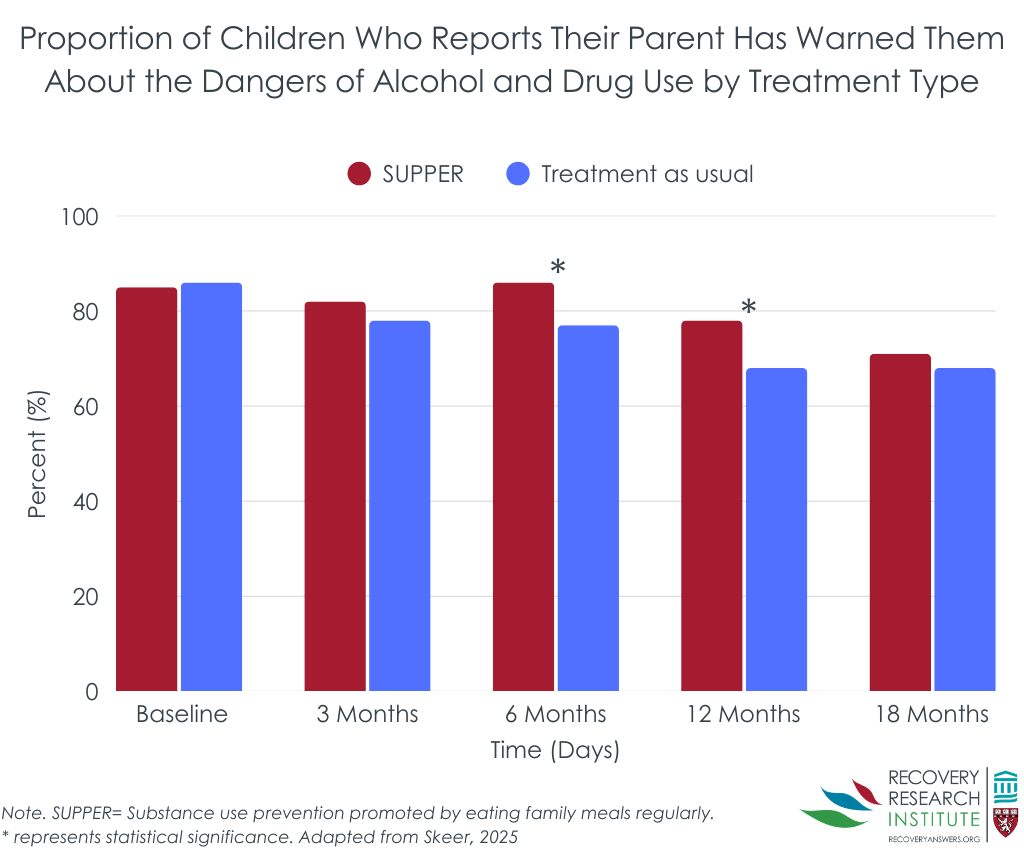
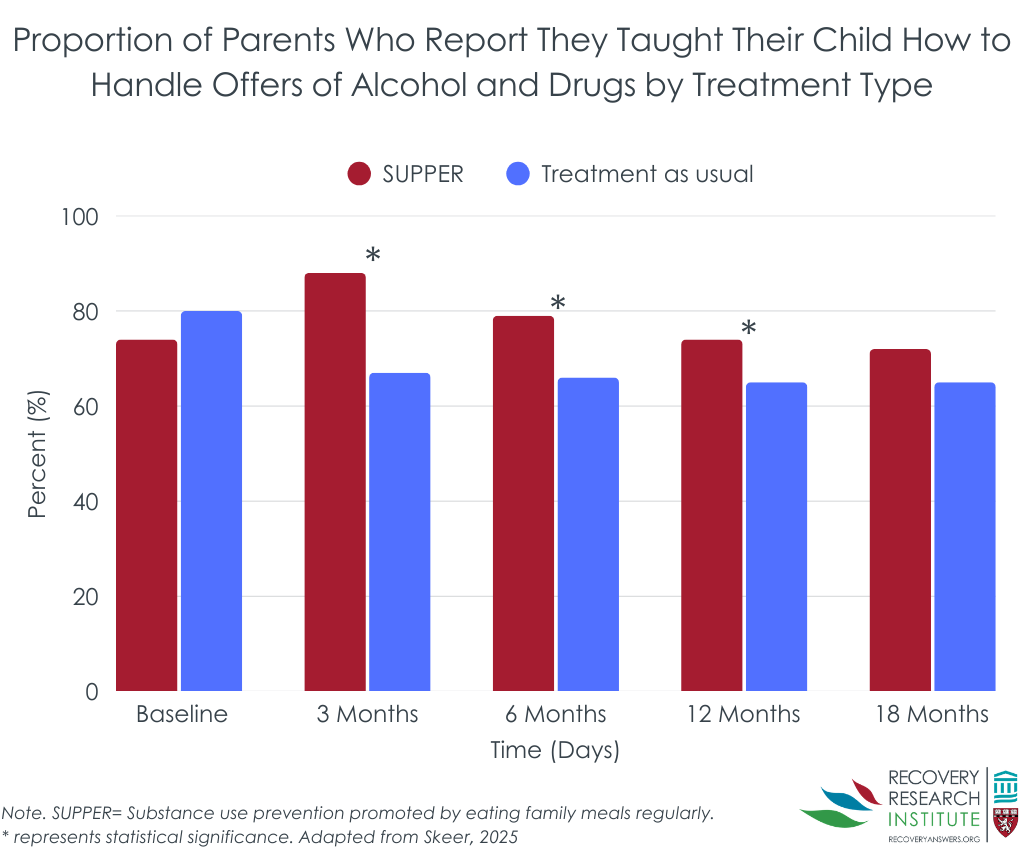
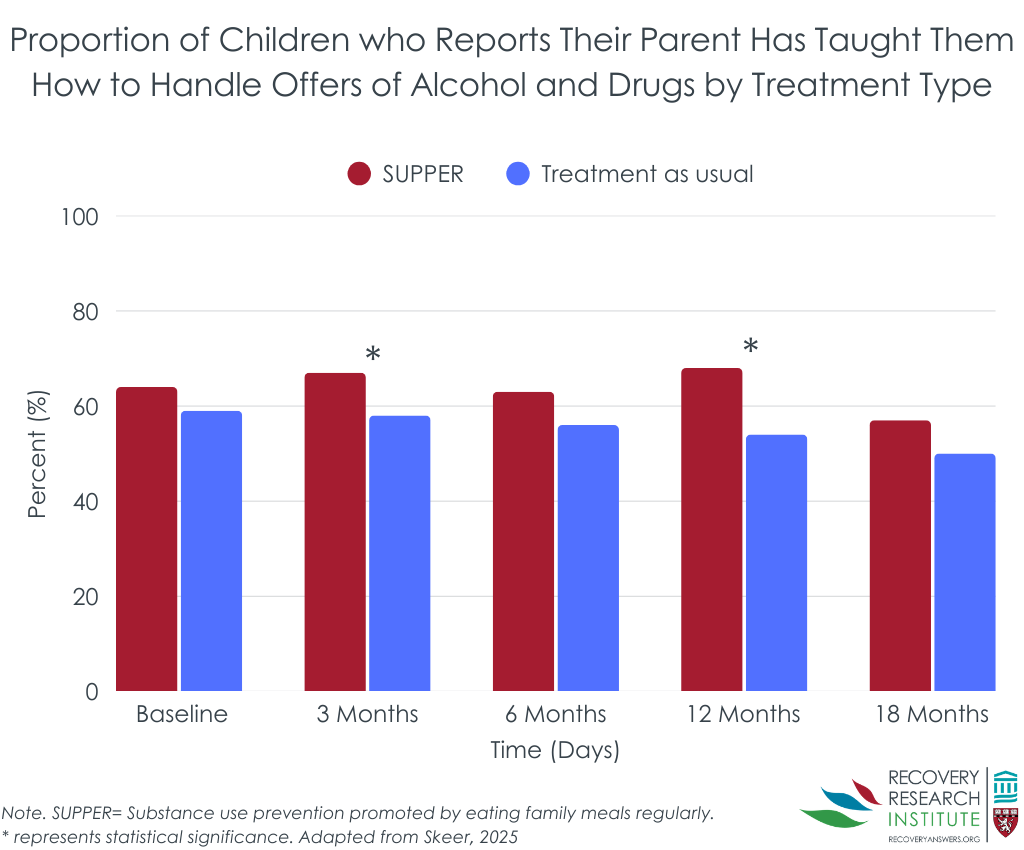
Of note, at the 18-month follow-up, both caregivers and children in the intervention condition were more likely to report giving (caregivers) or receiving (children) rules about drinking alcohol and using other substances. Caregivers and children in the intervention were approximately 40% and 30% more likely, respectively, than those in the control condition to report this rule-setting communication, indicating a sustained intervention effect. In addition, caregivers in the intervention were more likely at 18 months to report making comments about substance use when characters on TV were shown drinking or drunk, and children in the intervention group were also more likely to report that their caregivers talked directly with them about alcohol and other drug use at follow-up.
WHAT ARE THE IMPLICATIONS OF THE STUDY FINDINGS?
This study highlights the potential of leveraging family meals to increase caregiver–child communication about substance use. Though this study did not measure actual substance use directly, such conversations may ultimately contribute to reduced substance use among adolescents. Because the intervention components—a brief handbook, limited coaching sessions, and text messages—were delivered solely to caregivers, any observed effects among children likely occurred indirectly through caregiver–child interactions and children’s recall of those conversations. Importantly, SUPPER represents a brief, low-resource, and potentially scalable family-based intervention that can be integrated into existing routines. Future research is needed to determine whether increases in the frequency and quality of substance use communication during family meals translate into meaningful changes in adolescents’ substance use attitudes, intentions, and initiation over time.
BOTTOM LINE
This study highlights the family as a key context for adolescent substance use prevention and shows that a brief intervention embedded in family meals can meaningfully improve both the frequency and focus of caregiver–child conversations about substance use.
- For individuals and families seeking recovery: If you or a loved one is concerned about substance use, open and ongoing communication, even about difficult topics, can be beneficial. Grounding these conversations during regular family meals may help foster trust and openness over time.
- For treatment professionals and treatment systems: Involving the family is a key component of effective prevention, treatment, and recovery interventions for adolescents. Findings from this study suggest that even a brief intervention focused on increasing substance-related communication during family meals can improve both the frequency and focus of these conversations. Emphasizing regular routines, such as family meals, may be a useful and adaptable recommendation for families.
- For scientists: Developing and testing low-resource, scalable family interventions focused on adolescent substance use can be challenging. Findings from this study suggest that the brief SUPPER intervention improved caregiver–child communication about substance use by having these conversations during routine family meals. Future research could examine which caregivers, children, and caregiver–child dynamics are most likely to benefit from communication during family meals and what barriers there may be to implementation (e.g., parental substance use).
- For policy makers: Increased funding to test and scale family-focused interventions is needed to improve substance use outcomes for caregivers and children. Findings from this study suggest that situating interventions and conversations during regular family routines, such as family meals, may hold substantial promise.
CITATIONS
Skeer, M. R., Eliasziw, M., Sabelli, R. A., Hajinazarian, G., Ryan, E. C., Lee-Bravatti, M. A., Rancaño, K. M., Ialongo, N. S., & Spirito, A. (2025). Parent-child communication results from an efficacy trial of a brief family-based adolescent substance use preventive intervention. Journal of Adolescent Health, 77(6), 1097-1107. doi: 10.1016/j.jadohealth.2025.08.005.